



Restore Comfort When Your Heating or Cooling Fails
When your heating or cooling system fails, the disruption to your daily routine is immediate and frustrating. Contact us now to schedule a diagnostic visit or to discuss financing options for a new system. Homeowners in Santa Maria need reliable temperature control to handle the shift from damp winters to dry summers, and waiting days for a technician is rarely an option. We provide the expertise needed to diagnose complex mechanical issues and implement lasting solutions that restore your home’s environment.
- Same-day service availability ensures you do not have to endure uncomfortable temperatures for long.
- Transparent pricing structures mean you receive a clear quote before any work begins, eliminating surprise fees.
- Comprehensive warranties on labor and parts provide long-term protection for your investment.
Licensed, insured, and offering flexible financing options for hassle-free service.
Immediate Response to HVAC Emergencies
Mechanical failures rarely happen at convenient times. A furnace often quits during the coldest night of the year, or an air conditioner seizes up during a heatwave. When these systems malfunction, the primary goal is identifying the root cause quickly to prevent further damage to the unit or the home. A rapid response reduces the risk of minor issues escalating into catastrophic system failures that require full replacement.
In Santa Maria, where humidity levels fluctuate significantly between seasons, ignored symptoms can lead to accelerated wear. A rattling noise might indicate a loose part today, but tomorrow it could result in a shattered fan blade or motor failure. Professional intervention stops this progression.
The diagnostic process focuses on pinpointing the failure point, whether it is an electrical short, a refrigerant leak, or a mechanical obstruction. Technicians arrive equipped to handle a wide variety of common failure scenarios on the spot. The objective is to restore functionality immediately while ensuring safety protocols are met. If a system poses a safety risk, such as a cracked heat exchanger or an electrical hazard, the equipment is safely shut down, and options are presented to resolve the danger.
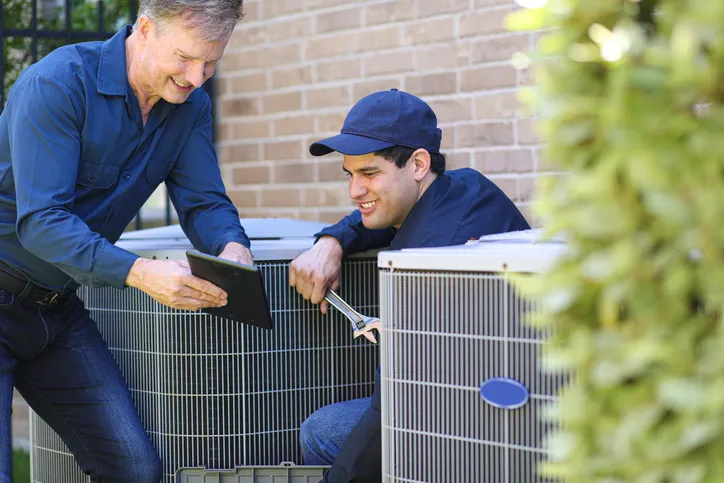
Comprehensive HVAC Services - Installation, Repairs, and Maintenance
Managing the indoor climate of a property involves more than just swapping out a filter. It requires a holistic approach to air management, thermal efficiency, and mechanical integrity. A full-service contractor handles every stage of the equipment's lifecycle, ensuring optimal performance from the initial install to the final days of operation.
Precision Repairs
Restoring a broken system requires technical precision. Modern HVAC equipment relies on complex circuit boards, variable-speed motors, and specific pressure balances.
- Technicians utilize advanced diagnostic tools to read error codes and measure system pressures.
- Electrical components, such as capacitors, contactors, and relays, are tested for proper voltage and amperage.
- Airflow restrictions are identified and cleared to prevent overheating or freezing coils.
- Refrigerant levels are checked and adjusted to manufacturer specifications to ensure efficient heat transfer.
Strategic Installation
Installation is the most critical day in the life of a heating or cooling unit. The efficiency and longevity of the system are dictated by how well it is sized and installed.
- Load calculations are performed to determine the exact heating and cooling requirements of the specific structure.
- Ductwork is inspected and modified to handle the airflow of the new, often more powerful, equipment.
- Units are leveled and secured to minimize vibration and noise transfer.
- Thermostats and control systems are calibrated to communicate effectively with the new machinery.
Preventative Maintenance
Routine maintenance is the defense against unexpected breakdowns. It shifts the focus from reactive repairs to proactive care.
- Coils are cleaned to improve heat exchange and reduce energy consumption.
- Moving parts are lubricated to reduce friction and wear on motors and bearings.
- Safety controls are tested to ensure the system shuts down properly in the event of an emergency.
- Drain lines are cleared to prevent water damage and mold growth within the system.
Your Guide to Hassle-Free HVAC Installation
Replacing a central heating or cooling system is a significant project that involves careful planning and execution. Understanding the process helps homeowners prepare for the installation day and ensures that the transition to the new system is smooth. The goal is to minimize disruption to the household while ensuring the new equipment is set up for maximum efficiency.
- First, the workspace is prepared to protect flooring and surrounding furniture. Technicians lay down drop cloths and clear a path to the equipment location, whether it is in a closet, attic, or garage.
- Next, the existing equipment is safely disconnected. This involves shutting off gas lines, electrical power, and refrigerant lines. The old unit is removed and hauled away for proper recycling or disposal, adhering to environmental regulations regarding refrigerant recovery.
- Then, the installation team prepares the infrastructure. This may involve modifying the plenum (the box connecting the unit to the ducts), upgrading electrical disconnects, or installing a new mounting pad for outdoor units. This step ensures the new unit fits perfectly and adheres to current building codes.
- Following the preparation, the new equipment is positioned. Indoor and outdoor units are placed, and the lineset (copper tubing connecting the two) is brazed or connected. A vacuum pump is used to remove moisture and air from the lines before releasing the refrigerant.
- Finally, the system is commissioned. The technician powers on the unit, checks gas pressure or refrigerant charge, and measures temperature differentials at the supply and return vents. This confirms that the system is producing the correct amount of heating or cooling power.
Deciding Between HVAC Repair and Replacement: A Useful Guide
Homeowners often face the difficult decision of whether to invest in another repair or to allocate those funds toward a new system. This decision relies on several factors, including the age of the unit, the cost of the repair, and the system's recent performance history. Organ & Sons Mechanical, Inc. helps homeowners navigate this analysis with objective data.
The Age of the System
Heating and cooling equipment has a finite lifespan. Furnaces generally last 15 to 20 years, while air conditioners and heat pumps often last 10 to 15 years.
- If the equipment is nearing the end of its expected life, a major repair may not be a wise investment.
- Newer systems offer higher efficiency ratings, which translate to lower monthly utility bills, potentially offsetting the cost of replacement over time.
The 50% Rule
A common industry standard for decision-making is the 50% rule.
- If the cost of the necessary repair approaches or exceeds 50% of the value of a new system, replacement is usually the better financial choice.
- Repeated minor repairs that add up quickly should also be considered in this calculation. A system that breaks down multiple times a year is signaling that it is unreliable.
Efficiency and Performance
Older units often utilize outdated technology that consumes more energy to produce the same amount of comfort.
- If energy bills have been steadily rising despite normal usage, the system’s efficiency has likely degraded.
- Uneven heating or cooling, where some rooms are hot while others are cold, often indicates that the current system can no longer effectively circulate air through the home.
- Noise levels are another indicator; grinding, squealing, or banging sounds often point to major component failure that may be cost-prohibitive to fix compared to replacement.
Navigating HVAC Installation in Santa Maria: Permits and Seasonal Advice
Operating as an HVAC contractor in Santa Maria involves understanding specific regional requirements and climate patterns. The local environment influences how systems should be selected, installed, and maintained to ensure they can withstand the elements.
Seasonality and Climate Impact
The Mediterranean climate brings distinct challenges. Winters are generally mild but wet, while summers are warm and very dry.
- The concentration of rainfall between November and April means outdoor units must be elevated and protected from standing water or mud accumulation. Moisture control is also essential for indoor air quality during these months.
- The dry summers increase the amount of dust and particulate matter in the air. Filters may need to be changed more frequently during the summer months to prevent airflow restrictions that can overheat the system.
- Temperature swings can be significant. A system needs to be responsive enough to switch from heating in the early morning to cooling in the late afternoon during transitional seasons.
Permits and Compliance
California has some of the strictest building codes in the country regarding energy efficiency.
- Title 24 compliance is mandatory for new installations and many alterations. This code dictates requirements for duct sealing, thermostat capabilities, and equipment efficiency ratings.
- Permits are required for most HVAC replacements. This ensures that the installation meets safety standards regarding gas piping, electrical connections, and venting.
- Final inspections by city officials protect the homeowner by verifying that the contractor performed the work correctly and safely. Hiring a professional who handles the permitting process is essential for avoiding legal and safety complications down the road.
Why Choose Us? Verified Quality and Local Expertise
Selecting a service provider is about trust and technical competence. The difference between a functional system and an optimal system lies in the details of the service provided. High-quality contractors do not cut corners on diagnostics, installation materials, or safety checks.
- Technical certification ensures that the individuals working on the equipment have undergone rigorous training and understand the complexities of modern HVAC technology.
- Thorough diagnostics mean that technicians look beyond the obvious symptom to find the underlying cause, preventing recurring issues.
- Respect for the home is paramount. Using shoe covers, drop cloths, and cleaning up the workspace after the job is complete demonstrates a commitment to customer service.
- Inventory availability on service trucks reduces the need for follow-up visits, allowing for faster resolution of heating and cooling problems.
- Honest communication regarding the condition of the system allows homeowners to make informed decisions without pressure.
When the comfort of your home is compromised, you need a partner who understands the urgency and technical requirements of the situation. Organ & Sons Mechanical, Inc. provides the professional, decisive service necessary to keep your indoor environment stable and comfortable year-round.
Reliable HVAC Service When Comfort Can’t Wait
When your heating or cooling system fails, you need fast, decisive action—not delays or guesswork. Organ & Sons Mechanical, Inc. delivers same-day HVAC service in Santa Maria with clear pricing, certified technicians, and solutions built to last. From emergency repairs to efficient system upgrades, we focus on accurate diagnostics, safe execution, and long-term performance—so your home stays comfortable through damp winters and dry summers.
Contact us today to schedule your service or request an estimate for a system upgrade.
Contact Us