



Solve Your Heat Pump Installation Needs Quickly and Efficiently
Facing unexpected heat pump failures or looking to upgrade an aging system? Ensure your comfort with quick, expert installations available even on short notice, giving you control over your indoor climate immediately. Call us today to schedule your consultation or discuss available financing options to get your project started.
Homeowners in Santa Maria need reliable temperature control that handles the morning fog and the midday heat with equal efficiency. Organ & Sons Mechanical, Inc. provides precision installation services designed to restore your home's comfort without delay. We prioritize technical accuracy and system longevity, ensuring your investment pays off through lower utility bills and consistent performance.
- Immediate assessment and same-day installation services for urgent replacement needs.
- Transparent pricing structures with no hidden fees and flexible financing options.
- High-efficiency systems designed to reduce long-term energy costs and meet California standards.
All installations are fully licensed, insured, and backed by a comprehensive warranty for your peace of mind.
Immediate Heat Pump Installation Services
The Central Coast offers a unique Mediterranean climate, characterized by mild, wet winters and warm, dry summers. While this weather is generally comfortable, it presents specific challenges for HVAC equipment. A heat pump is often the ideal solution for this region because it handles both heating and cooling in a single efficient unit. However, when a system fails, the discomfort is immediate. Our services are built around the urgency required when a home loses its primary heating or cooling source.
We focus on minimizing downtime. The installation process begins with a rapid evaluation of the existing infrastructure. Technicians look at ductwork integrity, electrical capacity, and the specific thermal envelope of the property. This is not a generic service; it is a targeted approach to ensure that the new equipment functions correctly from the moment it is powered on.
Choosing the right time to install goes beyond emergency failure. Many property owners in the area are transitioning away from older gas furnaces or inefficient air conditioners. Modern heat pump technology provides a distinct advantage in temperature regulation, particularly during the transition months when Santa Maria experiences cool ocean breezes in the evening after warm afternoons. Professional installation ensures that the unit can switch between modes seamlessly, maintaining a constant internal temperature regardless of the variable weather outside.
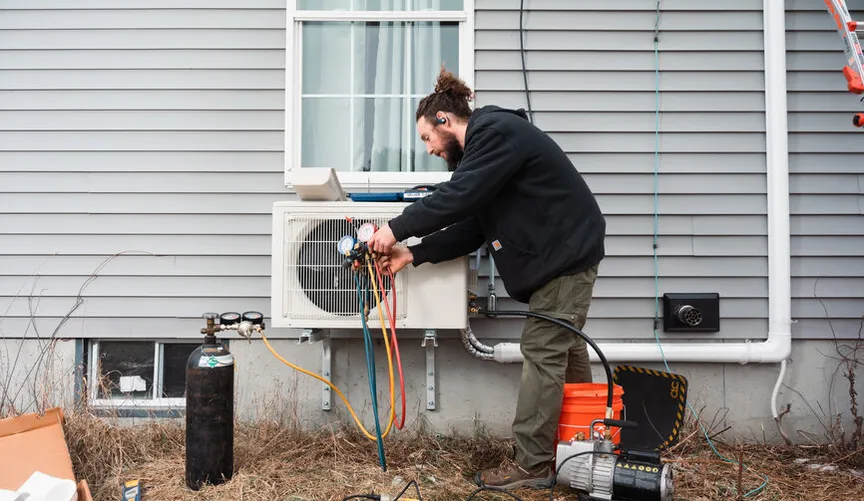
What Our Heat Pump Installation Includes
A comprehensive installation is more than just swapping out a box. It involves a complete integration of the new mechanical system with your home’s existing airflow and electrical frameworks. We provide a turnkey solution where every component is verified for compatibility and performance.
The scope of work generally covers the following core components and services:
- Site Preparation and Protection: Technicians prepare the workspace, using drop cloths and protective gear to ensure your home remains clean. This includes clearing the area around the outdoor condenser pad and the indoor air handler location.
- Equipment Provisioning: Supply of the specific heat pump unit selected during the sizing phase, including the outdoor condenser/compressor and the indoor air handler or coil.
- Refrigerant Line Set Installation: Routing and connecting the insulated copper lines that carry the refrigerant between the indoor and outdoor units. This is a critical step to prevent leaks and ensure efficient heat transfer.
- Electrical Integration: upgrading or connecting the electrical disconnect box and ensuring the circuit breaker is sized correctly for the new load. This often involves coordination with local code requirements to ensure safety.
- Drainage Management: Installation of condensate drain lines and pumps to safely remove moisture extracted from the air during the cooling cycle.
- Thermostat and Control Setup: Installation of a compatible smart thermostat or control interface, programmed to optimize the heat pump’s staging and efficiency curves.
- System Testing and Balancing: Rigorous testing of airflow (static pressure), refrigerant charge, and temperature differentials (delta T) to verify the system is operating within manufacturer specifications.
- Old Equipment Disposal: Safe removal and environmentally responsible disposal of the old furnace, AC, or heat pump, including the reclamation of old refrigerant.
Your Installation Process, Step-by-Step
A systematic approach prevents errors and ensures that the system meets the rated efficiency levels. We follow a strict protocol for every installation project.
- Load Calculation and Sizing: First, technicians perform a Manual J load calculation. This determines the exact heating and cooling requirements of the structure based on square footage, insulation levels, window orientation, and local climate data. Proper sizing prevents "short cycling" (unit is too big) or constant running (unit is too small).
- Existing System Removal: Next, the crew disconnects the power and gas lines (if applicable) and safely extracts the old equipment. Special care is taken to cap off gas lines if switching to an all-electric system and to recover existing refrigerant according to EPA guidelines.
- Indoor Unit Installation: Then, the indoor air handler or evaporator coil is positioned. If utilizing existing ductwork, the plenum is modified to ensure an airtight seal. For ductless configurations, the wall-mounted heads are leveled and secured.
- Outdoor Unit Placement: Simultaneously, the outdoor condenser is installed on a composite pad or wall bracket. This placement accounts for airflow clearance, noise reduction, and protection from coastal elements like salt air or moisture.
- Line Set and Electrical Connection: The copper refrigerant lines and low-voltage control wires are run between the units. These lines are brazed (welded) using nitrogen flow to prevent oxidation inside the pipes, a crucial step for the longevity of modern refrigerants.
- Evacuation and Charging: Once connected, the system is pressure-tested with nitrogen to check for leaks. A deep vacuum is then pulled to remove all moisture and air from the lines before the precise amount of factory-specified refrigerant is released into the system.
- Commissioning and Handover: Finally, the system is powered up. Technicians verify fan speeds, check amperage draws, and ensure the auxiliary heat strips (if installed) function correctly. The homeowner receives a walkthrough of the new controls and maintenance requirements.
Deciding Between Heat Pump Repair and Replacement
Determining whether to invest in a repair or commit to a full replacement is a significant financial decision. While our goal is always to restore comfort, there are technical and economic tipping points where replacement becomes the only logical choice.
Review the following criteria to assist in your decision-making:
- The 50% Rule: If the cost of the repair approaches or exceeds 50% of the value of a new system, replacement is generally recommended. Money spent on a major repair for an old unit is often better invested in a new asset with a warranty.
- System Age: The average lifespan of a heat pump is 10 to 15 years. If your unit is nearing or has surpassed this age range, major component failures (like a compressor) signal the end of its useful life.
- Refrigerant Type: Older systems often use R-22 (Freon), which has been phased out and is prohibitively expensive to restock. If an R-22 system has a leak, Organ & Sons Mechanical, Inc. advises upgrading to a system that uses modern, eco-friendly refrigerants like R-410A or R-454B.
- Rising Energy Bills: As internal components wear, heat pumps lose efficiency. If you notice a steady increase in energy consumption despite normal usage, the system’s SEER (cooling) or HSPF (heating) performance has degraded.
- Frequency of Breakdowns: If you have required multiple service calls within the last two years, the system is becoming unreliable. A new installation eliminates the stress of recurrent failures during peak weather seasons.
- Comfort Issues: Uneven heating or cooling, excessive noise, or humidity issues often indicate that the current unit is no longer capable of conditioning the space effectively.
Understanding Santa Maria's Heat Pump Installation Regulations
Installing a heat pump in California involves navigating a specific set of building codes and energy efficiency standards. Compliance is non-negotiable for safety, insurance validity, and resale value.
- Building Permits: The City of Santa Maria requires permits for HVAC replacements and new installations. This process ensures that the work meets safety codes regarding electrical connections and structural integrity. Inspections are typically required after the installation to close the permit.
- Title 24 Compliance: California’s Title 24 Energy Code is one of the strictest in the nation. New installations must meet specific SEER2 and HSPF2 efficiency ratings. Furthermore, in many cases, ductwork must be tested for leakage (HERS testing) by a third-party verifier to ensure the system isn't losing conditioned air into attics or crawlspaces.
- Electrification and Panel Upgrades: Many homeowners in the region are switching from gas furnaces to electric heat pumps. This "fuel switching" may require an upgrade to the home’s main electrical panel to handle the increased amperage.
- Rebates and Incentives: Various programs, such as TECH Clean California and federal tax credits under the Inflation Reduction Act, offer financial incentives for installing high-efficiency heat pumps. Eligibility often depends on the specific efficiency ratings of the equipment installed and the completion of proper permitting.
- Utility Coordination: For projects involving significant electrical load changes, coordination with Pacific Gas and Electric (PG&E) may be necessary to ensure the service drop to the home is adequate.
Why Choose Us? Customers' Trusted Choice in Santa Maria
Selecting the right contractor is the most critical variable in the lifespan of your heat pump. The best equipment will fail prematurely if installed incorrectly. We distinguish ourselves through technical rigor and a commitment to decision-stage clarity. We do not use high-pressure sales tactics; we provide data, options, and expert execution — read our FAQs to learn more.
Our technicians are trained in the specific thermodynamics required for the coastal valley climate. We understand how to balance a system so that it dehumidifies effectively during the foggy season while providing powerful cooling during heat waves. We adhere strictly to manufacturer protocols regarding line set length, refrigerant charge, and airflow settings, ensuring that the warranty remains valid.
Furthermore, we treat your property with respect. From the use of shoe covers to the final cleanup, the goal is to leave the home in better condition than it was found. We provide clear documentation of the installation, including model numbers, serial numbers, and warranty certificates, ensuring you have a complete record of your home improvement.
Organ & Sons Mechanical, Inc. stands ready to upgrade your home’s comfort and efficiency. Experience the difference of a professional, code-compliant installation that is built to last.
Upgrade to Reliable, Energy-Efficient Comfort—Without the Wait
When your heat pump fails or your current system can’t keep up with Santa Maria’s shifting coastal climate, fast and precise installation is critical. Organ & Sons Mechanical, Inc. delivers expert heat pump installations engineered for efficiency, longevity, and immediate comfort—handled by licensed professionals who prioritize accuracy over shortcuts.
Ready to upgrade your comfort? Contact us now to schedule your heat pump installation estimate.
Contact Us