



Breathe Easier with Professional Air Quality Solutions
Concerned about your indoor air quality in Santa Maria? You are not alone—many residents face issues from allergens, agricultural dust, and coastal moisture pollutants year-round. While the Central Coast offers beautiful outdoor scenery, the air inside your home can be up to five times more polluted than the air outside due to trapped contaminants and inadequate ventilation. Contact us today to schedule a comprehensive air quality assessment or financing consultation.
Our approach targets the specific particulate matter and biological growth affecting homes in this region. We provide:
- Rapid response and testing services available immediately to identify invisible threats.
- Detailed analysis using state-of-the-art diagnostic equipment to pinpoint VOCs and allergens.
- Recommendations for improving air based on certified data, not guesswork.
All services are fully certified and comply with local regulations and California ventilation standards.
Comprehensive Air Quality Analysis and Treatment
Improving the air you breathe requires a systematic approach that goes beyond standard HVAC filters. Most homeowners in Santa Maria assume their standard heating and cooling systems naturally clean the air. However, standard filters are designed primarily to protect the equipment, not your lungs. True Indoor Air Quality (IAQ) management involves a two-step process: accurate diagnostics followed by the integration of active air treatment solutions.
We focus on neutralizing three specific categories of pollutants: particulates (dust, pollen, dander), biologicals (mold, bacteria, viruses), and gases (chemical vapors, VOCs, odors). Addressing these issues requires specialized hardware that integrates directly into your central air system.
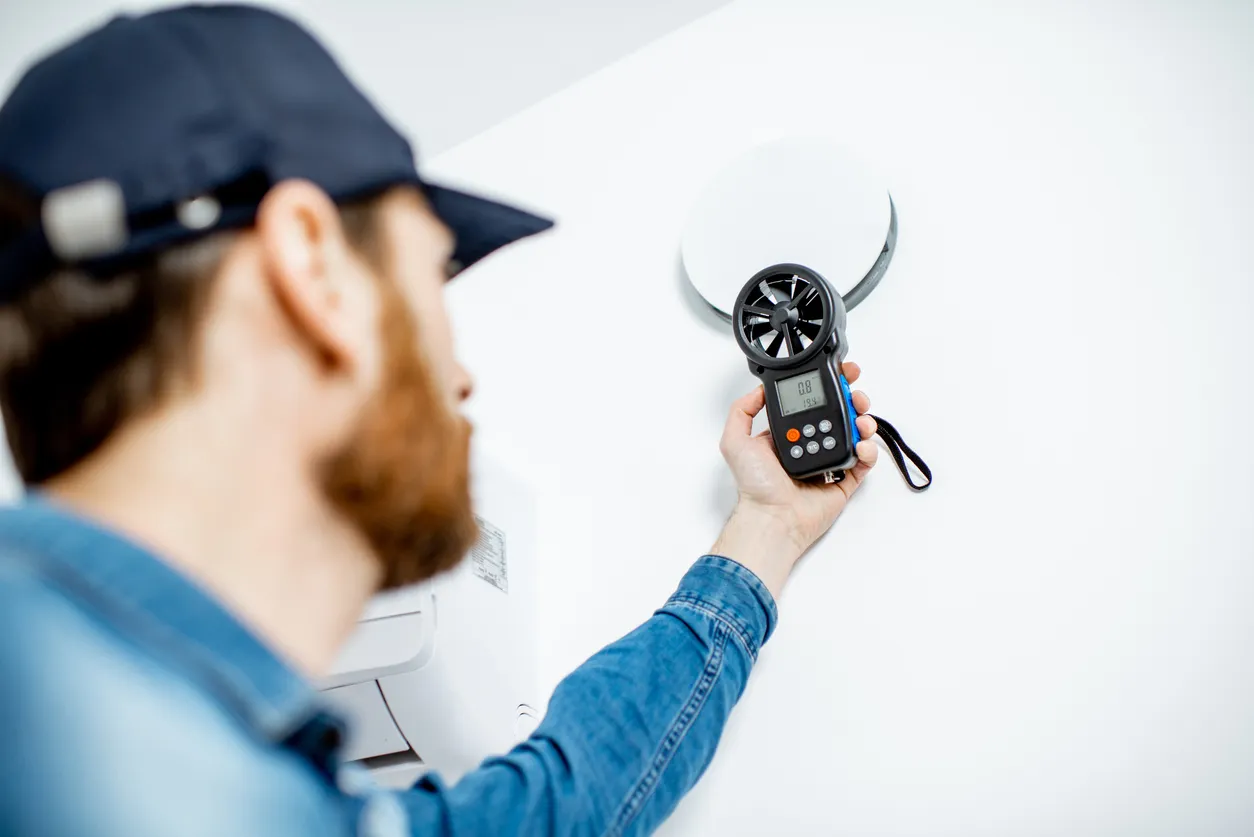
Advanced Diagnostic Testing
Before installing any equipment, we must understand the composition of your indoor atmosphere. Blindly installing a purifier may not solve high humidity issues or specific chemical off-gassing. Our testing process evaluates:
- Volatile Organic Compounds (VOCs): These are gases emitted from household products, paints, and building materials.
- Relative Humidity Levels: Excess moisture encourages mold growth, while overly dry air damages mucous membranes and wood furniture.
- Particulate Matter (PM2.5 and PM10): These microscopic particles can bypass your body’s natural defenses and enter the bloodstream.
- Carbon Dioxide (CO2) Levels: High CO2 indicates poor ventilation and stale air, often leading to headaches and fatigue.
Targeted IAQ Solutions
Once the data is analyzed, we implement solutions tailored to the specific contaminants found in your home.
- Whole-Home Air Purifiers: Unlike portable units that only treat one room, these systems attach to your central ductwork to filter the entire air volume of the house multiple times per hour. They capture smoke, bacteria, and virus-sized particles.
- UV Germicidal Lights: Installed within the air handler or ductwork, these focused ultraviolet lights neutralize biological contaminants like mold and bacteria on coils and in the air stream before they recirculate.
- Energy Recovery Ventilators (ERVs): These systems exchange stale indoor air for fresh outdoor air without losing the energy used to heat or cool your home. This is critical for modern, tightly sealed homes that lack natural airflow.
- Dehumidifiers and Humidifiers: Controlling moisture is the most effective way to prevent mold proliferation and dust mite activity. We install whole-home units that maintain humidity between the ideal 30% and 50% range.
The Process: From Assessment to Clean Air
Securing a healthy indoor environment is a technical process involving calculation, load analysis, and precise installation. We do not offer generic, one-size-fits-all products. The workflow ensures that the equipment installed is compatible with your existing HVAC infrastructure and capable of handling the square footage of your property.
Site Evaluation and Data Collection
The process begins with a physical inspection of your current ductwork and air handler. Technicians look for obvious sources of contamination, such as leaks in the return air ducts where attic dust may be pulled into the system. Air samples are taken to measure current pollutant levels. This establishes a baseline so we can measure the effectiveness of the installation later.
System Design and Selection
Based on the air analysis, we select the appropriate technology. If the primary issue is biological growth due to coastal fog, UV lights and dehumidification take priority. If the issue is agricultural dust or wildfire smoke, high-efficiency media filtration is the focus. We ensure that adding filtration does not create excessive static pressure that could damage your blower motor.
Precision Installation
Installation involves modifying the return or supply plenum of your HVAC system.
- First, power is disconnected, and the ductwork is accessed.
- Next, media cabinets or purification units are sealed into the metalwork to prevent air bypass.
- Then, electrical connections are made for powered units like UV lights or electronic air cleaners, often interlocked with the blower fan to run only when air is moving.
- Finally, technicians seal all seams with mastic or foil tape to ensure airtight performance.
Post-Installation Verification
After installation, the system is tested to ensure it operates correctly without restricting airflow. We review the maintenance requirements with you, such as filter replacement schedules and bulb life for UV systems, to ensure long-term performance.
Deciding Between Duct Cleaning or System Upgrades
Homeowners often struggle to determine if they simply need their ducts cleaned or if they require permanent equipment upgrades. While cleaning removes accumulated debris, it does not prevent new contaminants from entering or treat airborne viruses and gases. Understanding the distinction helps you allocate your budget effectively.
When to Choose Cleaning and Repair
- Visible Debris: If there is substantial dust buildup on the registers or inside the ducts.
- Recent Renovation: Construction creates drywall dust and sawdust that settles in the system.
- Pest Infestation: If rodents or insects have infiltrated the ductwork, cleaning and sanitizing are immediate requirements.
- Leaky Ductwork: If the return ducts are pulling in dirty air from crawl spaces or attics, sealing and cleaning the ducts is the first step before installing purifiers.
When to Install Whole-Home IAQ Systems
- Persistent Allergies: If occupants suffer from respiratory issues regardless of how often the house is cleaned.
- Recurring Mold: If you smell musty odors or see mold returning near vents, active treatment (UV lights/Dehumidifiers) is necessary to kill the source.
- Chemical Sensitivity: If odors from cooking, pets, or household cleaners linger for hours, ventilation and carbon filtration upgrades are required.
- High Efficiency Requirements: Organ & Sons Mechanical, Inc. recommends system upgrades when you want to protect high-efficiency HVAC equipment from debris buildup on coils, which ruins efficiency and shortens equipment lifespan.
Air Quality Challenges Specific to the Central Coast
Operating in the Santa Maria Valley presents unique environmental challenges that dictate how air quality systems must be configured. The local climate is Mediterranean, characterized by warm, dry summers and mild, wet winters, but the coastal influence adds specific variables that generic advice overlooks.
Managing Coastal Moisture and Marine Layer
The morning and evening fog common in this region introduces significant moisture into homes. While this keeps temperatures mild, it creates a breeding ground for mold and mildew within ductwork and on evaporator coils. Standard air conditioning removes some humidity, but during transitional seasons when the AC isn't running heavily, indoor humidity can spike. Dedicated whole-home dehumidifiers are often necessary to keep moisture levels below the threshold for mold growth without over-cooling the home.
Agricultural Dust and Pollen
Surrounded by active agriculture, homes in this area are subjected to higher loads of dust, soil, and pollen. This particulate matter is often finer than what standard fiberglass filters can catch. During harvest seasons or windy afternoons, this dust infiltrates homes through small cracks and ventilation points. High-MERV media filtration or HEPA bypass systems are essential for trapping these fine agricultural particulates effectively.
Compliance with Title 24 Standards
California’s Title 24 energy standards include strict requirements for indoor air quality and ventilation. Renovations or HVAC replacements often trigger the need to upgrade ventilation to ensure the home receives adequate fresh air exchange. We ensure that all IAQ installations meet these specific state codes, balancing energy efficiency with the required air changes per hour.
Why Specialized Air Quality Services Matter
Relying on store-bought, portable air purifiers often results in disappointment. These units typically lack the cubic feet per minute (CFM) capacity to treat an entire home and can be noisy and intrusive. Professional, whole-home solutions are silent, hidden, and far more effective because they treat the air at the source—your central HVAC system.
Professional Calibration vs. DIY
Off-the-shelf monitors and devices are often uncalibrated and can give false positives or negatives. Professional equipment is calibrated to detect specific micron sizes and chemical concentrations. This precision ensures that the solution implemented actually solves the problem rather than masking it.
Protecting Your HVAC Investment
Poor indoor air quality doesn't just hurt your health; it destroys your heating and cooling equipment. Dust and debris are the leading causes of compressor and blower motor failure. By filtering out contaminants before they reach critical components, you extend the life of your expensive HVAC system and maintain its energy efficiency rating.
The Value of Certified Installation
Improperly installed air purifiers or ventilators can alter the static pressure of your HVAC system, leading to reduced airflow, frozen coils, or overheated heat exchangers. Professional installation ensures that the pressure drop created by high-efficiency filters is accounted for and that the system airflow remains balanced.
Ensuring the air inside your home is clean, safe, and balanced is a vital investment in your health and property. With the specific climate challenges of the Central Coast, generic solutions rarely provide the protection families need. Organ & Sons Mechanical, Inc. provides the expertise and technology required to transform your indoor environment into a safe haven from outdoor pollutants — contact us today.
Call Us Now!
Take control of your home’s environment today. Secure a professional air quality assessment to identify hidden pollutants and breathe easier with a certified whole-home solution.
Contact Us