



HVAC Company in Santa Maria, CA
Expert HVAC solutions in Santa Maria. Immediate service for repairs, diagnostics, and installation. Licensed and certified. Contact us for swift assistance.
Restore Your Indoor Comfort Immediately with Expert Mechanical Solutions
When your heating or cooling system fails, the safety and livability of your home are instantly compromised, leaving you with an urgent need for professional intervention. Our certified technicians are ready for rapid dispatch across Santa Maria to diagnose the failure and restore your environment to normal as quickly as possible; contact us immediately or inquire about our flexible financing options to get started.
We understand that HVAC issues rarely happen at convenient times. You need a resolution that is fast, technically accurate, and transparent. Organ & Sons Mechanical, Inc. prioritizes efficient workflows that minimize downtime while adhering to strict industry standards:
- Same-day service availability ensures swift restoration of your temperature control systems.
- Transparent, flat-rate pricing models mean you approve the cost before work begins, with no hidden fees.
- Comprehensive labor and parts warranties protect your investment long after the truck drives away.
- We are fully licensed, bonded, and insured, ensuring every job meets local safety codes and manufacturer specifications.
Comprehensive HVAC Diagnostics and Repair Solutions
Effective repair work begins with precise diagnostics. When a technician arrives at your property in Santa Maria or the surrounding areas, the focus is immediately on identifying the root cause of the system failure. Modern HVAC systems are complex networks of electrical, mechanical, and airflow components. A guess-and-check approach is inefficient and costly. Instead, we utilize advanced diagnostic tools to measure static pressure, refrigerant levels, and electrical voltage to pinpoint the exact malfunction.
Upon arrival, the assessment covers several critical checkpoints to ensure a holistic view of the system's health:
- Airflow and Ductwork Analysis: Restricted airflow is a leading cause of compressor failure and frozen coils. Technicians measure air volume and pressure to ensure the blower motor is moving heat effectively. This step also involves checking for duct leakage, which can severely impact efficiency.
- Electrical Component Testing: Capacitors, contactors, and relays are high-wear items. We test the microfarad readings on capacitors and the amperage draw on motors to predict failures before they result in a total system breakdown.
- Refrigerant Cycle Inspection: For air conditioners and heat pumps, maintaining the correct subcooling and superheat levels is vital. Technicians check for leaks, verify the charge, and ensure the metering device is modulating flow correctly.
- Combustion Safety Checks: For gas furnaces, safety is paramount. We inspect the heat exchanger for cracks using combustion analyzers to detect carbon monoxide leaks, ensuring your heating season is safe.
Once the diagnostic phase is complete, you receive a detailed report of findings. This includes a clear explanation of what failed, why it failed, and the specific steps required to fix it. This approach moves beyond temporary band-aids to address underlying issues, preventing callbacks and recurring breakdowns.
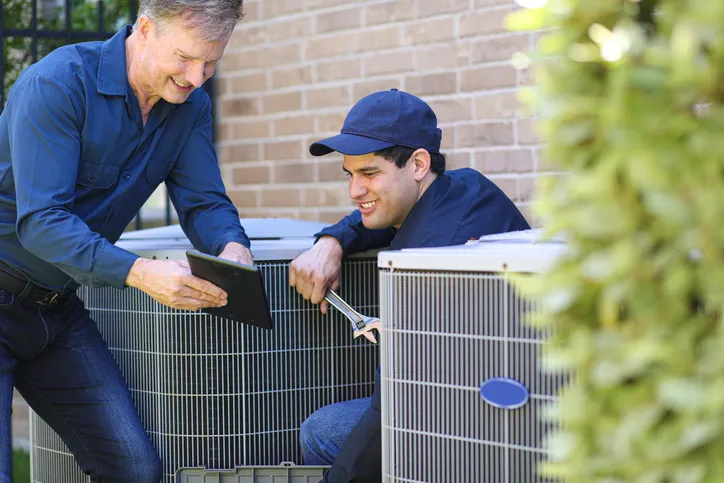
The System Installation and Replacement Process
There comes a point where repair is no longer the most economical or practical option. When installing a new system, precision during the installation phase dictates the efficiency and lifespan of the unit. A high-efficiency unit installed poorly will perform worse than a standard unit installed correctly. Our process is rigorous, adhering to ACCA (Air Conditioning Contractors of America) standards to ensure your new equipment delivers the comfort you pay for.
The installation workflow follows a structured path to ensure quality control at every stage:
- Manual J Load Calculation: First, we do not guess the size of the unit based on the old one. We perform a load calculation that factors in square footage, insulation levels, window direction, and local climate data. This ensures the new system is sized exactly for the heat gain and loss of your specific structure.
- Ductwork Modification and Sealing: Next, the existing ductwork is evaluated. If the new system requires different airflow parameters, we modify the plenums and transitions. Sealing accessible ductwork is critical to prevent conditioned air from leaking into attics or crawlspaces.
- Equipment Placement and Leveling: The new condenser and air handler/furnace are positioned on stable, vibration-absorbing pads. Proper leveling is essential for the drainage of condensate and the longevity of motor bearings.
- Brazing and Evacuation: During the connection of refrigerant lines, we use nitrogen purging to prevent oxidation inside the copper. Once connected, a vacuum pump removes moisture and non-condensables down to 500 microns, ensuring a pure, sealed system.
- Commissioning and Testing: Finally, the system is not just turned on; it is commissioned. We adjust blower speeds, verify static pressure, check gas pressure for furnaces, and measure temperature splits to confirm the unit is operating at manufacturer specifications.
This methodical process ensures that when the installation is complete, your system is optimized for peak performance, lower utility bills, and consistent comfort throughout the home.
Deciding Between System Repair and Full Replacement
Homeowners often struggle to decide whether to authorize a repair on an aging unit or invest in a replacement. Making the right financial decision requires analyzing the age of the equipment, the cost of the repair, and the potential energy savings of a new system. It is not just about the immediate cost, but the total cost of ownership over the next few years — check our hvac faqs for answers.
We assist you in navigating this decision using clear metrics and industry benchmarks:
- The 50% Rule: A common industry standard suggests that if the cost of the repair approaches 50% of the value of a new system, replacement is the wiser financial move. This is particularly true if the equipment is out of warranty.
- System Age and R-22 Availability: If your air conditioner is over 10-12 years old and utilizes R-22 (Freon) refrigerant, repair costs can be exorbitant due to the phase-out of this chemical. Newer systems use R-410A or A2L refrigerants, which are more environmentally friendly and affordable to service.
- Frequency of Breakdowns: If you have required multiple repairs in the last two years, the system has likely reached the end of its reliability curve. Continuing to pour money into an unreliable unit often costs more in the long run than a monthly payment on a high-efficiency replacement.
- Energy Efficiency Ratings: Older systems often operate at 8 to 10 SEER (Seasonal Energy Efficiency Ratio). Modern standards require a minimum of 14 to 15 SEER in many regions, with high-end units reaching over 20 SEER. Upgrading can result in significant monthly savings on electricity, effectively subsidizing the cost of the new installation over time.
Organ & Sons Mechanical, Inc. provides transparent assessments without sales pressure, offering data-backed recommendations so you can choose the path that aligns with your budget and long-term housing plans.
Navigating Local Climate and Regulatory Requirements
Operating in Santa Maria and the Central Coast requires specific attention to local climate patterns and regulatory codes. The region experiences a unique microclimate where cooling is necessary during summer peaks, but heating is vital during chilly coastal nights and winter months. Furthermore, California maintains some of the strictest energy codes in the nation, specifically Title 24, which impacts how HVAC work must be performed and verified.
Understanding these local factors ensures your project is compliant and optimized for the environment:
- Title 24 Compliance: For system replacements in California, permits are generally required, and the installation must meet Title 24 energy standards. This often triggers a requirement for third-party HERS (Home Energy Rating System) testing. This testing verifies that the ductwork is sealed properly and that the refrigerant charge is accurate. We manage this coordination to ensure your project passes all inspections.
- Coastal Corrosion Protection: For homes closer to the ocean, salt air can rapidly corrode standard aluminum fins on condenser coils. We recommend equipment with enhanced corrosion protection or specialized coatings to extend the life of the outdoor unit in marine environments.
- Heat Pump Viability: Given the moderate climate in the region, heat pumps are an increasingly popular choice. They provide both heating and cooling from a single electric unit. Because extreme freezing temperatures are rare, heat pumps operate at very high efficiency here, often outperforming dual-fuel systems in terms of operational cost.
- Utility Rebates and Incentives: Local utility providers often offer rebates for upgrading to high-efficiency heat pumps or smart thermostats. We stay updated on available programs to help you claim any credits or rebates you are eligible for, offsetting the initial installation cost.
Ignoring these local variables can lead to failed inspections, voided warranties, or equipment that rots out prematurely. We ensure every aspect of the job considers the specific geographical and legal landscape of the area.
Why Professional Mechanical Expertise Matters
The HVAC industry is flooded with handymen and unlicensed operators, but the complexity of modern thermal systems demands certified expertise. Your heating and cooling system is an appliance that utilizes high-voltage electricity, combustible gases, and high-pressure refrigerants. Improper handling of these elements poses fire hazards, health risks from carbon monoxide, and significant property damage.
Professional service offers guarantees that amateur work cannot match:
- Manufacturer Warranty Preservation: Most equipment manufacturers explicitly state that warranties are void if the equipment is not installed or serviced by a licensed professional. We ensure all paperwork is filed correctly so your parts coverage remains valid.
- Safety Training and Certification: Our technicians undergo continuous training on the latest safety protocols and building codes. Whether it is venting gas flues correctly or sizing breakers for electrical loads, safety is never compromised.
- Access to OEM Parts: We source Original Equipment Manufacturer (OEM) parts rather than cheap universal replacements. OEM parts are designed specifically for your unit, ensuring proper fitment and performance longevity.
- Advanced Tools and Technology: From digital combustion analyzers to thermal imaging cameras, we invest in the technology required to diagnose problems accurately. This eliminates guesswork and reduces the time technicians spend in your home.
When you hire a professional mechanical contractor, you are paying for the assurance that the job is done right the first time, protecting your home’s value and your family’s safety.
Securing Your Indoor Climate
Maintaining a consistent and safe indoor environment is essential for your daily life. Whether you are facing an emergency breakdown in the middle of a heatwave or planning a proactive system replacement to improve energy efficiency, the quality of the service provider determines the outcome. You need a partner who combines technical precision with local regulatory knowledge.
Organ & Sons Mechanical, Inc. is dedicated to delivering high-intent, solution-focused mechanical services that resolve your issues permanently. We handle the permits, the technical load calculations, and the complex repairs so you can focus on enjoying your home.
Take control of your indoor comfort today; book your service appointment or call us to speak with a specialist.
Contact Us