



Feeling the Effects of Poor Air Quality?
Have you noticed unusual smells, persistent humidity, or recurring health symptoms like headaches and congestion while inside your home or office? If your indoor environment feels "off," immediate verification is necessary to protect your health and property; contact us today to schedule your assessment. Residents in Santa Maria often underestimate the density of indoor pollutants until physical symptoms manifest. We provide the scientific data you need to make informed decisions about your property.
- Receive detailed, lab-verified air quality reports within 24 hours of sample processing.
- Benefit from state-of-the-art testing technology and certified environmental expertise.
- Get actionable insights and specific remediation protocols to drastically improve your indoor environment.
Licensed and certified service with over 10 years of local expertise ensuring your safety.
Immediate Solutions to Air Quality Concerns
Indoor air pollution can be two to five times higher than outdoor levels. Without professional testing, you are essentially guessing at the cause of respiratory issues, fatigue, or structural damage to your home. Professional testing bridges the gap between suspicion and certainty. It identifies the invisible particulates, biological growth, and chemical compounds that standard filtration systems may miss.
When you request a professional assessment in Santa Maria, you move beyond generic advice and receive a site-specific analysis. This is not a DIY kit that offers vague results. Professional service involves calibrated equipment, chain-of-custody protocols for samples, and interpretation by environmental specialists. The goal is to isolate the source of contamination—whether it is insufficient ventilation, water intrusion, or off-gassing materials—and provide a clear roadmap for correction.
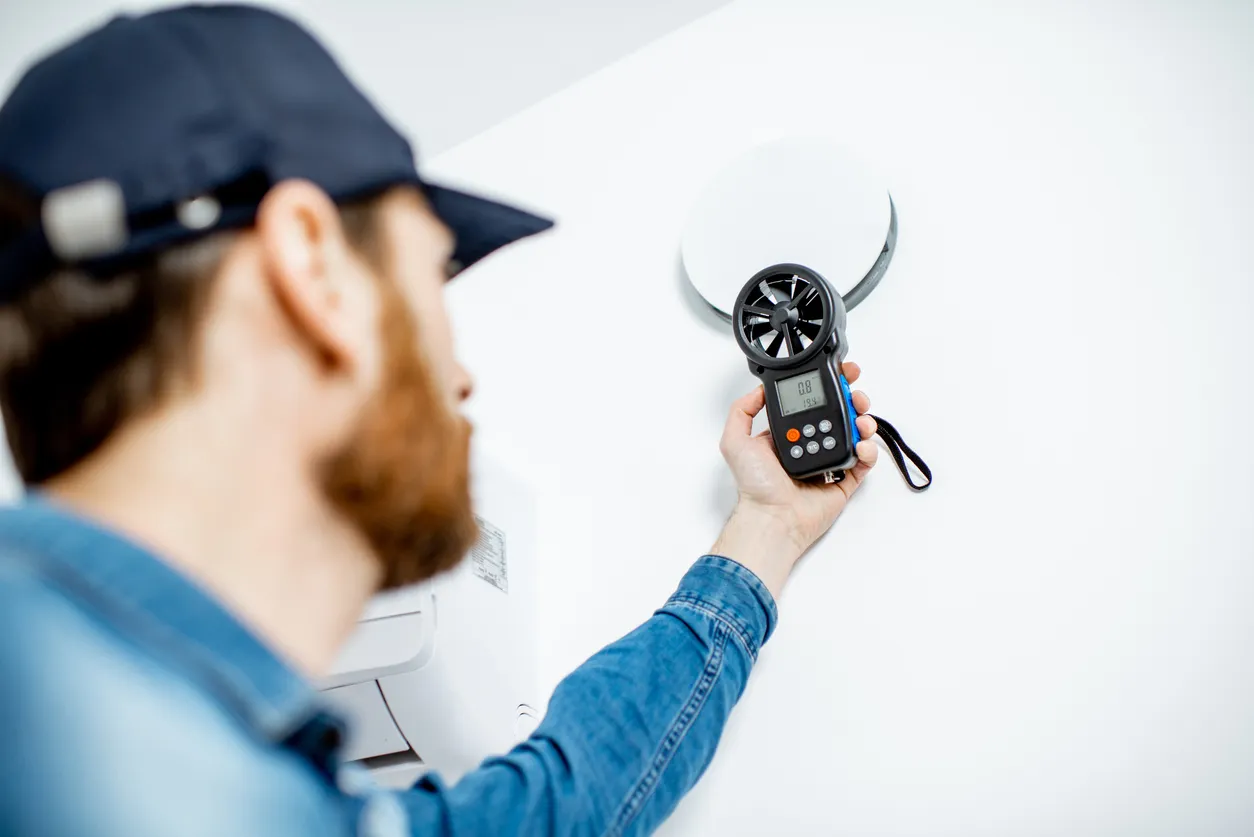
What is Included in Comprehensive Testing
A professional air quality test is a multi-faceted investigation. It is designed to capture a complete profile of the air you breathe. The scope of service typically includes distinct phases of data collection to ensure no variable is overlooked.
- Particulate Matter Analysis: We measure the concentration of microscopic particles (PM2.5 and PM10) such as dust, dander, and smoke that can penetrate deep into the lungs.
- Biological Contaminant Screening: This involves sampling for mold spores, pollen, and bacteria. This is critical in coastal regions where humidity fluctuations encourage biological growth.
- Volatile Organic Compounds (VOCs) Testing: We detect chemical off-gassing from paints, cleaning supplies, furniture, and building materials that contribute to "Sick Building Syndrome" — see our HVAC terminology guide.
- Environmental Parameter Logging: We record relative humidity, temperature, and carbon dioxide (CO2) levels. High CO2 levels often indicate poor ventilation, while incorrect humidity levels can accelerate mold growth.
- Carbon Monoxide and Radon Checks: These colorless, odorless gases pose immediate health risks and require specialized detection methods.
- Visual Inspection: Instruments are only half the equation. A physical inspection of HVAC components, crawl spaces, and potential moisture ingress points correlates data with physical evidence.
Your Path to Better Indoor Air: Our Testing Process
Accuracy in air quality testing relies heavily on the methodology used during collection. Organ & Sons Mechanical, Inc. utilizes a strict procedural framework to ensure that every sample taken is representative of the actual living conditions in the home. This process is non-invasive but thorough.
- Initial Consultation and Walkthrough: The process begins with a discussion regarding your specific concerns, such as areas with strong odors or rooms where health symptoms worsen. A technician performs a visual survey to identify red flags like water stains, condensation on windows, or visible dust accumulation on vents.
- Control Sample Collection: To understand your indoor air, we must compare it to the outdoor environment. An outdoor control sample is taken to establish a baseline. If outdoor mold counts are high due to local agriculture or seasonality, indoor levels must be interpreted relative to that baseline.
- Interior Sampling: Calibrated air pumps are set up in key areas of the home. These pumps pull a specific volume of air through a cassette or slide, capturing airborne particulates. Surface sampling (tape lifts or swabs) may also be conducted if visible growth is present to identify specific fungal species.
- Chain of Custody and Lab Analysis: Samples are sealed and documented to maintain a strict chain of custody. They are transported to an accredited laboratory where microbiologists and chemists analyze the slides. This prevents cross-contamination and ensures legal-grade reliability.
- Data Interpretation and Reporting: The raw data from the lab is translated into a readable report. We explain what the levels mean, whether they exceed safety standards, and specifically what is causing the elevation.
- Remediation Recommendations: The final step is the action plan. Based on the findings, we recommend specific solutions, such as installing a whole-home dehumidifier, upgrading to HEPA filtration, cleaning ductwork, or addressing water leaks.
Deciding on Solutions Based on Air Quality Results
Once the results are in, the decision to repair an existing system, install add-ons, or engage in full remediation depends entirely on the data. Not every air quality issue requires a complete HVAC overhaul, but ignoring high-risk results can lead to expensive medical bills and property restoration costs later — visit our HVAC FAQs page.
When Filtration Upgrades Are Sufficient
If the testing reveals elevated levels of dust, pollen, or pet dander, the solution is often mechanical. These particulates are relatively large and can be trapped effectively.
- Standard Filter Upgrades: Moving to a higher MERV rating can trap finer particles.
- Media Air Cleaners: Installing a thick media cabinet into the HVAC system provides significantly more surface area for capturing contaminants without restricting airflow.
- Duct Cleaning: If the source of the particulate matter is accumulated debris within the supply lines, professional duct cleaning removes the reservoir of dust.
When Active Purification is Required
If the report indicates high levels of bacteria, viruses, or VOCs, passive filtration is often insufficient. These contaminants are too small for standard filters or are chemical in nature.
- UV Germicidal Lights: For biological contaminants like mold spores and bacteria circulating in the HVAC system, UV lights installed in the coil or supply plenum neutralize the pathogens on contact.
- Air Scrubbers: These devices actively send oxidizers into the living space to neutralize surface contaminants and clump airborne particles together, making them easier to filter.
- Ventilation Systems (HRV/ERV): If CO2 and VOC levels are high due to a tightly sealed home, bringing in fresh, filtered outdoor air is the only way to dilute the pollutants.
When Source Removal is Necessary
In cases where testing confirms active mold growth (Stachybotrys or Aspergillus/Penicillium at elevated levels compared to outside), HVAC improvements alone are not the answer.
- Mold Remediation: Physical removal of infested drywall or insulation is required.
- Moisture Control: The water source causing the growth must be repaired.
- System Replacement: If the HVAC unit itself is heavily contaminated with mold that cannot be cleaned from the insulation, replacing the unit is often the most cost-effective and safe option.
Local Climate and Regulations: Why They Matter
Testing air quality in the Santa Maria Valley requires an understanding of the specific microclimate and local environmental factors. The region’s Mediterranean climate presents unique challenges that generic advice fails to address.
The Impact of Coastal Humidity
While summers are dry, the region experiences wet winters and frequent coastal fog. This moisture is a primary driver for biological growth inside homes.
- Winter Moisture: High ambient humidity during the rainy season can penetrate homes. If indoor ventilation is poor, this moisture settles on cold surfaces, creating ideal conditions for mildew and mold.
- Fog and Marine Layer: Even in drier months, the marine layer can keep morning humidity levels high. Homes without adequate dehumidification often struggle with "musty" odors that indicate early-stage microbial growth.
Agricultural and Wildfire Particulates
The local geography influences the types of particulates found indoors.
- Agricultural Dust: Proximity to active farming adds specific dust and pesticide drift concerns that are not present in urban-only environments. Testing can verify if your filtration is adequate to handle this increased load.
- Wildfire Smoke: During fire season, fine particulate matter (PM2.5) infiltrates homes through small cracks and vents. Post-season testing ensures that your home has not retained hazardous ash or smoke residues in carpets and ductwork.
Local Regulatory Standards
We adhere to guidelines and references provided by the Santa Barbara County Air Pollution Control District regarding safe emission levels and environmental health. Understanding local building codes and permit requirements for ventilation upgrades ensures that any recommended solution is compliant. When you seek testing, you are looking for alignment with these recognized safety standards, not arbitrary metrics.
Trusted by Homes & Businesses for Over a Decade
Air quality is invisible, which makes trust the most important component of the service. You need to know that the technicians entering your property are looking for the truth, not just a sales opportunity. We focus on data-driven results that stand up to scrutiny.
We distinguish our services through technical precision. We do not use general-purpose "handyman" tools; we use industrial-grade equipment capable of detecting trace elements. Our reports are comprehensive, breaking down complex chemical and biological data into clear, understandable language. We do not just hand you a lab sheet; we walk you through the implications of every data point.
Furthermore, we understand the urgency of these issues. If you are testing because of a health concern or a real estate transaction, time is of the essence. Our workflows are optimized to get samples to the lab and results back to you faster than standard industry timelines. This efficiency allows you to move forward with renovations, purchases, or medical discussions without unnecessary delays.
Call Us Now!
If you suspect your indoor environment is compromising your well-being, rely on Organ & Sons Mechanical, Inc. for definitive answers.
Don't let invisible pollutants dictate your health. secure your detailed air quality assessment today.
Contact Us