



Is Your Heating System Ready for the Santa Maria Climate?
Facing unexpected cold snaps or consistency issues with your home heating in Santa Maria? Ensure your comfort with a professionally installed, efficient heating system tailored to our unique climate. Contact us today at tel: or ask about our flexible financing options.
While the Central Coast offers mild weather, winter nights bring a damp chill that penetrates poorly insulated or under-heated homes. Relying on an aging furnace or an undersized heat pump often leads to skyrocketing utility bills and uneven temperatures across different rooms. Organ & Sons Mechanical, Inc. provides comprehensive installation services designed to address these specific load requirements:
- Secure a perfectly calibrated heating setup for year-round comfort.
- Benefit from rapid, professional installation to match your schedule.
- Enjoy peace of mind with robust warranties and local expert support.
Licensed and insured for your safety, with flexible financing available.
What a Modern Heating Installation Includes
Investing in a new heating system involves more than simply swapping out a gray metal box. It requires a holistic approach to air distribution, energy efficiency, and fuel combustion safety. When you authorize a new installation, you are purchasing a complete home comfort solution that includes proper equipment selection, rigorous safety checks, and integration with your existing ductwork and ventilation.
Current heating technology has advanced significantly over the last decade. Modern systems are designed to operate with variable-speed blowers and modulating gas valves. This means the system can adjust its output in small increments rather than blasting at full capacity every time the temperature drops slightly. The result is a consistent indoor climate without the "hot and cold spots" typical of older single-stage units.
A professional installation package typically covers:
- Site Evaluation and Load Calculation: Technicians assess the square footage, window placement, insulation levels, and orientation of the home. This data is used to perform a Manual J load calculation, ensuring the unit is neither too large (which causes short-cycling) nor too small (which causes the unit to run continuously).
- Equipment Selection: Based on the load calculation, you receive recommendations for high-efficiency furnaces or heat pumps that meet current Department of Energy standards and local California efficiency requirements.
- Ductwork Inspection: Existing ducts are checked for leaks, disconnects, or compression. A high-efficiency heater cannot perform correctly if the heated air is escaping into the attic or crawlspace before reaching the living areas.
- Safety Upgrades: The installation includes upgrading gas connections, flue pipes, and electrical wiring to meet current building codes. This is critical for preventing carbon monoxide leaks and fire hazards.
- Thermostat Integration: New units often require advanced thermostats to control humidity and variable fan speeds. The installation includes setting up and calibrating these controls.
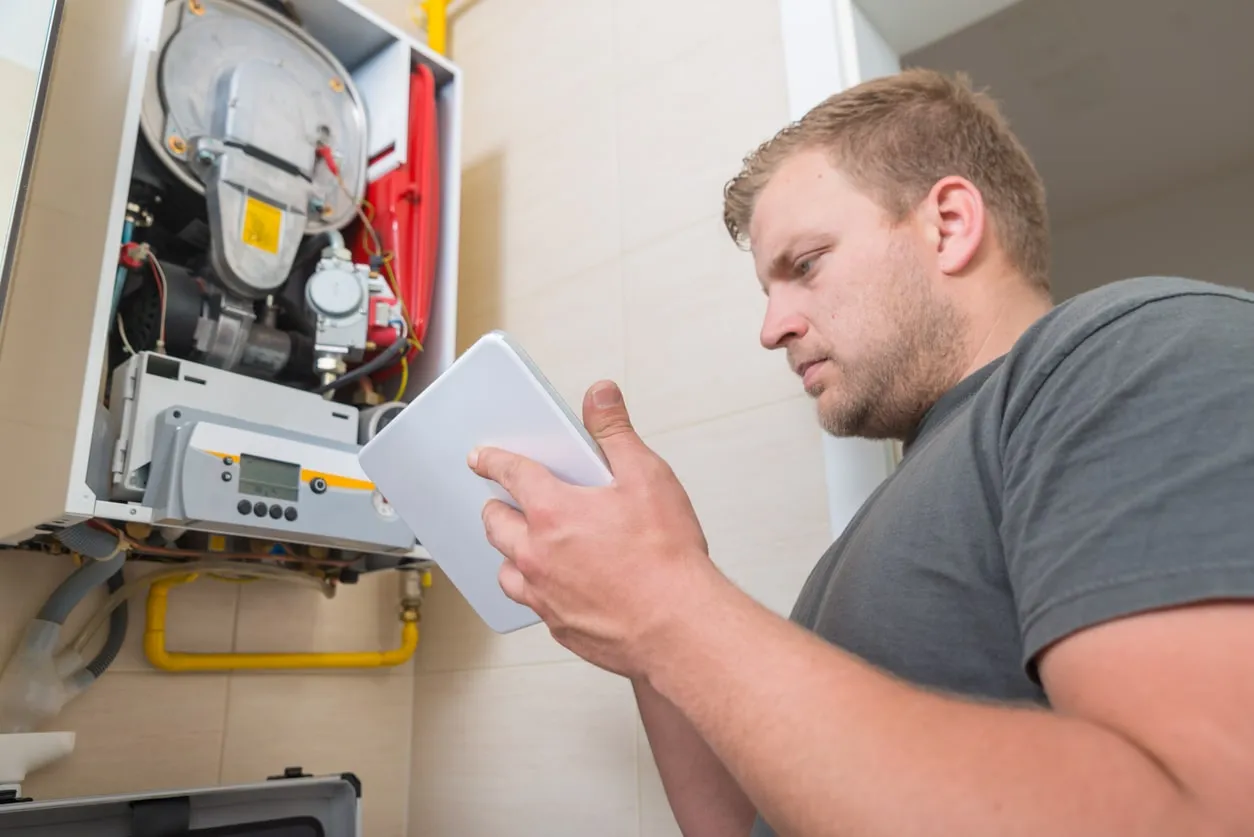
The Installation Process: From Assessment to Airflow
A systematic approach to heating installation ensures that the disruption to your daily routine is minimized and that the system performs at peak efficiency from day one. Professional installers follow a strict protocol to guarantee safety and cleanliness throughout the project:
- Pre-Installation Site Prep: The process begins with preparing the workspace. Technicians lay down drop cloths and floor protectors to ensure your home remains clean. They verify that all necessary equipment, parts, and tools are on-site before disabling the old unit. This preparation phase prevents unnecessary delays once the work begins.
- Decommissioning and Removal: The existing heating unit is disconnected from the gas line, electrical panel, and flue. Handlers carefully remove the old equipment, ensuring no damage occurs to the surrounding walls or flooring. Refrigerant (in the case of heat pumps) is recovered according to EPA regulations, and the old unit is hauled away for proper recycling and disposal.
- System Positioning and Connection: The new furnace or air handler is positioned and leveled. Proper leveling is essential for the correct drainage of condensate and the quiet operation of the blower motor. Once in place, technicians reconnect the plenum (the box connecting the furnace to the ductwork) and seal it with mastic or metal tape to prevent air leakage.
- Utility Integration: Gas lines are reconnected using new drip legs and shut-off valves where necessary. Electrical connections are wired to a dedicated circuit, ensuring the system has the correct amperage. If the system is a high-efficiency condensing furnace, PVC venting and condensate drain lines are installed to handle the exhaust and moisture byproducts safely.
- Commissioning and Testing: Once physically installed, the system is not just turned on; it is commissioned. Technicians measure static pressure to ensure airflow is within the manufacturer's specifications. They test the temperature rise (the difference between air entering and leaving the unit) to verify combustion efficiency. Gas pressure is adjusted at the manifold to ensure the burner fires cleanly.
- Final Walkthrough: The installation concludes with a demonstration. The lead technician shows you how to operate the new thermostat, how to change the filter, and explains the maintenance requirements to keep the warranty valid — visit our hvac faqs to learn more.
Deciding When to Replace vs. Repair
Homeowners often struggle with the decision of whether to pour more money into an existing system or invest in a replacement. While repairs can extend the life of a unit, there is a mathematical tipping point where replacement becomes the more financially sound option:
- The Age of the System: Most gas furnaces have a lifespan of 15 to 20 years, while heat pumps typically last 10 to 15 years. If your system is approaching or has exceeded this age range, major components like the heat exchanger or compressor are likely nearing failure. Replacement is often recommended for units over 15 years old to avoid emergency breakdowns during winter.
- The Cost of Repairs: A common industry standard is the "50% Rule." If the cost of a necessary repair approaches 50% of the value of a new system, replacement is the better investment. For example, replacing a cracked heat exchanger or a failed blower motor on an out-of-warranty unit is expensive and does not guarantee that another part won't fail shortly after.
- Rising Energy Bills: As heating systems age, they lose efficiency due to wear and tear, dust accumulation, and component degradation. If your energy bills have increased steadily over the past few winters despite usage remaining the same, the system is likely working harder to produce the same amount of heat. New systems with higher Annual Fuel Utilization Efficiency ratings can significantly reduce monthly costs.
- Safety Concerns: Older furnaces, particularly those that have not been maintained, are at higher risk for cracked heat exchangers. This defect can allow carbon monoxide to mix with the indoor air supply. If a technician identifies a combustion safety issue, immediate replacement is usually the only safe option.
- Uneven Heating and Noise: If some rooms are freezing while others are roasting, or if the system rattles, bangs, and squeals during operation, it signals that the unit is no longer capable of distributing air effectively. Organ & Sons Mechanical, Inc. can assess whether these issues are due to ductwork or the unit itself, helping you make an informed decision.
Local Considerations: Permits, Climate, and Regulations
Installing a heater in the Santa Maria area involves specific regional considerations that differ from other parts of the country. The coastal influence and state regulations dictate how systems are sized and permitted:
- Handling Coastal Humidity: The proximity to the ocean brings fog and higher humidity levels. While it doesn't get sub-zero cold, the dampness makes the air feel colder than the thermometer reads. Heating systems here must be sized to handle this specific type of "wet cold." Additionally, external units (like heat pumps) require corrosion-resistant coatings or placement strategies to mitigate the effects of salt air on the coils.
- Permitting and Title 24 Compliance: California has some of the strictest energy codes in the nation. Under Title 24, replacing a furnace often triggers requirements for duct testing and sealing. This ensures that the new, efficient unit isn't wasting energy through leaky ducts. Professional installers handle the permit application process and coordinate with local inspectors to ensure the installation passes all required HERS (Home Energy Rating System) testing.
- Gas vs. Electric Options: Depending on your specific neighborhood and utility setup, you may have access to natural gas, or you may rely on electricity. In recent years, high-efficiency electric heat pumps have become a popular choice in the region due to their ability to provide both heating and cooling, serving as a dual-purpose solution for the warm summers and cool winters.
The Importance of Professional Execution
The most important day in the life of a furnace or heat pump is the day it is installed. Industry studies indicate that a significant percentage of new HVAC equipment is installed incorrectly, which reduces efficiency and shortens the equipment's lifespan — check our hvac blog for more info:
- Proper Sizing Matters: An oversized unit will turn on and off frequently (short-cycling), which puts excessive stress on the starting components and fails to dehumidify the home. An undersized unit will run continuously, failing to reach the set temperature on colder nights. Professional load calculations eliminate this guesswork.
- Venting and Air Quality: Incorrect venting can lead to back-drafting, where exhaust gases are pulled back into the home instead of being expelled outside. Professionals ensure that flue pipes have the correct slope and diameter to establish a proper draft.
- Warranty Protection: Manufacturers generally require proof of professional installation to honor their equipment warranties. DIY installations or work performed by unlicensed handymen often void these warranties immediately, leaving the homeowner liable for expensive parts if a defect occurs.
Secure Your Comfort Today
A reliable heating system is essential for navigating the damp winters of the Central Coast. Delaying installation can lead to higher operational costs and the risk of system failure when you need heat the most. By choosing a professional team, you ensure that your new system is safe, code-compliant, and optimized for maximum efficiency. Organ & Sons Mechanical, Inc. is ready to help you select and install the ideal heating solution for your home.
Don't wait for the first frost to find out your heater is failing. Secure your installation date now to ensure a warm, safe, and energy-efficient home this season.
Contact Us