



Eliminate Hot Spots and High Energy Costs with Targeted Cooling
Dealing with rising temperatures in Santa Maria can be tough without a reliable air conditioning solution, especially if your current setup leaves certain rooms uncomfortable or drives up utility costs. Discover the efficiency and customized comfort of a professionally installed ductless AC system by contacting us today to schedule your consultation.
- Experience rapid, same-day installation capability to enjoy restored comfort sooner without major renovations.
- Lower your monthly energy bills significantly with a highly efficient, zone-based ductless system.
- Customize your cooling zones to match your specific living space needs, ensuring every room is the perfect temperature.
All installations are fully insured, permitted, and backed by a comprehensive service warranty to protect your investment.
Cool Your Home Efficiently with Ductless AC
Homeowners frequently face a difficult choice when trying to cool older properties or room additions: tear down walls to extend messy ductwork or suffer through the noise and inefficiency of window units. Ductless mini-split systems bridge this gap, offering a permanent, high-performance solution that integrates seamlessly into homes without existing air ducts. Organ & Sons Mechanical, Inc. specializes in assessing your specific layout to determine the optimal configuration for these systems, ensuring that air is delivered directly to the areas where you spend the most time.
The Mediterranean climate in Santa Maria, characterized by warm, dry summers and damp winters, makes a ductless heat pump an ideal dual-purpose investment. These systems not only provide powerful cooling when the coastal fog burns off and temperatures spike, but they also offer efficient heating during the wetter months from November to March. By removing the need for energy-consuming electric baseboards or inefficient portable heaters, a ductless installation creates a year-round climate control solution that responds instantly to weather changes.
Efficiency is the cornerstone of modern ductless technology. Traditional forced-air systems can lose up to 30% of their energy consumption through leaks, holes, and poor connections in the ductwork. Since mini-splits deliver air directly from the indoor unit to the room, this energy loss is virtually eliminated. This efficiency translates into lower operational costs and a reduced carbon footprint, allowing you to run your air conditioning without the dread of an exorbitant utility bill at the end of the month.
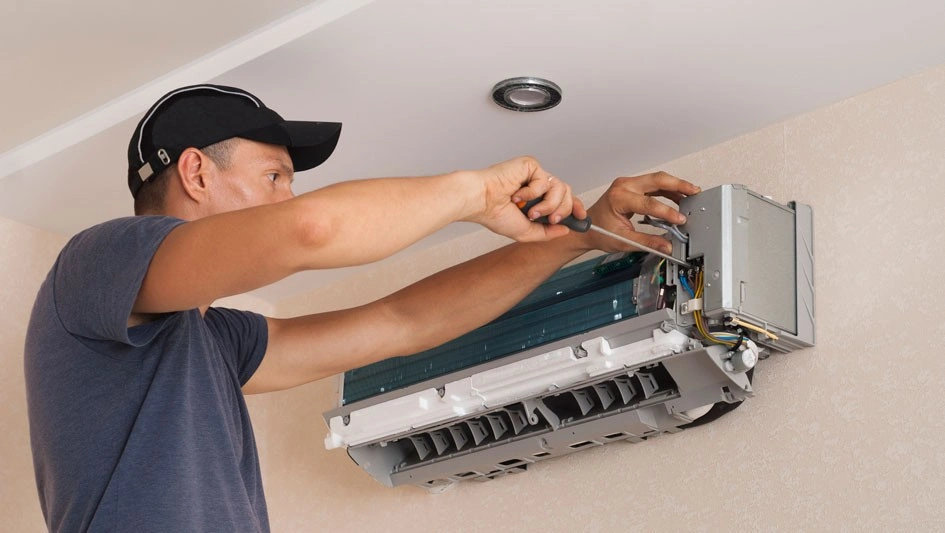
Installation Process: Quick, Clean, and Professional
One of the primary advantages of choosing a ductless configuration is the speed and cleanliness of the installation compared to central HVAC retrofits. A typical central air installation can take days or even weeks, requiring extensive drywall cutting, dust containment, and disruption to your daily routine. In contrast, a mini-split system is minimally invasive. The connection between the indoor and outdoor units requires only a small three-inch hole through the wall, which is easily sealed and hidden behind the unit itself.
When you authorize an installation, the focus turns immediately to logistics and site preparation. The scope of work involves mounting the indoor air handlers securely to the walls or ceilings, placing the outdoor condenser unit on a stable pad or bracket, and running the necessary refrigerant lines and electrical cabling. This process is designed to be low-impact. There is no need to rebuild soffits or patch large sections of drywall. Most installations for single-zone or multi-zone systems are completed within a single day, meaning you can wake up to a hot house and go to sleep in a cool, climate-controlled environment the same night.
Included in a professional installation is the precise handling of refrigerant and high-voltage electrical connections. These are not DIY tasks; they require specialized tools and certifications to ensure safety and system longevity. The installation team handles all logistical challenges, including navigating tight side yards or mounting units on second-story exterior walls. You receive a turnkey solution where the workspace is left clean, the system is fully tested, and the remote controls are programmed to your preferences before the technicians depart.
Understanding Your Ductless AC Installation Steps
A successful installation follows a rigorous, logical sequence to ensure maximum performance and aesthetic appeal. While every home in Santa Maria has unique architectural features, the fundamental process remains consistent to guarantee quality results.
- Load Calculation and Sizing: The process begins with a technical evaluation of the cooling load. Factors such as room square footage, ceiling height, insulation quality, window direction, and local solar gain are calculated. This ensures the unit selected has the correct BTU capacity. Undersizing leads to a unit that runs constantly without cooling, while oversizing causes "short-cycling," which increases humidity and wear on the compressor.
- Mounting the Indoor Unit: Technicians locate the ideal wall placement for the indoor evaporator. This spot must distribute air evenly throughout the room while remaining accessible for filter cleaning. A mounting plate is leveled and secured to the studs to support the unit's weight.
- Drilling and Line Running: A precise hole is drilled through the exterior wall. This hole accommodates the refrigerant lines, the condensate drain tube, and the communication wire. The hole is drilled at a slight downward angle to assist with gravity drainage for condensation.
- Installing the Outdoor Condenser: The outdoor unit is positioned outside, either on a concrete composite pad on the ground or mounted to the exterior wall using heavy-duty brackets. This placement is critical for airflow; the unit needs breathing room to disperse heat effectively.
- Making Connections: The copper refrigerant lines are flared and connected to both units. These lines form a closed loop. The electrical wiring is connected to a disconnect box for safety and code compliance.
- Vacuuming and Pressure Testing: Before releasing the refrigerant, the lines are vacuumed to remove all moisture and air. This step is non-negotiable; moisture inside the lines can freeze and damage the compressor or degrade the oil. A pressure test confirms there are no leaks in the system.
- Final Start-Up: The refrigerant is released, and the system is powered on. Technicians check the temperature delta (the difference between air intake and output) to verify the system is cooling strictly according to manufacturer specifications.
Deciding Between AC Repair and a New Ductless System
Homeowners often grapple with the decision to repair an aging window unit or central system versus investing in a new ductless installation. There comes a point where sinking money into repairs yields diminishing returns. If your current cooling system is over 10-15 years old, uses phased-out refrigerants like R-22, or requires a compressor replacement, the cost of repair often approaches or exceeds 50% of the cost of a new system. In such cases, replacement is the financially prudent choice — try our HVAC troubleshooter for help.
Beyond the immediate repair costs, consider the operational improvements. Older units often operate at a SEER (Seasonal Energy Efficiency Ratio) of 10 or 12. Modern ductless systems frequently achieve SEER ratings of 20 to 25 or higher. This leap in efficiency means the new system essentially pays you back over time in the form of reduced monthly energy expenditures. If your current system struggles to keep up with the midday heat or runs continuously without cycling off, it is likely near the end of its service life.
Zoning capability is another decisive factor. If you currently rely on a central thermostat that cools the entire house just to make one bedroom comfortable, you are wasting energy. A ductless multi-split system allows you to install heads in specific rooms (zones). You can keep the living room cool during the day and the bedrooms cool at night, without paying to condition unoccupied spaces. If your goal is granular control over your indoor environment rather than a blanket approach, a ductless transition is the superior option.
Adhering to Santa Maria's Building Codes and Climate Needs
Local building codes and environmental regulations play a significant role in HVAC projects. In California, Title 24 energy standards are among the strictest in the nation. Any new installation or significant alteration to an HVAC system must meet specific efficiency criteria. Compliance involves ensuring that the equipment selected meets minimum SEER and EER ratings and that the installation includes proper insulation for refrigerant lines. Professional installers manage the permitting process, ensuring that the electrical circuits are up to code and that the mechanical installation passes city inspection.
The local climate also dictates specific installation practices. Coastal areas are prone to marine layer fog, which contains salt and moisture that can accelerate corrosion on outdoor condenser coils. To mitigate this, it is essential to select equipment with anti-corrosive coatings or to apply protective treatments to the outdoor unit. Furthermore, proper drainage planning is vital. Given the precipitation patterns between November and March, the condensate drain must be routed effectively to prevent water from pooling near the foundation or creating slip hazards on walkways.
Electrical capacity is another local consideration. Many older homes in the area may have 100-amp electrical panels that are already near capacity. Installing a ductless system requires a dedicated circuit. A professional assessment includes checking the main panel to ensure it can handle the additional load or determining if a sub-panel or service upgrade is necessary to operate the AC safely. Skipping this step can lead to tripped breakers or fire hazards.
Why Choose Us: Certifications, Guarantees, and Local Expertise
Selecting the right contractor is as important as selecting the brand of equipment. A high-quality machine installed poorly will fail prematurely. Technical expertise ensures that the complex chemistry and physics of the refrigeration cycle work in harmony. Organ & Sons Mechanical, Inc. employs certified technicians who undergo continuous training on the latest inverter technologies and control systems. This expertise guarantees that your system is not just hung on the wall, but tuned for peak performance.
Warranties provide the ultimate peace of mind. While manufacturers offer limited warranties on parts, these are often contingent on proof of professional installation. We provide clear, comprehensive warranty coverage that extends to the labor and workmanship. If an issue arises post-installation, you have a local partner ready to diagnose and resolve the problem immediately, rather than navigating a complex corporate call center maze.
Finally, navigating the landscape of rebates and incentives requires industry insider knowledge. Utility companies and regional energy networks often offer rebates for upgrading to high-efficiency electric heat pumps. We assist in identifying these opportunities, helping you offset the initial investment cost. From accurate load calculations to the final walkthrough where we demonstrate how to clean your filters and use your remote, the focus is on delivering a hassle-free, high-value service that upgrades your home’s comfort for decades.
Call Us Today!
Ready to take control of your home’s climate? Contact us now to schedule your ductless AC installation and start saving energy today.
Contact Us