



HVAC Company in Greenfield, CA
Need fast and reliable HVAC services in Greenfield? Contact us today for expert repairs, installations, and maintenance. Immediate service available!
Restore Your Indoor Comfort With Reliable HVAC Solutions
Is your HVAC system failing at the worst possible time, leaving your home uncomfortably hot or freezing cold? You need a solution that is prompt, dependable, and doesn’t break the bank—contact us today to schedule an inspection or inquire about our flexible financing options. Homeowners in Greenfield and surrounding areas cannot afford to wait when temperature control fails. Whether it is a furnace that won't ignite in January or an air conditioner blowing warm air in August, the disruption to your daily life requires immediate professional attention:
- Experience immediate relief with same-day service options designed to get your system running quickly.
- Enjoy peace of mind knowing all work is performed by fully insured, licensed, and NATE-certified technicians.
- Save more on your long-term energy costs with our competitive pricing and access to high-efficiency equipment.
All services are backed by strong labor warranties and strictly adhere to local California building codes and Title 24 regulations.
Comprehensive Heating and Cooling Services Available Immediately
When you request service, the priority is diagnosing the root cause of the inefficiency or failure accurately. A functional HVAC system is complex, relying on the synchronization of electrical components, refrigerant cycles, and airflow dynamics. Organ & Sons Mechanical, Inc. provides a full spectrum of services designed to restore this synchronization immediately.
Diagnostic and Repair Services
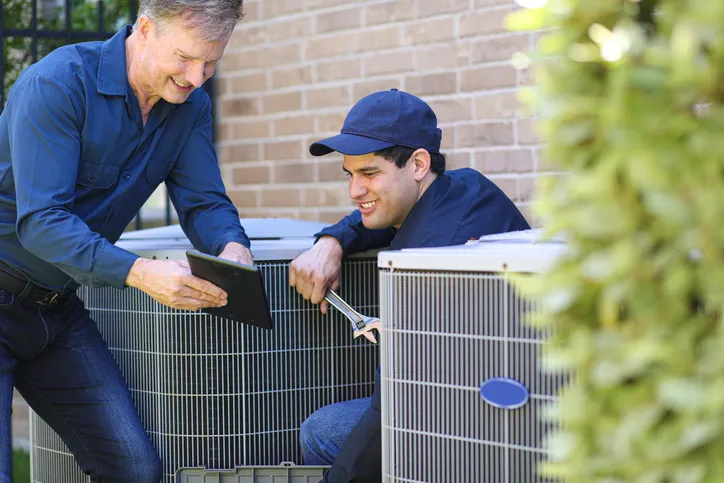
Technicians arrive equipped to handle a wide variety of mechanical failures on the spot. The diagnostic process involves testing electrical connections, measuring refrigerant levels, and inspecting the heat exchanger for cracks or corrosion. Common repairs handled immediately include:
- Replacing faulty capacitors or contactors that prevent the compressor from starting.
- Sealing refrigerant leaks and recharging the system to manufacturer specifications.
- Clearing clogged condensate drain lines that trigger safety float switches.
- Repairing or replacing blower motors to restore proper airflow.
- Calibrating or replacing malfunctioning thermostats for precise temperature control.
System Replacement and Installation
When a system is beyond repair or simply too old to be efficient, the focus shifts to replacement. This includes the removal of the old unit and the installation of modern, high-efficiency equipment. Options range from standard split systems and gas furnaces to dual-fuel heat pumps that offer versatility in Greenfield’s variable climate.
Preventative Maintenance
Long-term reliability requires proactive care. Maintenance services include cleaning condenser coils, inspecting burner assemblies, checking gas pressure, and tightening electrical connections. This service prevents emergency breakdowns during peak usage months and ensures the equipment operates at its rated SEER (Seasonal Energy Efficiency Ratio) level.
The Installation and Replacement Process
A proper installation is the most critical factor in the longevity and efficiency of your heating and cooling system. Simply swapping out a box is not enough; the infrastructure supporting the unit must also be evaluated. The process follows a strict protocol to ensure optimal performance:
- Load Calculation and Sizing: The process begins with a Manual J load calculation. This engineering calculation determines the exact heating and cooling capacity your home requires based on square footage, insulation levels, window orientation, and local climate data. Oversized units cycle on and off too frequently, leading to premature wear and high humidity, while undersized units run continuously without reaching the set temperature.
- Ductwork and Airflow Evaluation: Before the new unit is installed, the existing ductwork is inspected. Leaky or collapsed ducts can lose up to 30% of conditioned air before it reaches your living space. Technicians verify that the duct system is sized correctly to handle the airflow requirements of the new equipment.
- System Removal and Preparation: The old equipment is disconnected and removed safely. This involves recovering any remaining refrigerant according to EPA guidelines to prevent environmental contamination. The area is then prepped, which may include leveling the ground for a condenser pad or modifying the plenum in the attic or closet to fit the new air handler.
- Installation and Connection: The new equipment is set in place. For air conditioners and heat pumps, the refrigerant lines are brazed with nitrogen to prevent oxidation inside the copper tubing. Electrical whips and disconnect boxes are updated to meet current codes. For furnaces, gas lines are pressure-tested to ensure there are no leaks, and venting is checked for proper draft.
- Commissioning and Testing: Once physically installed, the system is commissioned. This involves a comprehensive startup sequence where static pressure is measured, refrigerant charge is fine-tuned using subcooling and superheat methods, and temperature splits are verified. This step confirms that the system is operating exactly as the manufacturer intended.
Deciding Between Repair and Replacement
Determining whether to invest in a repair or commit to a full system replacement is a financial and logical decision. While a repair might seem cheaper upfront, it can be more costly over time if the unit is nearing the end of its lifespan.
The 5000 Rule
A common industry benchmark is the "5000 Rule." Multiply the age of the equipment by the estimated repair cost. If the result exceeds $5,000, replacement is generally the more fastidious choice. For example, if a 12-year-old unit requires a $500 repair (12 x 500 = 6,000), the money is better spent on a new system.
Age and Reliability
Most heat pumps and air conditioners have a service life of 10 to 15 years, while furnaces may last 15 to 20 years. If your system is within this age range and requires frequent repairs, components are likely failing in succession. Replacing the unit eliminates the cycle of recurring breakdown costs.
Efficiency and Energy Bills
Older systems often operate at 8 to 10 SEER, whereas modern units start at 14.3 SEER2 and go much higher. Upgrading to a modern system can reduce cooling and heating costs significantly. If you have noticed a steady increase in your utility bills despite normal usage, the equipment has likely lost its efficiency.
Refrigerant Availability
If your older AC unit relies on R-22 refrigerant (Freon), repairs involving refrigerant leaks are exorbitantly expensive because R-22 is no longer produced or imported. Modern systems use R-410A or newer, eco-friendly alternatives. If a major component like a compressor fails in an R-22 unit, replacement is the only viable option.
Local Climate and Regulatory Considerations
Operating HVAC equipment in Greenfield and the broader Monterey County region requires specific attention to environmental and regulatory factors. The local climate dictates specific equipment needs, while state laws dictate how that equipment is installed.
Seasonality and Usage
The region experiences warm to hot temperatures from June through August, placing a heavy load on air conditioning systems. Conversely, winters can bring a distinct chill, requiring reliable heating from December to February. Transition periods in Fall and Spring often require systems that can toggle between heating and cooling efficiently. This makes heat pumps an increasingly popular choice for the area, as they handle both functions effectively in moderate climates.
California Title 24 Compliance
California has some of the strictest energy codes in the nation. Any significant alteration to an HVAC system, including replacement, triggers Title 24 requirements. This may mandate duct leakage testing, the installation of smart thermostats, and verification of airflow. Professional installers ensure all work is compliant, filing the necessary HERS (Home Energy Rating System) registry forms so that the project passes city inspections.
Permits and Safety
Proper permitting is not optional. It serves as a safeguard for the homeowner, ensuring that gas lines are safe, electrical circuits are not overloaded, and the unit is structurally secure. Insurance companies may deny claims related to unpermitted work. Licensed contractors handle the permitting process with the City of Greenfield or county officials, ensuring the project is legal and documented.
Rebate Programs
Various local utility providers and state programs offer rebates for upgrading to high-efficiency heat pumps or furnaces. These incentives can significantly offset the initial investment cost. Identifying which equipment qualifies for these rebates is part of the service provided during the consultation phase.
Technical Expertise and Professional Standards
The difference between a system that lasts 20 years and one that fails in five often comes down to the quality of the installation and maintenance. Modern HVAC equipment is sophisticated, utilizing variable-speed motors, communicating thermostats, and complex control boards. Organ & Sons Mechanical, Inc. employs technicians who engage in continuous training to stay ahead of these technological advancements.
Advanced Tooling and Diagnostics
Guesswork has no place in HVAC service. Professionals utilize digital manifolds for precise pressure readings, combustion analyzers to ensure furnace safety, and thermal imaging to detect duct leaks or insulation gaps. This scientific approach ensures that problems are solved at the source, rather than just treating symptoms.
Safety Protocols
Heating systems often involve combustible gases and high-voltage electricity. A cracked heat exchanger in a furnace can leak carbon monoxide into the home, a silent and deadly hazard. Professional maintenance includes rigorous safety checks, including carbon monoxide testing and gas leak detection, to ensure the safety of the household.
Warranty Protection
Equipment manufacturers strictly enforce warranty policies. They require proof that the system was installed and maintained by a licensed professional. DIY repairs or work performed by unlicensed handymen can void the manufacturer’s warranty, leaving the homeowner responsible for the full cost of future parts replacements.
Securing Your Home Comfort
Your home’s comfort system is an essential utility, not a luxury. Whether facing a sudden breakdown during a heatwave or planning a proactive upgrade to reduce energy consumption, the goal is a reliable, efficient, and safe indoor environment. Navigating the complexities of SEER ratings, zoning, and air quality requires a partner who understands the specific demands of the California Central Coast climate.
By choosing a professional service, you ensure that your system is sized correctly, compliant with all state energy codes, and protected by comprehensive warranties. Don't let a failing system compromise your comfort or safety.
Take control of your indoor climate today. Contact our team to schedule your service, repair, or free estimate for a new system installation.
Contact Us