



Is Your Heat Pump Ready for Santa Maria's Climate?
Struggling with an inefficient heat pump in the varying Santa Maria climate is a common frustration for homeowners, but you do not have to endure uncomfortable temperatures in your own home. Contact our team today to schedule an inspection or repair to restore your system's performance.
An unserviced heat pump can lead to skyrocketing energy bills and uneven heating or cooling just when you need it most. Our service approach ensures your system is optimized for local weather patterns.
- Ensured same-day service appointments available for urgent issues.
- Expert repair and maintenance to maximize energy efficiency and system longevity.
- Clear pricing with no hidden costs before any work begins.
Licensed and fully insured — all services guaranteed for your peace of mind.
Professional Heat Pump Services Matched to Local Weather Needs
Heat pumps are uniquely suited for the Central Coast, but they require specific attention to handle the distinct weather patterns found here. Unlike a standard air conditioner or furnace that operates seasonally, a heat pump works year-round to move heat in or out of your home. In Santa Maria, where the climate is Mediterranean with wet winters and dry, warm summers, this continuous operation places significant stress on the system's components.
During the summer months, temperatures frequently reach the mid-70s to low 80s. Your heat pump acts as an air conditioner, removing indoor heat and displacing it outside. However, the winter season brings temperatures dropping into the 60s and high humidity due to the 15-18 inches of annual rainfall. This moisture creates a specific challenge: the outdoor unit must manage condensation and frost accumulation effectively. If a heat pump is not properly serviced, the defrost cycle may fail during these damp, cooler months, leading to ice buildup that damages the fan blades and compressor.
Organ & Sons Mechanical, Inc. provides service protocols designed specifically for these conditions. We focus on ensuring the reversing valve—the component that switches the unit from cooling to heating—is functioning correctly. We also inspect the outdoor coil for debris and organic matter that accumulates during the dry, windy season, which can turn into a sludge-like blockage once the winter rains begin. Proper airflow is critical; without it, the heat exchange process becomes inefficient, forcing the system to run longer cycles to maintain the set temperature.
Regular professional attention addresses these climate-specific wear patterns. By ensuring the system can handle the transition from dry heat to damp cold, we prevent the "emergency heat" or auxiliary strips from engaging unnecessarily, which is a primary driver of high winter electric bills in this region.
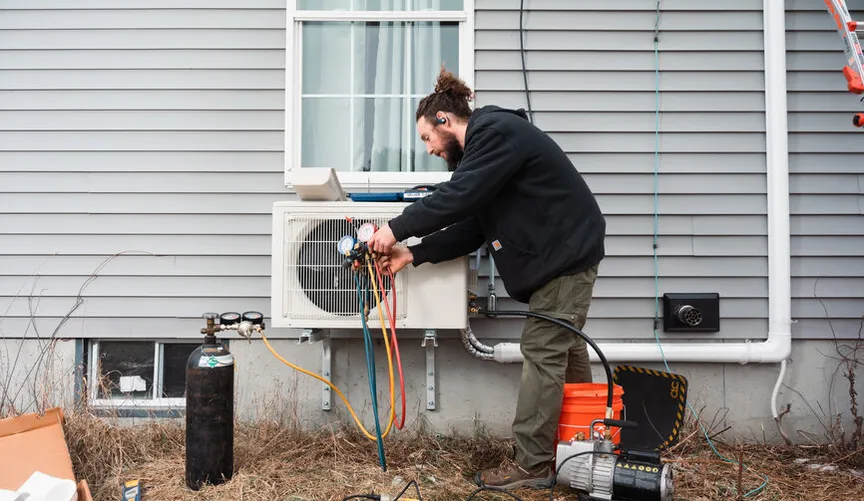
Immediate Assistance and Comprehensive Care
When a heat pump fails or begins to drift from its optimal performance, immediate intervention is necessary to prevent minor issues from becoming catastrophic failures. A system that struggles to start, makes grinding noises, or blows lukewarm air requires a technical assessment rather than a simple filter change. Our approach to service is comprehensive, covering every mechanical and electrical subsystem within the unit.
We begin with a thorough examination of the refrigerant levels. Heat pumps rely on a precise charge of refrigerant to transfer heat energy. Even a minor leak can reduce capacity significantly, causing the compressor to overheat as it attempts to compensate. We check for leaks using electronic detectors and repair the line set before recharging the system to manufacturer specifications.
Electrical integrity is another focal point of our service. As heat pumps vibrate during operation, electrical connections can loosen over time. This leads to arcing, pitted contactors, and potential shorts that can fry the control board. We tighten all connections, measure the voltage and amperage draw of the compressor and fan motors, and test the capacitors. A failing capacitor is a common cause of "hard starting," where the unit struggles to turn on, placing immense strain on the compressor windings.
Our comprehensive care includes:
- Coil Cleaning and Inspection: We chemically clean the evaporator and condenser coils to remove dust, pollen, and grime that act as insulators and block heat transfer.
- Drain Line Clearance: We flush the condensate drain line to prevent water backups that can trigger safety switches and shut down the system or cause water damage to the property.
- Thermostat Calibration: We verify that the thermostat is reading indoor temperatures accurately and communicating correctly with the air handler and outdoor unit.
- Blower Motor Analysis: We inspect the blower wheel for dust buildup and check the motor bearings for wear to ensure quiet, efficient air distribution.
- Reversing Valve Testing: We cycle the system between heating and cooling modes to ensure the valve shifts smoothly without sticking.
- Defrost Board Verification: We test the sensors and logic board that control the defrost cycle to ensure the outdoor unit remains ice-free during the rainy season.
From Diagnosis to Solution: Our Process
Restoring a heat pump to peak efficiency is a structured process. We do not guess at the problem; we follow a rigorous diagnostic path to isolate the root cause of the inefficiency or failure. This ensures that we solve the underlying issue rather than just treating the symptom.
- Initial System Assessment: The technician arrives and performs a visual inspection of the indoor and outdoor units, checking for obvious signs of damage, oil spots indicating leaks, or airflow restrictions.
- Operational Testing: We run the system in both heating and cooling modes (weather permitting) to monitor pressures and temperatures. We measure the "temperature split"—the difference between the supply and return air—to gauge performance.
- Component Isolation: If a fault is detected, we isolate the specific component. For example, if the compressor is not running, we test the power supply, the contactor, and the capacitor individually to determine exactly which part has failed.
- Detailed Explanation: Once the issue is identified, we provide a clear explanation of what is wrong, why it happened, and the options for repair. We explain the impact on the system’s longevity and efficiency.
- Execution of Repairs: Upon approval, we proceed with the repair using high-quality parts. This may involve brazing new lines, replacing electrical components, or adjusting airflow settings.
- Verification and Testing: After the repair is complete, we do not simply leave. We restart the system and monitor it through a full cycle to verify that the repair holds and that all other parameters are within normal ranges.
- Maintenance Recommendations: We provide specific advice on how to maintain the repairs, such as filter change schedules or clearance requirements for the outdoor unit.
Deciding Between Heat Pump Repair and Replacement
Homeowners often face the difficult decision of whether to invest in repairs for an aging unit or to replace the system entirely. This decision should be based on data and financial logic rather than guesswork. Several factors influence the viability of a repair.
The age of the system is the primary indicator. Heat pumps in the Santa Maria area generally last between 10 to 15 years, depending on maintenance history and coastal proximity. If a unit is over 12 years old and requires a major repair—such as a compressor replacement or a new reversing valve—the investment may not yield a good return. Technology has advanced significantly, and newer units offer much higher efficiency ratings (SEER2 and HSPF2) that can lower monthly utility costs.
Frequency of breakdowns is another critical metric. If you find yourself calling for service multiple times a year, the system is likely unreliable and nearing the end of its service life. We often apply the "50% Rule": if the cost of the repair approaches 50% of the value of a new system, replacement is usually the wiser financial choice.
Organ & Sons Mechanical, Inc. helps you weigh these factors by providing a transparent analysis of your current system's health. We look at the condition of the coils, the integrity of the ductwork, and the availability of parts (especially for older units using R-22 refrigerant).
Consider replacement if:
- The system uses phased-out R-22 refrigerant, making recharging prohibitively expensive.
- The heat pump has a SEER rating below 13, resulting in higher electricity bills compared to modern standards.
- There are major leaks in the coil system that cannot be easily patched.
- The compressor makes loud, mechanical noises indicating internal mechanical failure.
- Uneven heating or cooling persists despite calibration and airflow adjustments.
Consider repair if:
- The system is under 10 years old and is still under the manufacturer's warranty.
- The issue is a minor electrical component like a capacitor, contactor, or sensor.
- The unit has been well-maintained and shows no signs of major corrosion.
- The cost of the repair is low relative to the cost of a new installation.
Santa Maria Specifics: Permitting and Peak Service Times
Operating a heat pump in Santa Maria involves navigating local regulations and understanding regional demand cycles. When a repair escalates to a replacement, or when significant modifications are made to the HVAC system, adherence to California’s building codes is mandatory.
Permitting is a crucial aspect of compliance. The California Energy Code (Title 24) sets strict standards for energy efficiency. For homeowners in Santa Maria, this means that new installations or major alterations must meet specific SEER and HSPF ratings. Furthermore, duct testing is often required to ensure that conditioned air is not leaking into attics or crawlspaces. We handle the logistical burden of verifying that all work meets local safety and efficiency codes, ensuring that your home remains compliant and safe.
Seasonality also dictates service availability and urgency. While the climate is mild, the shift from the dry season to the rainy season creates a spike in service calls.
- Winter Peak: The first cold snap usually exposes issues with the heating cycle or the defrost board. Since the region receives most of its rainfall in winter, outdoor units that have not been serviced may struggle with moisture management.
- Summer Demand: As temperatures rise in late spring, residents switch to cooling. Systems with refrigerant leaks often fail to keep up with the midday heat.
- Shoulder Seasons: The best time for preventative maintenance is during the spring and fall. Addressing potential issues during these milder months prevents emergency breakdowns during peak temperature extremes.
Local utilities may also offer rebates or incentives for upgrading to high-efficiency heat pumps. These programs change frequently, but upgrading from an older gas furnace or inefficient electric resistance heating to a modern heat pump is often encouraged. We stay informed about current opportunities to help you maximize the value of your HVAC investment.
Why Choose Us: Local Experience and Expertise
Selecting a service provider involves looking for technical proficiency and a commitment to operational integrity. We understand the specific load calculations required for homes in this area, ensuring that we do not just fix the machine, but optimize the comfort of the entire home.
Our technicians are trained to troubleshoot complex heat pump systems, from variable-speed inverters to communicating thermostats. We do not incentivize our team to upsell unnecessary parts; our goal is to restore your comfort as quickly and cost-effectively as possible. We arrive with fully stocked trucks, prepared to handle the majority of common repairs on the spot, reducing downtime for your household.
We prioritize clear communication. You will understand the scope of the work, the timeline, and the cost before we proceed. Our local presence means we are accessible for follow-up questions and warranty support. We treat your home with respect, using drop cloths and shoe covers to maintain cleanliness while we work.
Call Us Now1
When you need reliable heat pump service that understands the nuances of the local climate and building codes, trust the experts who have served this community effectively.
Contact Organ & Sons Mechanical, Inc. today to schedule your service and ensure your heat pump performs perfectly all year round.
Contact Us