



Is Your Current Heating System Failing to Keep Up with Goleta Winters?
Facing unexpected cold snaps in Goleta can be uncomfortable when your equipment is outdated or efficient operation is compromised. Ensure your home remains cozy with a professionally installed, energy-efficient heat pump by contacting us today to schedule your consultation or to discuss financing options.
- Slash your energy bills with modern, efficient heat pump technology.
- Expert installation by certified technicians—done right the first time.
- Rapid response and flexible scheduling to fit your busy life.
Fully licensed and insured, with attractive financing options to ease your investment.
Why a Heat Pump System is Your Best Choice for Goleta Climate
Homeowners in California often struggle to find a single HVAC solution that addresses the specific nuances of the local weather patterns. The Mediterranean climate here brings mild, wet winters and warm, dry summers, creating a unique demand on residential climate control systems. Traditional furnaces can be overkill for the moderate cold, yet they often lack the versatility required when the seasons shift. A heat pump installation addresses this duality perfectly by providing both heating and cooling from a single unit.
Rather than generating heat by burning fossil fuels, a heat pump works by transferring thermal energy. During the winter months in Goleta, the system extracts latent heat from the outdoor air—even when it feels cold outside—and compresses it to warm your interior. In the summer, the process reverses, acting exactly like a high-efficiency air conditioner to remove heat from your home. This bidirectional capability makes it the most practical and energy-conscious choice for the region.
Transitioning to this technology requires precise sizing and an understanding of the local thermal load. Organ & Sons Mechanical, Inc. specializes in matching specific property requirements with high-performance equipment. The result is a system that runs longer at lower capacities to maintain constant comfort, rather than short-cycling and causing temperature spikes. This steady operation is crucial for managing humidity levels during the wet season while keeping electricity consumption minimal.
What to Expect When You Install a Heat Pump
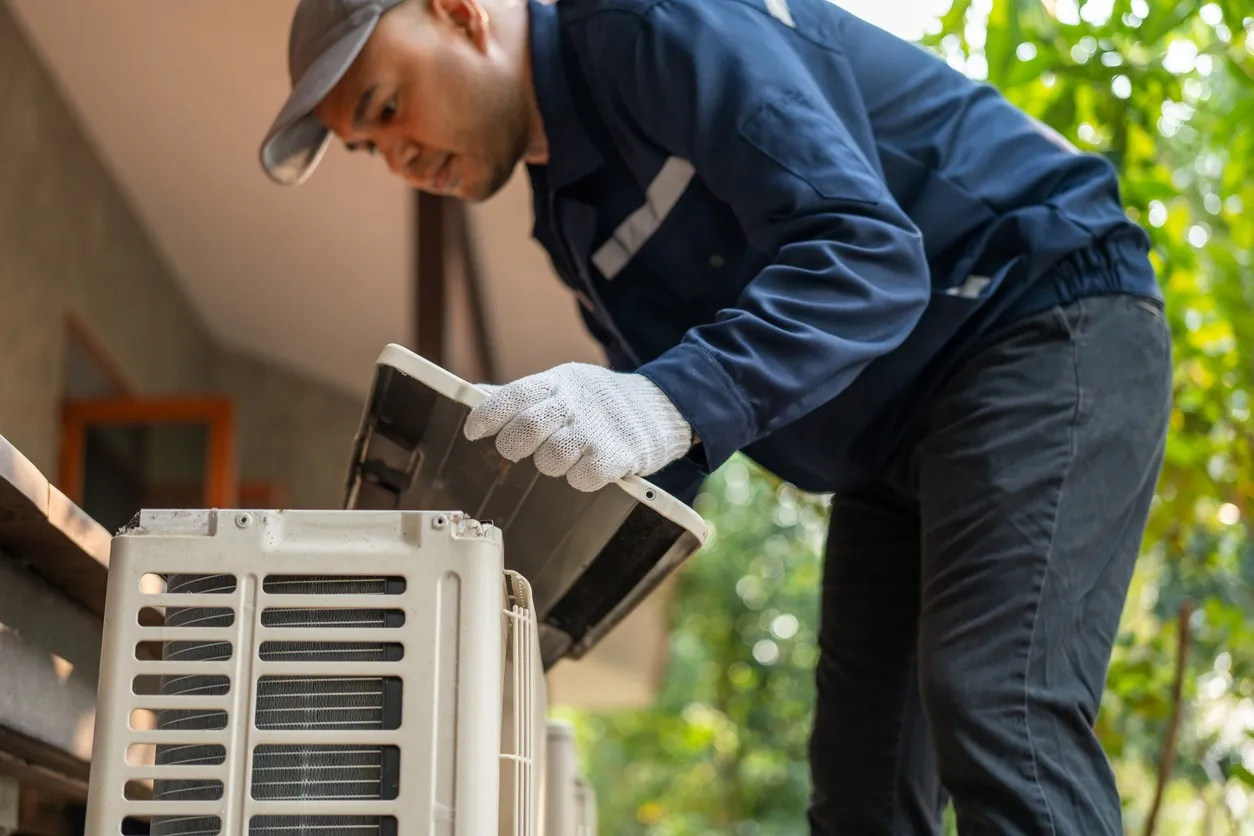
Investing in a new heating and cooling system is a significant decision involving more than just swapping out a box. A proper installation begins with a comprehensive assessment of your home’s infrastructure. Before any equipment is ordered, technicians must evaluate the existing ductwork, electrical capacity, and insulation levels. In many older homes, the ductwork designed for a gas furnace may need modification to handle the airflow requirements of a modern heat pump.
When you move forward with a professional installation, you are purchasing a complete home comfort solution. The scope of work typically includes the removal and environmentally safe disposal of your existing HVAC equipment. Technicians will prepare the installation site, which may involve pouring a new concrete pad or installing wall brackets to ensure the outdoor unit remains level and free from debris.
The installation package generally covers:
- Load Calculation: A Manual J calculation to determine the exact heating and cooling load of your specific floor plan, ensuring the unit is neither undersized nor oversized.
- Equipment Selection: Procurement of the condenser (outdoor unit) and air handler (indoor unit) that match the calculated SEER2 and HSPF2 efficiency ratings.
- System Integration: Connection of the new unit to existing or modified ductwork, ensuring airtight seals to prevent energy loss.
- Thermostat Configuration: Installation and programming of a smart thermostat or control interface to optimize the heat pump’s staging and auxiliary heat settings.
- Electrical Safety: Verification that your electrical panel can support the amperage requirements of the heat pump and backup heating strips.
Our Heat Pump Installation Process – Step by Step
A high-performance heat pump is only as good as its installation. Even the most expensive equipment will fail prematurely if corners are cut during the setup. We adhere to a strict, manufacturer-approved protocol to ensure longevity and efficiency.
- Site Preparation and Protection: Technicians arrive on time and lay down drop cloths to protect your flooring. The workspace is cleared, and safety checks are performed on the gas and electrical lines before disconnecting the old unit.
- Removal of Old Equipment: The existing condenser and air handler are disconnected. Any remaining refrigerant in the old system is recovered according to EPA guidelines to prevent atmospheric venting. The old units are then hauled away for recycling.
- Positioning the Outdoor Unit: The new heat pump condenser is positioned on a vibration-absorbing pad or stand. This step is critical for noise reduction and proper drainage. We ensure the unit has adequate clearance on all sides to allow for optimal airflow, which is essential for the heat exchange process.
- Installing the Indoor Air Handler: The indoor unit is secured in place, whether in a closet, garage, attic, or crawlspace. Technicians verify that the unit is level to ensure proper condensate drainage, preventing water damage to the property.
- Refrigerant Line Set Installation: Copper refrigerant lines are run between the indoor and outdoor units. If existing lines are used, they are flushed thoroughly. If new lines are required, they are routed neatly and insulated. The joints are brazed using a nitrogen purge; this critical step prevents oxidation inside the copper tubing, which can otherwise clog the sensitive expansion valves later.
- Electrical and Control Wiring: High-voltage wiring is connected to the disconnect box and the unit, adhering to all local electrical codes. Low-voltage control wires are connected between the thermostat, air handler, and heat pump to ensure proper communication between components.
- Pressure Testing and Evacuation: The system is pressurized with nitrogen to test for leaks at the brazed joints. Once confirmed leak-free, a vacuum pump is used to pull the system down to below 500 microns. This removes all moisture and non-condensables from the lines, a vital step for the health of the compressor.
- Refrigerant Charge and Commissioning: The system is charged with the precise amount of refrigerant specified by the manufacturer. Technicians then start the system, measuring static pressure, airflow, and temperature splits to verify it is operating within factory specifications.
Assessing Heat Pump Repair vs. Replacement
Determining whether to repair an aging system or invest in a new installation is a common dilemma for homeowners. While repairs can offer a short-term fix, there is a tipping point where continuing to patch up an old unit becomes financially imprudent. This is particularly true in California, where energy standards and refrigerant regulations have shifted significantly in recent years.
Consider the "5,000 Rule" often used in the industry: multiply the age of the equipment by the estimated repair cost. If the total exceeds $5,000, replacement is usually the smarter financial move — try our HVAC troubleshooter. Furthermore, if your current system utilizes R-22 refrigerant (Freon), repair costs will be astronomical due to the phase-out of this chemical. Modern systems use environmentally safer refrigerants like R-410A or R-454B, which are more efficient and readily available.
Organ & Sons Mechanical, Inc. recommends evaluating the following criteria before approving a major repair:
- System Age: Heat pumps typically last 10 to 15 years. If your unit is nearing the end of this lifespan, a major component failure (like a compressor) signals it is time to replace.
- Efficiency Ratings: Older units may have SEER ratings of 10 or 12. Modern heat pumps start at SEER2 14.3 and go much higher. upgrading can result in immediate monthly savings on electricity bills.
- Frequency of Breakdowns: If you have required repairs more than twice in the last two years, the system is becoming unreliable.
- Comfort Consistency: Uneven heating, loud noises, or the inability to hold a set temperature indicate that the system's capacity has diminished.
- Warranty Status: A lapsed warranty means you bear the full cost of parts and labor. New installations come with renewed manufacturer warranties, often covering parts for 10 years.
Navigating Goleta’s Climate Needs & Permit Regulations
Installing a heat pump in this region involves navigating specific regulatory requirements designed to ensure safety and energy efficiency. California’s Title 24 Building Energy Efficiency Standards are among the strictest in the nation. These codes dictate not only the efficiency of the unit being installed but also the condition of the ductwork and the building envelope.
When a permit is pulled for a change-out, HERS (Home Energy Rating System) testing is often triggered. This third-party verification ensures that the ductwork does not leak excessive amounts of conditioned air and that the refrigerant charge is correct. While this adds a step to the process, it guarantees that homeowners get the performance they paid for. Skirting permit requirements can lead to fines, issues when selling the home, and voided manufacturer warranties.
Local utility providers frequently offer rebates and incentives to encourage the switch from gas appliances to electric heat pumps. These programs change annually and often require the contractor to be part of a specific trade ally network. We stay updated on the current "Tech Clean California" incentives and local utility rebates to help offset the initial installation cost. Furthermore, seasonality plays a role; scheduling installations during the shoulder seasons (spring or fall) ensures you are prepared before the peak demand of winter or summer hits.
Why Trust Us? – Our Commitment to Quality and Service
Choosing the right contractor is just as important as choosing the right brand of equipment. We focus on the details that other companies often overlook. Our approach is rooted in technical accuracy and customer transparency. We do not employ high-pressure sales tactics; instead, we provide data-driven recommendations based on the specific thermal envelope of your home.
Our technicians undergo continuous training to stay ahead of the rapid advancements in inverter-driven heat pump technology. We understand the intricacies of variable-speed compressors and communicating thermostats, ensuring your system is programmed for maximum efficiency. We respect your property, maintaining a clean job site and removing all debris upon completion.
We stand behind our work with robust labor warranties that complement the manufacturer's parts warranty. When you choose Organ & Sons Mechanical, Inc., you are choosing a partner dedicated to your long-term comfort and safety. We verify every connection, test every mode of operation, and ensure you are fully comfortable operating your new system before we leave.
Ready to upgrade your home’s comfort and efficiency? Contact us today to schedule your comprehensive heat pump evaluation.
Contact Us