



Ductless Service in Santa Barbara, CA
Experiencing issues with your ductless mini-split in Santa Barbara? Contact us for fast, professional repair and ensure your system operates efficiently. Quick diagnostic and reliable results guaranteed.
Is Your Ductless Mini-Split Failing to Maintain Comfort?
Tired of inconsistent indoor temperatures, or has your ductless AC started making odd noises that disrupt your peace and quiet? You are likely facing specific mechanical issues, such as refrigerant leaks or sensor failures, that require immediate professional attention to prevent a total system breakdown. Call Organ & Sons Mechanical, Inc. now to schedule a diagnostic visit and restore your home's climate control.
When you notice a drop in performance or a spike in your energy bills in Santa Barbara, acting quickly prevents minor glitches from becoming expensive replacements. Our approach focuses on technical accuracy and speed.
- Restore your comfort with priority service that addresses the root cause immediately.
- Get clear, transparent pricing on all repairs and installations so you know the cost before work begins.
- Ensure system longevity and efficiency with routine maintenance protocols designed for coastal climates.
All services are performed by licensed professionals, ensuring compliance with local codes and your peace of mind.
Immediate Diagnostic and Repair Solutions
When a ductless system acts up, the issue rarely resolves itself. Homeowners often encounter specific symptoms indicating internal failure. You might notice water dripping from the indoor air handler, indicating a clogged condensate line, or the outdoor unit might short cycle, signaling electrical or compressor issues. Our technicians arrive equipped to diagnose these problems using advanced diagnostic tools.
The scope of a service visit focuses on isolation and correction. We do not guess; we test. The process begins with a complete system evaluation to check error codes and operational pressures.
- Refrigerant Charge Verification: Technicians measure superheat and subcooling levels to determine if the system has a leak or is undercharged, which severely impacts cooling capacity.
- Electrical Component Testing: We inspect the control board, inverter circuits, and communication wires between the indoor and outdoor units to ensure signals are transmitting correctly.
- Airflow Analysis: Blocked blower wheels or dirty filters restrict air, leading to frozen coils. We assess static pressure and airflow volume to ensure the system breathes correctly.
- Condensate Drain Cleaning: Leaking units often result from algae or debris blocking the drain. We clear these lines to prevent water damage to your walls or flooring.
Once the diagnosis is complete, you receive a detailed report of the findings. We explain exactly what component failed, why it failed, and the specific steps required to fix it. This eliminates ambiguity and ensures you are making an informed decision about your HVAC equipment.
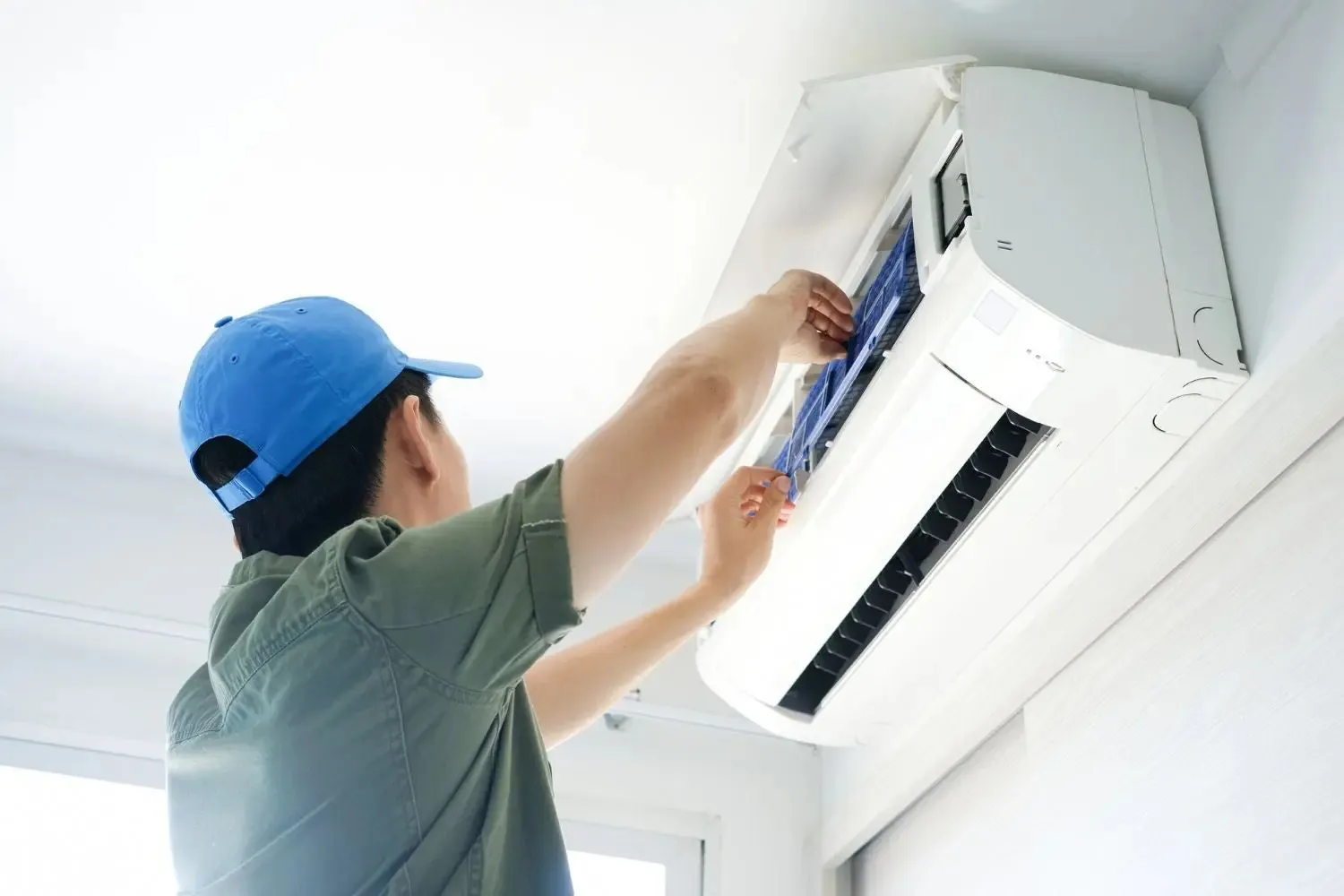
Detailed Maintenance to Prevent System Failure
Routine maintenance is not about just wiping down the unit; it is about preserving the mechanical integrity of the equipment. Ductless mini-splits are precision machines that require tight tolerances to operate efficiently. Neglecting maintenance leads to reduced efficiency, higher electricity bills, and premature component failure.
Our maintenance protocol is comprehensive, covering every critical touchpoint of the system.
- Deep Cleaning of Coils: The evaporator and condenser coils facilitate heat exchange. If they are coated in dust, dirt, or salt accumulation—common in coastal areas—the system must work harder to cool or heat. We chemically clean these coils to restore heat transfer efficiency.
- Blower Wheel Sanitation: The barrel fan inside the indoor unit accumulates mold and dust, which can unbalance the fan and cause noise. We clean the blower wheel to ensure quiet, balanced operation.
- Filter Maintenance: While homeowners can clean standard mesh filters, we inspect secondary filtration systems and advise on replacements for improved indoor air quality.
- Electrical Tightening: Vibrations can loosen electrical connections over time, leading to arcing or overheating wires. We torque all connections to factory specifications.
- Leak Search: We visually inspect piping and flare connections for signs of oil, which indicates a refrigerant leak, catching small issues before they vent the system's charge.
By adhering to a strict maintenance schedule, typically once or twice a year, you extend the lifespan of the unit and protect the manufacturer’s warranty.
How the Ductless Installation Process Works
Installing a ductless mini-split requires precision planning and execution. Unlike window units, these are permanent fixtures that require structural and electrical modifications. Whether you are outfitting a garage, a room addition, or an entire home in Santa Barbara, the process follows a strict technical sequence to ensure optimal performance.
Organ & Sons Mechanical, Inc. adheres to manufacturer best practices during every step of the installation.
- Site Survey and Load Calculation: First, we calculate the cooling and heating load of the specific zone. This ensures the unit is sized correctly—neither too small to keep up nor too big that it short-cycles and fails to dehumidify.
- Mounting the Indoor Unit: Next, we locate a wall position that supports the weight of the unit and allows for proper drainage. A mounting plate is secured to the studs, and a precise hole is drilled through the wall for the line set, sloped slightly downward to facilitate gravity drainage.
- Running the Line Set: We run the insulated copper refrigerant lines, control wire, and drain hose from the indoor unit to the exterior. These are often housed in protective line set covers to ensure a clean aesthetic and protection from the sun.
- Setting the Outdoor Unit: The condenser is placed on a concrete pad or wall bracket. It must be level and have sufficient clearance for airflow. In coastal environments, elevation is key to preventing debris accumulation and corrosion.
- Pressure Testing and Evacuation: Before releasing refrigerant, we pressurize the lines with nitrogen to check for leaks. Then, we use a vacuum pump to remove all moisture and air from the lines, measuring down to 500 microns to ensure a pure, sealed system.
- Electrical Connection and Startup: Finally, we connect the unit to a dedicated electrical disconnect box. The system is powered up, and we test all modes—cooling, heating, and fan speeds—to verify functionality.
Deciding When to Repair or Replace Your Unit
Homeowners often struggle with the decision to sink money into a repair or invest in a new system. There is a logical way to approach this decision based on equipment age, repair cost, and refrigerant type.
We recommend evaluating the situation based on the "5000 Rule" and current efficiency standards.
- The Age Factor: If your equipment is over 10 to 12 years old and requires a major repair, replacement is usually the smarter financial move. Technology has advanced significantly, and newer units offer much higher Seasonal Energy Efficiency Ratio ratings.
- Repair Frequency: If you have required multiple repairs in the last two years, the system is likely entering the end of its reliable life. Continuing to patch a failing system often costs more than monthly payments on a new unit.
- Compressor Failure: The compressor is the heart of the system. If this component fails and the unit is out of warranty, the cost of labor and parts usually rivals the cost of a new outdoor unit.
- Refrigerant Type: Older systems running on R-22 refrigerant are obsolete. R-22 is no longer produced, making it prohibitively expensive to source. If an R-22 unit develops a leak, replacement is the only viable long-term option.
- Efficiency Gains: Modern inverter-driven heat pumps can heat effectively even in low temperatures and cool with minimal energy usage. Upgrading can lower utility bills immediately, offsetting the installation cost over time.
Local Considerations for Ductless Systems
Operating HVAC equipment in Santa Barbara presents unique challenges due to the specific climate and environmental factors. The mild Mediterranean climate is generally easy on equipment, but specific local conditions demand attention.
- Coastal Corrosion: Proximity to the ocean introduces salt air, which accelerates corrosion on the aluminum fins of the outdoor condenser. We recommend systems with anti-corrosive coatings or applying specific treatments to extend the life of the metal components.
- Year-Round Usage: unlike areas with distinct harsh seasons, local homeowners often use their systems year-round—cooling during warm fall days and heating during the wet winter nights. This increases the runtime hours on the compressor, making maintenance even more critical.
- Permitting and Code Compliance: Local building departments usually require permits for new HVAC installations, including electrical work. Compliance ensures that the installation meets safety standards and does not complicate future real estate transactions.
- Humidity Control: While summers are dry, the "June Gloom" and marine layer can bring humidity. Ductless systems have a "Dry Mode" specifically designed to dehumidify without over-cooling the space, perfect for spring and early summer mornings.
Understanding these local nuances ensures that the equipment selected and the service provided align with the reality of the environment.
Why Professional Service Matters
Ductless systems are sophisticated pieces of technology involving high-pressure refrigerant, high-voltage electricity, and complex electronics. Attempting DIY repairs or hiring general handymen often leads to voided warranties and compromised safety.
Professional service guarantees that the correct tools and protocols are used.
- Warranty Preservation: Manufacturers require proof of professional installation and maintenance to honor parts warranties. Without this, you are liable for the cost of replacement parts.
- Specialized Tools: We use digital manifolds, micron gauges, and sensitive leak detectors that are not available to the general public. These tools allow for precise calibration that ensures the system operates at peak efficiency.
- Safety Protocols: Handling refrigerant requires EPA certification to prevent venting harmful chemicals into the atmosphere. Additionally, working with electrical components poses shock hazards that trained technicians are equipped to manage.
Securing Your Home Comfort
Your home environment depends on the reliability of your heating and cooling equipment. Whether you need an emergency repair to fix a leaking unit, a routine tune-up to improve efficiency, or a full consultation for a new installation, professional intervention is the key to long-term performance.
We focus on delivering results that improve your quality of life. By addressing issues at the source and providing honest, data-backed recommendations, we ensure your system runs smoothly regardless of the weather outside. Organ & Sons Mechanical, Inc. is dedicated to keeping your indoor climate stable and comfortable.
Do not let a small issue turn into a system failure. Contact us today to schedule your service or installation consultation.
Contact Us