



Restore Your Home’s Warmth When Your System Fails
When your home in Santa Barbara suddenly feels cold, it is more than just uncomfortable—it is an urgent disruption to your daily life. You need a team that understands the specific heating challenges of our coastal climate and can restore your comfort immediately. Contact Organ & Sons Mechanical, Inc. or request service online to get a technician to your door.
- Rapid response capabilities available 24/7 to address immediate heating failures.
- Expert diagnostics and repairs performed with advanced tools to ensure long-term efficiency.
- Transparent, upfront pricing provided before any work begins, eliminating surprise costs.
- Licensed and insured technicians dedicated to safety and compliance with every repair.
What to Expect From Your Heating Service Visit
A broken heater demands a systematic, professional approach. When a technician arrives at your property, the focus is on accurate identification of the root cause, not just a quick patch for the symptoms. Modern heating systems, whether gas furnaces or electric heat pumps, are complex machines where a single component failure can trigger a system-wide shutdown.
Upon arrival, the service begins with a comprehensive safety inspection. This is particularly vital for gas-powered systems common in the region, where issues like cracked heat exchangers can pose carbon monoxide risks. The technician evaluates the thermostat communication, the ignition sequence, and the airflow dynamics. You receive a detailed explanation of exactly what has failed—whether it is a worn-out flame sensor, a malfunction in the control board, or a failing blower motor.
The goal is to provide you with immediate clarity. You will know the condition of your system, the necessary steps to fix it, and the exact cost involved. Most common parts are carried on the truck to facilitate same-day repairs, minimizing the time your home remains without heat.
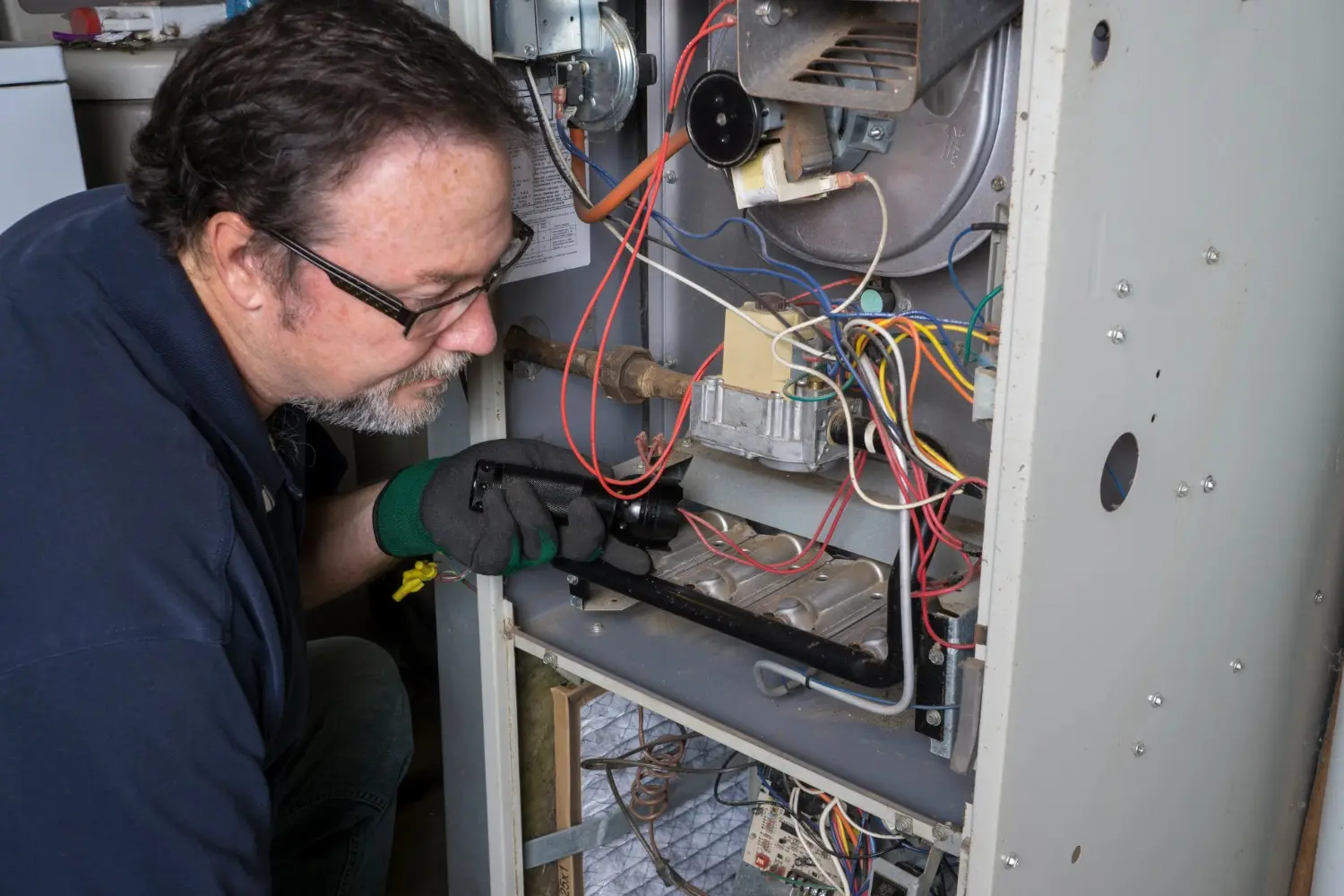
Comprehensive Diagnostics and Repair Process
Effective heating repair relies on a defined process that ensures nothing is overlooked. We utilize a strict protocol to troubleshoot your system, ensuring that once the heat comes back on, it stays on.
- System Analysis: The process begins with an operational test. The technician cycles the system to observe how it initiates, runs, and shuts down. This reveals issues with "short cycling" (turning on and off too frequently) or delayed ignition.
- Component Testing: Electrical connections are tightened, and voltage readings are taken on motors and capacitors. For gas furnaces, the gas pressure is measured to ensure it matches the manufacturer's specifications. Air filters are checked for blockages that could be strangling the system's efficiency.
- The Repair Plan: Once the issue is isolated, you receive a clear report. The technician explains the repair options. If multiple parts are worn, you are informed of which repairs are critical for operation and which are preventative recommendations for the future.
- Execution and Verification: After you approve the work, the repair is performed. The job is not complete until the system is re-tested. The technician measures the temperature rise (the difference between the air entering and leaving the system) to confirm the unit is heating effectively.
- Site Cleanup: Work areas are left exactly as they were found. Old parts and packaging are removed from your property.
Critical Heating Components We Repair
Heating systems are comprised of various subsystems that must work in unison. A failure in one area often places stress on others. Organ & Sons Mechanical, Inc. handles repairs across all major heating configurations found in the area.
- Ignition Systems: Modern furnaces use hot surface igniters or intermittent pilots rather than standing pilot lights. These components are fragile and subject to wear. If your furnace clicks but does not fire, the ignition system is often the culprit.
- Blower Motors and Belts: The blower moves warm air through your ductwork. If the motor fails or the belt breaks, the furnace may run but no air will circulate, eventually causing the system to overheat and shut down on a safety limit.
- Heat Exchangers: This is the heart of a gas furnace. It separates the combustion gases from the breathable air in your home. Over time, the expansion and contraction from heating cycles can cause cracks. A compromised heat exchanger requires immediate attention for safety reasons.
- Thermostats and Zoning Controls: Sometimes the unit is fine, but the "brain" is not communicating. Malfunctioning thermostats or zone dampers can lead to uneven heating, where some rooms are freezing while others are sweltering.
- Heat Pump Reversing Valves: In milder climates like Santa Barbara, heat pumps are popular. If your heat pump is blowing cold air while in heating mode, the reversing valve—which switches the flow of refrigerant—may be stuck.
Deciding Between Repair and Replacement
Homeowners often face the difficult decision of whether to invest in another repair or to replace the system entirely. This decision should be based on data and the long-term economics of your specific unit.
- The 50% Rule: A general industry standard suggests that if the cost of the repair approaches 50% of the cost of a new system, replacement is the wiser financial choice. This is particularly true if the warranty on the existing unit has expired.
- System Age: The average lifespan of a furnace or heat pump is typically between 15 and 20 years. If your system is approaching or has surpassed this age range, parts may be harder to source, and efficiency has likely degraded significantly. A repair today may only buy a few months of operation before the next component fails.
- Frequency of Breakdowns: If you have required repairs more than once in the last two years, the system is likely entering the end of its reliable service life. Repeated service calls quickly add up to the cost of a down payment on a modern, energy-efficient unit.
- Energy Efficiency and Utility Bills: Older systems often operate at 60% to 70% AFUE (Annual Fuel Utilization Efficiency), meaning 30% to 40% of the energy you pay for is wasted. Modern systems can reach up to 98% efficiency. If your heating bills have been steadily climbing despite normal usage, the inefficiency of the old unit is costing you money every month that could be invested in a replacement.
Local Factors Affecting Heating in Santa Barbara
Operating a heating system in this region presents unique challenges that standard maintenance guidelines may not cover. The local environment impacts how systems age and what types of repairs are most common.
- Salt Air Corrosion: Properties located near the coast are subject to salt-laden air. This can accelerate corrosion on outdoor heat pump units and even affect indoor furnaces if they draw combustion air from outside. Components often rust or seize faster here than in inland areas, requiring specific attention during repairs to check for structural integrity.
- The "Cold Start" Strain: Because winters are relatively mild, heating systems often sit dormant for many months. When the first cold snap hits—usually around November when the rains begin—systems are forced to work hard after a long period of inactivity. This creates a surge in demand and often exposes weak components like capacitors or igniters that degraded while the system was idle.
- Permitting and Title 24 Compliance: California has some of the strictest energy codes in the nation. When performing significant repairs or retrofits, compliance with Title 24 standards is essential. This includes ensuring ductwork is sealed properly and that system airflow meets efficiency mandates. Working with a provider who understands these local regulations protects you from liability and ensures your home remains up to code.
- Utility Rebates and Incentives: Local utility providers frequently update rebate programs for high-efficiency repairs or upgrades. A knowledgeable service provider can advise on whether your repair or potential replacement qualifies for current incentives, potentially offsetting some of the costs.
Why Technical Expertise Matters
In the era of DIY videos, it can be tempting to attempt heating repairs personally. However, heating systems involve high-voltage electricity, combustible gases, and high-pressure refrigerants. Professional service ensures that these hazards are managed safely.
- Safety Verification: Professionals possess the tools to detect gas leaks and carbon monoxide presence that are undetectable to the human senses. Verifying that a system is venting properly is a critical step that prevents dangerous fumes from backing up into living spaces.
- Warranty Preservation: Most equipment manufacturers require proof of professional service to maintain warranty coverage. DIY repairs or service from unlicensed individuals often void these warranties, leaving you responsible for the full cost of future major component failures.
- Accurate Diagnosis: Misdiagnosing a heating issue is expensive. Replacing a thermostat when the issue is actually a control board, or replacing a motor when the issue is a capacitor, wastes time and money. Professional diagnostics utilize multimeters and manometers to pinpoint the exact failure point based on electrical and pressure readings, not guesswork.
Restoring Comfort to Your Home
A functional heating system is a necessity for your home’s safety and your family’s comfort. When the heat fails, you need a solution that is fast, reliable, and technically sound. The focus should be on resolving the immediate problem while ensuring the overall health of the system for the remainder of the season.
Organ & Sons Mechanical, Inc. is committed to providing high-quality repair services that respect your time and property. By combining extensive technical training with a deep understanding of local climate requirements, we ensure your heating system operates at peak performance when you need it most. Do not let a cold house disrupt your life any longer.
Secure your appointment for expert heating repair now.
Contact Us