



AC Installation in Lompoc, CA
Explore expert AC installation services in Lompoc with flexible financing options. Get reliable and efficient cooling solutions tailored to local building codes. Schedule now!
Is Inconsistent Cooling Disrupting Your Comfort at Home?
Is your current air conditioning system failing to keep up with the shifting temperatures typical of Lompoc summers? When the coastal fog burns off and the heat rises, a malfunctioning AC unit can turn your home from a sanctuary into a stifling environment, but relief is available immediately. Contact us now to schedule an assessment or apply for our flexible financing options. Organ & Sons Mechanical, Inc. provides comprehensive installation services designed to restore your comfort without delay.
- Expert AC installation completed quickly to minimize downtime.
- Tailored cooling solutions that strictly adhere to Lompoc building codes.
- Flexible financing options to ensure premium comfort fits your budget.
All installations are backed by comprehensive warranties and are fully compliant with local permit requirements for your peace of mind.
What You Can Expect From a Modern Installation
Investing in a new air conditioning system is about more than just swapping out old machinery; it is an upgrade to your home’s energy infrastructure. Homeowners often delay replacement because they fear a chaotic installation process or hidden costs. However, a professional installation is a structured, transparent operation designed to improve your indoor air quality and lower monthly utility bills immediately — visit our FAQs to learn more.
When you choose a professional service, you receive a complete system overhaul. This includes the removal and environmentally safe disposal of your existing unit, which likely contains older refrigerants that require careful handling. The service also covers a thorough inspection of the mounting pad or brackets to ensure stability. If the ground has settled or the previous installation was not up to code, these elements are corrected before the new unit arrives.
Furthermore, a modern installation includes the integration of smart thermostat technology if desired. New systems are designed to communicate more effectively with temperature controllers, allowing for variable speed adjustments that maintain constant comfort levels rather than the jarring on-and-off cycles of older units. You also gain the benefit of a system designed for the specific electrical configurations of your home, ensuring that your breaker panel can handle the load efficiently without risk of tripping.
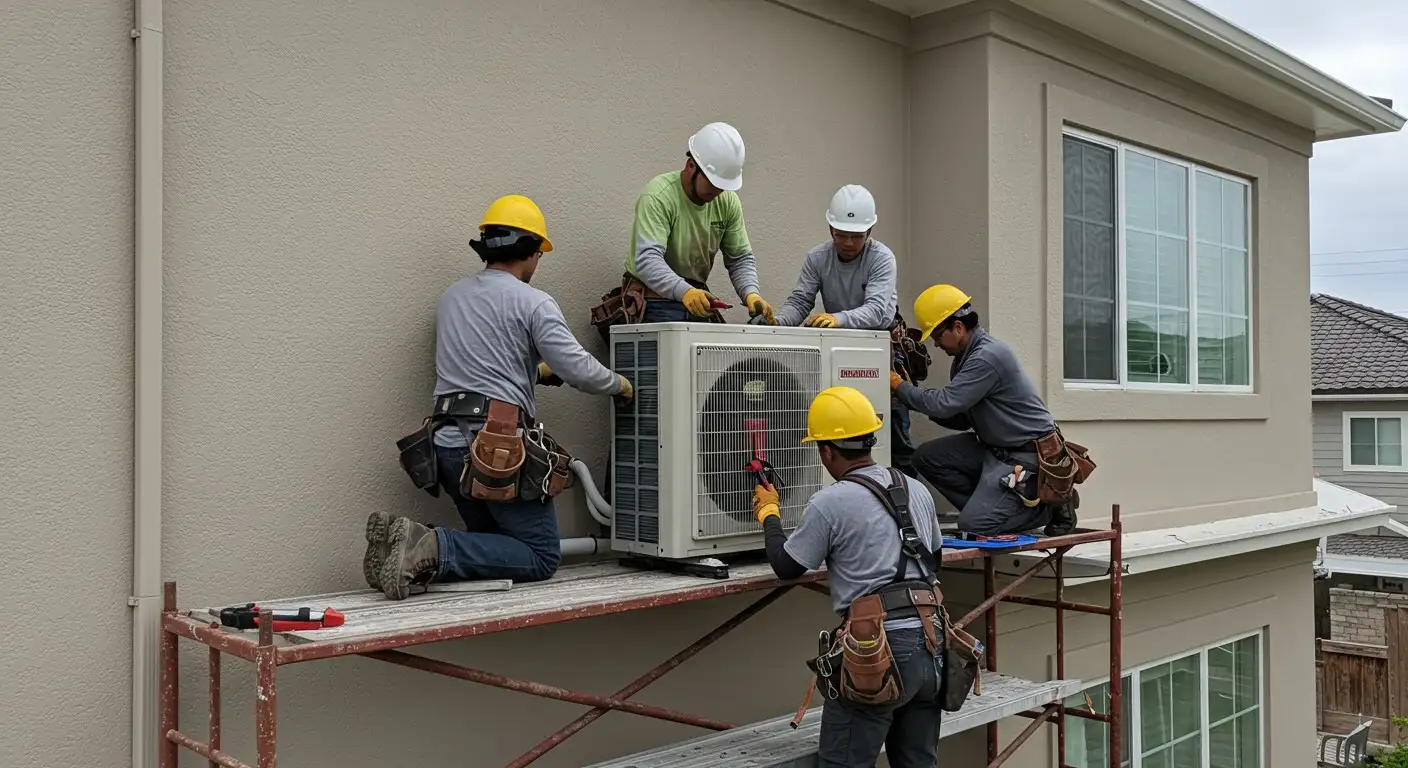
The Installation Process: From Assessment to Airflow
A high-quality AC installation follows a rigorous, step-by-step protocol to ensure the longevity of the equipment and the safety of the household. This process removes the guesswork and guarantees that the system operates at the manufacturer's specified efficiency rating.
Detailed Site Evaluation and Sizing
- Technicians begin by performing a Manual J load calculation. This is a precise engineering calculation that determines exactly how much cooling power your home requires based on square footage, insulation levels, window placement, and local climate data.
- Ignoring this step leads to "short cycling," where a unit is too large and turns off before removing humidity, or continuous running, where a unit is too small to cool the space.
- The existing ductwork is examined for leaks, collapses, or inadequate insulation that could undermine the performance of the new machinery.
Mechanical Installation and Connection
- Once sizing is confirmed, the old unit is disconnected from the electrical supply and refrigerant lines.
- The new condenser is positioned outside on a leveled pad, ensuring proper clearance for airflow and maintenance access.
- Inside the home, the evaporator coil is installed within the air handler or furnace system.
- Refrigerant lines are brazed (welded) together using nitrogen purging techniques to prevent oxidation and contaminants from entering the sealed system.
System Commissioning and Calibration
- After mechanical connections are secure, a vacuum pump is used to remove all moisture and air from the refrigerant lines.
- The system is then charged with the precise amount of refrigerant required by the manufacturer.
- Technicians test the voltage and amperage to ensure electrical components are operating safely.
- Finally, airflow is measured at supply and return registers to verify that cool air is reaching every room as intended.
Determining When Replacement Outweighs Repair
Deciding between repairing an aging unit or investing in a new one is a critical financial decision. While a quick fix might seem attractive in the short term, sinking money into a dying system often costs more over time. Understanding the threshold for replacement helps homeowners make rational, data-driven choices rather than emotional ones during a heatwave.
- The 50% Rule: A general guideline used in the industry is the 50% rule. If the cost of the repair approaches or exceeds 50% of the value of a new system, replacement is the smarter financial move. This is particularly true if the warranty on the existing unit has expired. Major component failures, such as a blown compressor or a cracked coil, are expensive repairs that do not guarantee the rest of the system will last.
- Age and Refrigerant Type: Air conditioners typically last between 10 to 15 years. If your unit is in this age range, it likely uses R-22 refrigerant (Freon), which has been phased out due to environmental regulations. As R-22 becomes scarcer, the cost to recharge an old leaking system has skyrocketed. Organ & Sons Mechanical, Inc. recommends upgrading to systems that utilize R-410A or newer, more eco-friendly refrigerants, which are cheaper to service and more readily available.
- Energy Efficiency Gains: Older units often have SEER (Seasonal Energy Efficiency Ratio) ratings of 10 or less. Modern standards require a minimum SEER2 rating that is significantly higher. Upgrading to a high-efficiency unit can reduce cooling energy consumption by 20% to 40%. This monthly savings on electric bills can offset the cost of installation over the life of the system. If your current AC runs constantly but fails to drop the temperature, it is wasting energy and likely nearing catastrophic failure.
Navigating Local Requirements and Climate Factors
Installing air conditioning in this region requires specific knowledge of local environmental factors and regulatory codes. Lompoc presents unique challenges that generic installation procedures often overlook. A successful installation must account for both the regulatory landscape and the physical environment to ensure the system passes inspection and resists the elements.
Managing Coastal Corrosion
- The proximity to the ocean brings salt air and fog, which can accelerate corrosion on the outdoor condenser coils and aluminum fins.
- Standard units may deteriorate faster here than in inland areas.
- Solutions include selecting units with coastal-grade protective coatings or scheduling regular chemical cleanings to remove salt buildup.
- Proper placement of the outdoor unit can also shield it from prevailing winds that carry moisture and saline.
Permits and Title 24 Compliance
- The City of Lompoc Building Department requires permits for all HVAC installations and replacements to ensure safety and energy efficiency.
- California’s Title 24 energy standards are among the strictest in the nation. This code dictates duct sealing requirements, thermostat capabilities, and refrigerant charge verification.
- A third-party HERS (Home Energy Rating System) rater is often required to test the system after installation to certify compliance.
- Hiring a contractor who handles the permitting and inspection process protects the homeowner from future liability and fines when selling the home.
Electrical Infrastructure
- Many older homes in the area may not have the electrical capacity to support modern, high-output air conditioning systems.
- An assessment of the main electrical panel is necessary to determine if a dedicated circuit needs to be installed or if the panel requires an upgrade.
- Ensuring the electrical connections meet local fire and safety codes prevents hazards and ensures reliable operation during peak demand times.
Why Technical Precision Matters
The most important day in the life of an air conditioner is the day it is installed. Industry studies suggest that a significant percentage of HVAC equipment is installed incorrectly, which reduces efficiency and shortens the lifespan of the equipment. Technical precision is not just about making the unit run; it is about optimizing the entire thermal envelope of the house.
- Proper Airflow Balance: A unit that is mechanically sound but connected to poor ductwork will never perform well. Professional installers analyze static pressure within the ducts. If the pressure is too high, the blower motor works harder, using more electricity and burning out faster. Balancing the airflow ensures that the master bedroom is just as cool as the living room, eliminating hot spots and cold drafts.
- Sealed Systems for Longevity: The refrigeration cycle is a closed loop. Any contamination during installation—such as moisture left in the lines—reacts with the refrigerant and oil to form acid. This acid eats away at the compressor windings and internal components, leading to premature burnout ("acid burnout"). Using microns gauges to ensure a deep vacuum before charging the system is a non-negotiable step for high-quality service providers. This level of detail differentiates a system that lasts 15 years from one that fails in five.
- Drainage and Moisture Control: Air conditioners remove humidity as well as heat. This process generates condensate water that must be drained away effectively. If the drainage system is not properly trapped and vented, or if the unit is not leveled correctly, water can back up. This leads to water damage in ceilings or walls and can trigger mold growth. Installing safety float switches ensures that if a drain line clogs, the system shuts off automatically before water damage occurs.
Secure Your Comfort and Efficiency Today
Waiting until a complete system breakdown occurs puts you at the mercy of emergency scheduling and peak-season delays. A planned replacement allows you to choose the exact system that fits your needs, budget, and energy goals without the pressure of an immediate crisis. By addressing your cooling needs now, you ensure reliable performance throughout the warmer months and take advantage of modern efficiency standards that lower operational costs.
Organ & Sons Mechanical, Inc. is dedicated to providing technically superior installation services that meet the specific demands of Lompoc’s climate and building regulations. From the initial load calculation to the final permit inspection, every step is handled with professional rigor to guarantee your long-term satisfaction.
Take control of your indoor climate today. Contact us to schedule your comprehensive AC installation consultation.
Contact Us