



Is Your Furnace Blowing Cold Air or Making Strange Noises?
A malfunctioning heating system during a damp winter evening in Lompoc disrupts your routine and compromises the comfort of your home. When your heat fails, you need an immediate diagnosis that identifies the root cause of the breakdown rather than a temporary fix that leaves you vulnerable to future outages. Contact Organ & Sons Mechanical, Inc. immediately to schedule a diagnostic visit or inquire about financing options for your repair.
Homeowners require a service partner who prioritizes accuracy and speed. We understand that a furnace breakdown is an urgent matter that affects the safety and livability of your residence. Our technicians arrive fully equipped to handle common failures on the spot, ensuring you do not have to wait days for warmth to return to your living space.
- Comprehensive diagnostics that pinpoint electrical, mechanical, or airflow issues accurately.
- Expedited service timelines to restore heat before your home temperature drops significantly.
- Upfront, transparent quotes for all required repairs so you can make informed financial decisions.
All repair services are performed by licensed professionals and backed by robust labor warranties to guarantee your peace of mind.
What to Expect During a Professional Repair Service
When you request a service call, the objective is to move from a state of malfunction to a fully operational system as efficiently as possible. The process begins with a thorough evaluation of the furnace's current condition. Unlike general maintenance, a repair visit is targeted; the technician focuses on the symptoms you are experiencing—whether that is loud banging, a burning smell, or a complete refusal to ignite—and traces them back to the component failure.
You should expect a clear explanation of what has gone wrong. Modern furnaces are complex machines involving high-voltage electricity, combustible gases, and intricate control boards. A technician will inspect the ignition system, the blower motor, the flame sensor, and the safety switches. In Lompoc, where humidity levels can fluctuate due to the marine influence, specific attention is paid to electrical connections that may have corroded or sensors that have become oxidized.
The scope of a standard repair typically involves:
- System Isolation: Shutting down power and gas to safely inspect internal components.
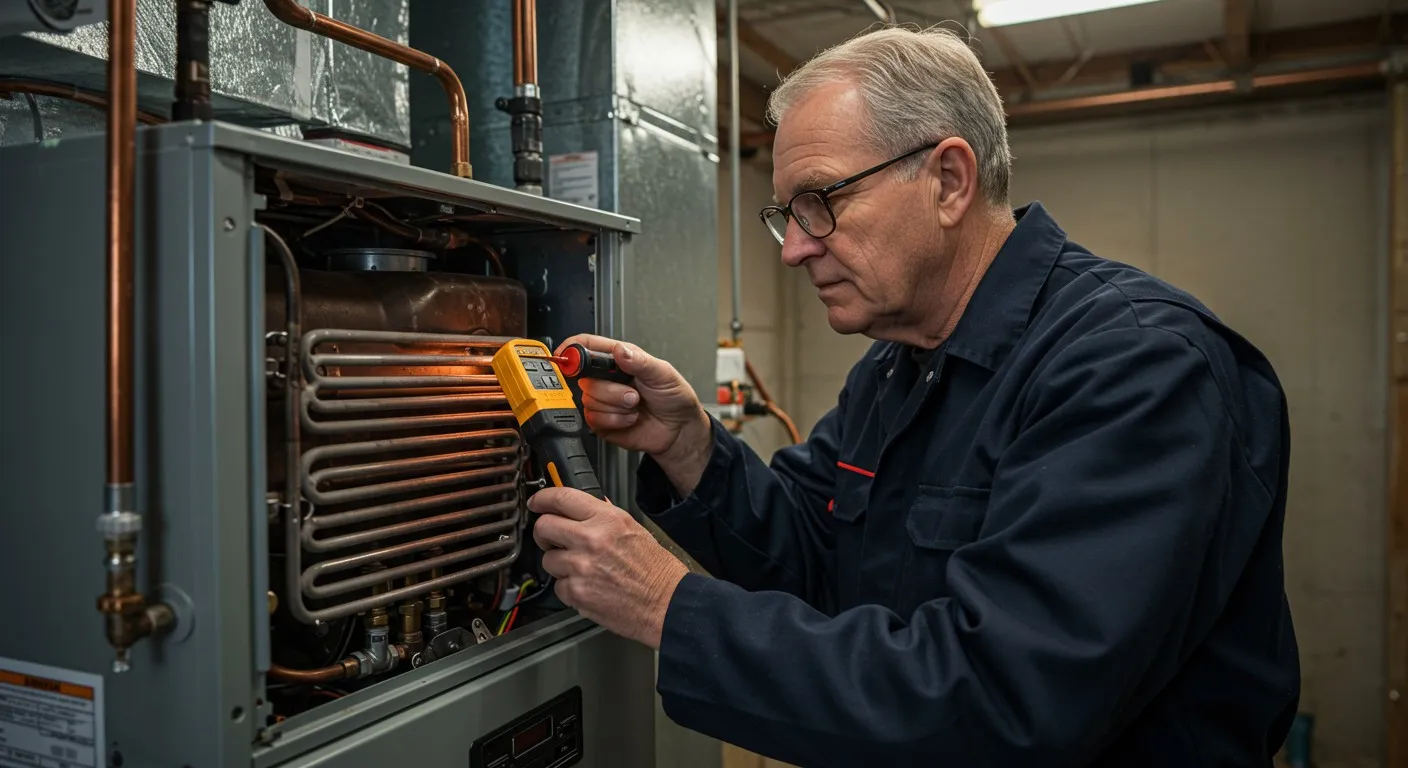
- Component Testing: Using multimeters to check capacitors, transformers, and control board logic.
- Airflow Verification: Ensuring the blower wheel is clean and spinning at the correct RPM to distribute heat effectively.
- Safety Analysis: Checking the heat exchanger for cracks to prevent carbon monoxide leaks.
Once the issue is identified, you receive a breakdown of the necessary parts and labor. You approve the work before any tools are applied to the fix. This approach eliminates surprise billing and puts the control back in your hands.
The Repair Process: From Diagnosis to Heat Restoration
Restoring a furnace requires a methodical approach to ensure that the fix is permanent and safe. Professionals do not guess; they follow a specific sequence of operations that mirrors the furnace's own ignition sequence. This systematic troubleshooting ensures that secondary issues are not overlooked.
The restoration process generally follows this workflow:
- Thermostat Communication Check: The technician verifies that the thermostat is sending the correct "call for heat" signal to the furnace control board. If the signal is weak or interrupted, the issue may be in the low-voltage wiring rather than the furnace itself.
- Draft Inducer Operation: Upon receiving the signal, the draft inducer motor must spin to clear the combustion chamber of lingering gases. If this motor fails or the pressure switch tubing is blocked, the furnace will lock out as a safety precaution.
- Ignitor and Pilot Verification: The technician checks the hot surface ignitor for cracks or the pilot light for a strong flame. This is the catalyst for the heat; without a proper ignition source, the gas valve will not open.
- Flame Sensor Cleaning: A common issue involves the flame sensor becoming coated in carbon or oxidation. The technician cleans this sensor to ensure it can accurately detect flame, preventing the system from shutting down prematurely.
- Gas Valve and Burner Inspection: The gas pressure is measured to ensure it matches the manufacturer's specifications. Incorrect pressure can lead to inefficient burning or overheating. The burners are inspected for rust or misalignment.
- Blower Motor functionality: Once the heat exchanger reaches the appropriate temperature, the blower fan must engage. The technician checks the run capacitor and the motor windings to ensure the fan pushes air efficiently through the ductwork.
- Limit Switch Testing: The high-limit switch protects the unit from overheating. This component is tested to ensure it will trip if the furnace gets too hot but remains closed during normal operation.
This rigorous testing protocol ensures that when the technician leaves, the system is running safely and efficiently.
Addressing Common Heating Failures
Furnaces consist of numerous moving parts and electronic controls, all of which are subject to wear and tear. Understanding the specific nature of these failures can help you understand the urgency of the repair.
Ignition Failures
The most frequent service call involves a furnace that tries to start but fails. You may hear a click, a woosh, and then silence. This cycle often indicates a failure in the ignition sequence. It could be a cracked hot surface ignitor, a dirty flame sensor, or a faulty gas valve. In older units with pilot lights, a bad thermocouple is often the culprit. These components must be replaced with exact matches to ensure safe operation.
Blower Motor Issues
If the furnace runs but no air comes out of the vents, or if the unit makes a loud humming noise, the blower motor or its capacitor has likely failed. The capacitor acts as a battery to start the motor; when it weakens, the motor strains to turn, eventually overheating and burning out. Replacing a capacitor is a minor repair, but ignoring the symptoms can lead to a full motor replacement, which is significantly more expensive.
Short Cycling
Short cycling occurs when the furnace turns on and off frequently without reaching the set temperature. This is highly inefficient and places immense stress on the heat exchanger. Causes range from a clogged air filter restricting airflow to an oversized furnace or a faulty thermostat placement. Professional diagnosis is critical here, as short cycling can rapidly destroy the internal components of the heating system.
Noisy Operation
Furnaces should operate relatively quietly. Scraping sounds usually indicate a loose blower wheel or broken motor mount. Banging or popping sounds often result from delayed ignition—where gas builds up before igniting—or expanding ductwork. Squealing noises point to belt issues (in older units) or bearing failures. Addressing these noises early prevents catastrophic mechanical failure.
Deciding Between Repair and Replacement
Homeowners often face the dilemma of whether to repair an existing unit or invest in a new system. This decision should be based on data, not guesses. At Organ & Sons Mechanical, Inc., we help you navigate this choice by evaluating the condition of your current equipment against industry standards.
You should generally opt for repair if:
- The furnace is under 10 years old.
- The cost of the repair is less than 50% of the cost of a new system.
- The unit has been well-maintained and has a history of reliable performance.
- The breakdown is caused by a minor component, such as a capacitor, ignitor, or switch.
- Your warranty still covers parts or labor.
Replacement becomes the more logical financial choice if:
- The furnace is over 15 years old.
- You are facing a major component failure, such as a cracked heat exchanger or a blown compressor.
- Your heating bills have been steadily rising despite maintenance, indicating lost efficiency.
- The repair costs effectively "total" the unit (the 50% rule).
- The system requires R-22 refrigerant (for heat pumps) or obsolete parts that are expensive and hard to source.
A cracked heat exchanger is an automatic trigger for replacement discussions. This component separates the combustion gases (carbon monoxide) from the breathing air. A crack compromises the safety of the home, and repairing a heat exchanger is rarely cost-effective compared to installing a modern, safe unit.
Local Factors Affecting Heating Systems
Operating a heating system in Lompoc presents unique challenges compared to other regions. While the winters are not arctic, the specific climate profile influences how furnaces degrade and fail.
The Impact of Marine Moisture
The proximity to the coast means that Lompoc experiences higher humidity and salt air intrusion than inland areas. This environment accelerates corrosion on metal components. Flame sensors, electrical contacts, and even the outer casing of the furnace can rust faster here. Technicians often find that "electrical ghosts"—intermittent failures—are caused by oxidation on control board terminals. Regular repair and maintenance in this region must include cleaning contacts and checking for rust on the heat exchanger.
Variable Usage Patterns
Unlike regions where the furnace runs constantly for months, local weather leads to variable usage. You might run the heat heavily for a week and then not use it for several days. This stop-start cycle can be harder on the equipment than continuous operation. Components expand and contract more frequently, loosening connections and stressing the heat exchanger metal.
Permitting and Utilities
When a repair escalates to a full component replacement or system swap, local building codes come into play. Lompoc enforces specific regulations regarding venting and gas line safety. While minor repairs (like swapping a sensor) do not require a permit, significant work on the gas line or flue pipe might. Additionally, ensuring your system is compatible with the local utility provider's pressure and supply is part of the professional service check.
Why Homeowners Choose Professional Diagnostics
Trying to troubleshoot a modern furnace without training is dangerous and often expensive. The "parts cannon" approach—where a homeowner guesses the problem and buys random parts—rarely solves the core issue.
Safety and Liability
Gas furnaces burn fuel to create heat. Mishandling a gas valve or failing to tighten a connection properly can lead to gas leaks. incorrectly wiring a safety switch can bypass the mechanisms designed to prevent fires. Licensed technicians understand the sequence of safety. They carry the necessary liability insurance and have the training to handle high-voltage electricity and combustible gases safely.
The Value of the Stocked Truck
A significant advantage of professional service is inventory. A service vehicle acts as a mobile warehouse, stocked with universal parts like thermocouples, ignitors, pressure switches, and capacitors. This allows the majority of repairs to be completed in a single visit. If you attempt a DIY repair, you often face wait times for shipping parts, leaving your home cold for days.
Accurate Tools and Testing
Professionals use specialized tools that go beyond a basic screwdriver. Manometers are used to measure gas pressure to the tenth of an inch of water column. Anemometers measure airflow velocity. Combustion analyzers test the exhaust gases to ensure the furnace is burning cleanly and not producing excess carbon monoxide. These tools allow for a diagnosis based on physics and chemistry, not guesswork. If you need help identifying issues yourself first, you can use our tool to troubleshoot a modern furnace to narrow down the symptoms.
Restoring Comfort to Your Home
A broken furnace disrupts your life, but the solution should be straightforward and stress-free. Whether you are dealing with a pilot light that won't stay lit, a blower that won't stop running, or a system that simply refuses to turn on, you need a resolution that lasts.
Do not settle for a cold home or a heating system that operates unsafely. Quality repair work restores not just the temperature of your house, but the safety and reliability of your HVAC system. When you need decisive action and technical expertise, trust Organ & Sons Mechanical, Inc. to handle your heating needs.
Contact Us