



Inconsistent Temperatures and System Failures Require Immediate Attention
Living in the Central Coast region means dealing with damp winters and dry, warm summers, making a reliable HVAC system essential for maintaining a safe and comfortable home environment. When your heater fails on a forty-degree night or the air conditioner quits during an unexpected heat spike, you need a contractor who responds immediately with a solution rather than a sales pitch. Contact Organ & Sons Mechanical, Inc. now to schedule a diagnostic visit or discuss available financing options.
In Lompoc, HVAC systems work hard to combat humidity in the winter and dry heat in the summer, leading to wear and tear that often results in sudden breakdowns. We understand that a malfunctioning unit disrupts your daily life and can pose safety risks for vulnerable family members. Our approach focuses on rapid assessment and effective resolution.
- Same-day scheduling priority ensures you are not left waiting during extreme weather conditions.
- Upfront, flat-rate pricing structures guarantee the final invoice matches the initial quote.
- Fully licensed technicians strictly adhere to all local safety codes and manufacturer protocols.
All services are fully permitted, with extended warranties and flexible financing options available to suit your budget.
Comprehensive HVAC Services: Scope and Expectations
When you request service, the goal is to restore functionality and efficiency as quickly as possible. The process begins with a thorough diagnostic evaluation. Unlike cursory visual inspections, a deep-dive assessment involves testing the electrical load, refrigerant levels, airflow static pressure, and the integrity of mechanical components like the compressor or heat exchanger.
The scope of service for a standard repair call covers the identification of the root cause, not just the symptom. For example, if a system is freezing up, simply adding refrigerant is a temporary fix that does not address the underlying leak or airflow restriction. A professional response involves locating the leak, repairing it, and verifying the system is holding pressure before recharging.
For homeowners in Lompoc, service appointments are structured to provide clarity and immediate action. Upon arrival, technicians arrive with fully stocked trucks containing common parts such as capacitors, contactors, control boards, and blower motors. This preparation allows most repairs to be completed during the initial visit, eliminating the need for follow-up appointments and prolonged discomfort.
If the diagnosis reveals that a major component has failed, the focus shifts to a detailed cost-benefit analysis. You receive a breakdown of the repair costs, the expected remaining lifespan of the unit after the repair, and the availability of parts. This transparency ensures that you have all the necessary data to make an informed decision about your property’s mechanical systems.
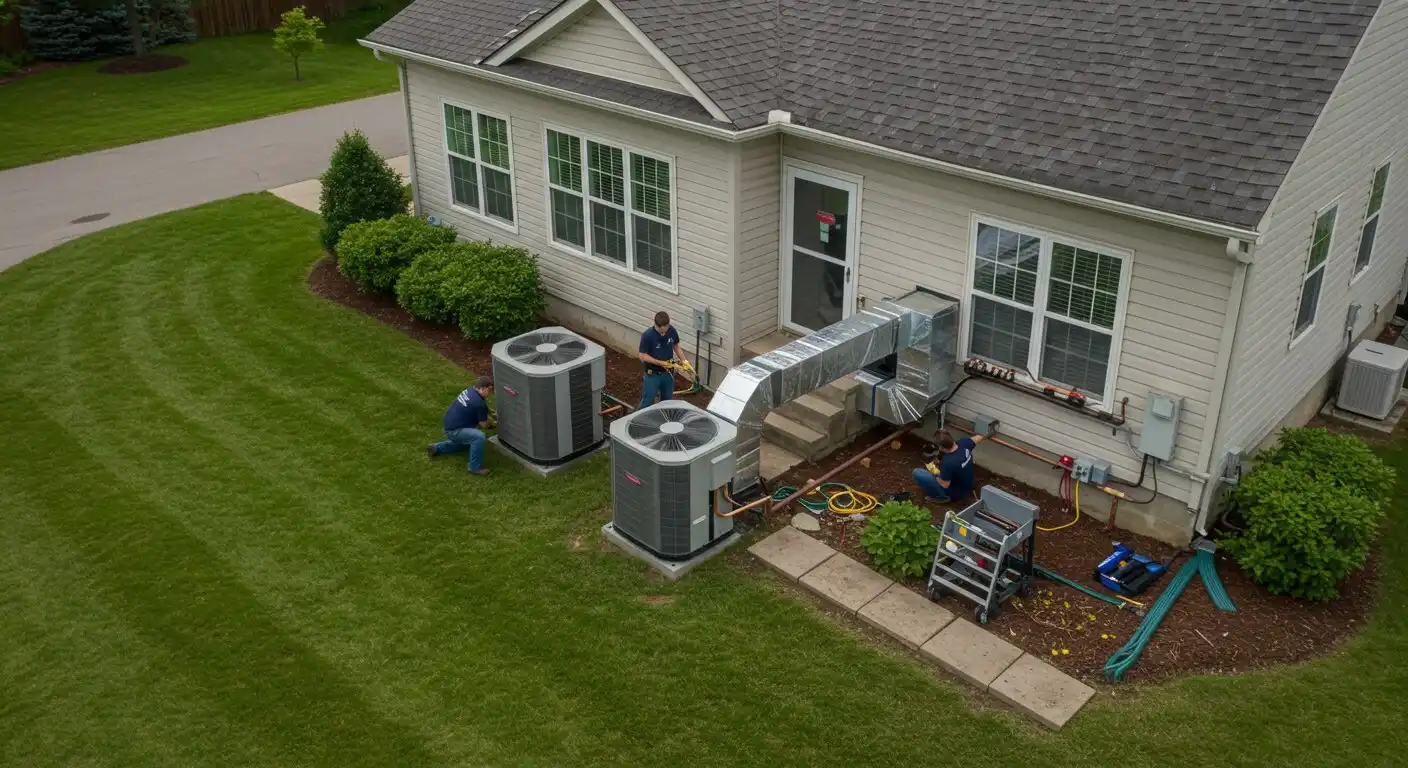
The Installation and Replacement Process Explained
Replacing a heating or cooling system is a significant construction project that affects the infrastructure of your home. The process is systematic and designed to minimize disruption while ensuring the new equipment operates at peak efficiency.
The workflow for a full system replacement typically follows a strict sequence:
- Site Assessment and Load Calculation: Before any equipment is ordered, a technician performs a Manual J load calculation. This engineering standard determines the exact heating and cooling requirements of the home based on square footage, insulation levels, window orientation, and local climate data. This step prevents the common issue of oversizing or undersizing the unit, both of which reduce efficiency.
- System Selection: Based on the load calculation, equipment is selected that meets current SEER2 (Seasonal Energy Efficiency Ratio) standards. Options may include variable-speed furnaces, two-stage air conditioners, or dual-fuel heat pump systems that are particularly effective in California's climate.
- Site Preparation: Technicians lay down drop cloths and protective coverings to safeguard flooring and furniture. The electrical circuit is shut off for safety, and the existing refrigerant is reclaimed according to EPA guidelines to prevent environmental contamination.
- Removal and Disposal: The old unit is disconnected and removed. This often involves maneuvering heavy equipment through tight spaces, requiring specialized dollies and lifting gear. The old equipment is hauled away for proper recycling.
- Ductwork and Plenum Modification: New high-efficiency units often have different physical dimensions than older models. The sheet metal plenum (the transition between the unit and the ductwork) is custom-fabricated or modified to ensure an airtight fit. This is critical for maintaining static pressure and preventing air leaks.
- Installation and Connection: The new unit is positioned and leveled. Refrigerant lines are brazed with nitrogen to prevent oxidation inside the copper tubing. Electrical connections are tightened to torque specifications, and the condensate drain line is piped to an appropriate outlet.
- Commissioning and Testing: Once the physical installation is complete, the system is started. Technicians measure airflow, adjust gas pressure (for furnaces), and check refrigerant subcooling and superheat levels to ensure the unit is performing exactly as the manufacturer designed.
Deciding Between Repair and Full System Replacement
One of the most difficult decisions for a homeowner is knowing when to stop repairing an aging system and invest in a new one. While repairs are often the lower upfront cost, they can become more expensive over time if the unit is nearing the end of its useful life.
Several technical factors influence this decision:
- The 50% Rule: If the cost of the repair approaches or exceeds 50% of the cost of a new system, replacement is generally the wiser financial choice. This is especially true if the unit is out of warranty.
- Equipment Age: The average lifespan of a central air conditioner or heat pump is 10 to 15 years, while furnaces may last 15 to 20 years. If your equipment is in this age range and experiences a major failure—such as a cracked heat exchanger or a grounded compressor—replacement is recommended. Older units also utilize outdated refrigerants like R-22, which are no longer manufactured and are prohibitively expensive to restock.
- Frequency of Breakdowns: If a system has required multiple repairs within the last two years, it indicates that internal components are failing in succession. Continuing to repair a "lemon" often costs more in the long run than a monthly payment on a new, high-efficiency system.
- Energy Efficiency: Modern systems are significantly more efficient than those manufactured even a decade ago. Organ & Sons Mechanical, Inc. can provide an energy analysis showing how much a new system could save on monthly utility bills. Often, the energy savings over the lifetime of the new unit help offset the installation cost.
- Home Comfort Issues: If the existing system results in hot and cold spots, excessive humidity, or loud operation, a simple repair will not solve these design flaws. A replacement allows for the correction of ductwork issues and the installation of zoning systems or variable-speed technology to improve overall comfort.
Local Considerations for HVAC Work in the Central Coast Region
Operating an HVAC business in the Central Coast region requires specific knowledge of local building codes, environmental factors, and utility programs. Lompoc generally follows California’s strict Title 24 energy standards, which dictate specific efficiency ratings and installation practices.
- Permitting and Inspections: Major HVAC work, including replacements and new installations, requires a permit from the local building department. This process ensures that the installation meets safety standards regarding gas line connections, electrical grounding, and exhaust venting. A final inspection by a city official validates that the work was done correctly.
- Coastal Climate Impact: The proximity to the ocean introduces salt air, which can accelerate corrosion on the outdoor condenser coils and aluminum fins. Equipment installed in this region often benefits from special coastal coatings or the selection of units built with corrosion-resistant materials to extend longevity.
- Humidity Management: While summers are dry, winters in the region can be damp. A properly sized heating system helps manage indoor humidity levels, preventing mold growth and protecting drywall and wood flooring. Heat pumps are increasingly popular here because they provide efficient heating without the combustion risks associated with older gas furnaces.
- Ductwork Testing: California code often requires duct pressure testing (HERS rating) during a system replacement to ensure that conditioned air is not leaking into attics or crawlspaces. Sealing ducts can improve system efficiency by up to 30%, a crucial factor for older homes in the area that may have original, deteriorating ductwork.
- Electrical Infrastructure: Older homes may not have the electrical capacity to support modern, high-output air conditioning systems. Part of the service involves evaluating the main electrical panel to determine if a sub-panel or circuit upgrade is necessary to safely power the new equipment.
Why Professional Execution Matters for Long-Term Efficiency
The longevity and efficiency of an HVAC system depend more on the quality of the installation than the brand of the equipment. Even the most expensive, top-tier heat pump will fail prematurely if it is installed incorrectly.
Professional execution involves precise attention to detail that is often invisible to the homeowner but critical for performance:
- Refrigerant Charge: An incorrect refrigerant charge can damage the compressor and reduce efficiency. Too much refrigerant increases pressure and energy consumption; too little causes the coil to freeze.
- Airflow Balance: Ensuring that the blower motor is set to the correct speed for the ductwork design prevents the system from overheating and ensures quiet operation.
- Gas Pressure Calibration: For furnaces, setting the correct gas manifold pressure is a safety requirement. Incorrect pressure can lead to incomplete combustion, producing carbon monoxide and soothing the heat exchanger.
- Warranty Protection: Manufacturers strictly require proof of professional installation to honor warranties. Attempting DIY repairs or hiring unlicensed labor can void the parts warranty, leaving the homeowner liable for future failures.
Reliable climate control is not a luxury; it is a necessity for maintaining a healthy home environment and protecting the structural integrity of your property. Organ & Sons Mechanical, Inc. is ready to deploy skilled technicians to restore your system to peak performance or guide you through a seamless replacement process.
Ensure your home remains comfortable year-round by securing professional HVAC services today.
Structured Oversight for Complete HVAC Projects
Working with a qualified HVAC contractor in Lompoc, CA, ensures every phase of your system is managed with technical expertise and accountability. Organ & Sons Mechanical, Inc. provides coordinated oversight for HVAC installations, repairs, and system planning. Poor contractor management often leads to performance limitations and costly corrections. Our team delivers organized execution focused on long-term system value.
Choose professional oversight to ensure your HVAC project is handled correctly from start to finish.
Partner With an Experienced HVAC Contractor Today
Contact Us