



AC Replacement in Arroyo Grande, CA
Struggling with an old AC in Arroyo Grande? Choose our AC replacement services for high-efficiency cooling and lower energy bills. Schedule your professional assessment today!
Is Your Home Remaining Uncomfortably Warm Despite the Thermostat Setting?
You expect relief when you walk through your front door, but an aging or malfunctioning air conditioner can turn your living space into a humid, stifling box. If your cooling system is making loud noises, leaking water, or simply failing to keep up with the Arroyo Grande heat, you need a permanent solution, not another temporary patch. Contact us today to schedule an assessment and discuss financing options for your new system.
An unreliable AC unit does more than just disrupt your comfort; it drives up energy costs while struggling to reach the target temperature. Homeowners facing this issue require a definitive replacement service that ensures long-term efficiency and reliability.
- Secure same-day assessment and rapid replacement scheduling to restore comfort immediately.
- Install high-efficiency SEER2-rated units that significantly lower monthly electrical expenditures.
- Receive comprehensive warranty coverage on both the new equipment and the labor provided.
All installations are fully licensed, compliant with California Title 24 codes, and come with flexible financing options to fit your budget.
What to Expect From Professional AC Replacement
Choosing to replace your air conditioning system is a significant investment in your property and your daily quality of life. The goal is to transition from a system that struggles to maintain 75 degrees to one that effortlessly maintains your preferred climate while using less energy. Modern systems are designed to handle the specific dry heat patterns of the Central Coast, ensuring that your home remains a sanctuary even during the peak temperature spikes of late summer.
When you move forward with a replacement, you are purchasing more than just a metal box outside your home. You are securing a complete climate control solution. This includes a full evaluation of your current ductwork infrastructure, precise load calculations to ensure the unit is neither undersized nor oversized, and the removal and environmentally safe disposal of your old equipment.
The technology in HVAC has advanced rapidly in the last decade. New units utilize variable-speed compressors and smart thermostat integration, allowing for precise temperature modulation. This means the system runs at lower speeds to maintain comfort rather than blasting at 100% capacity and then shutting off, which eliminates hot and cold spots throughout the house.
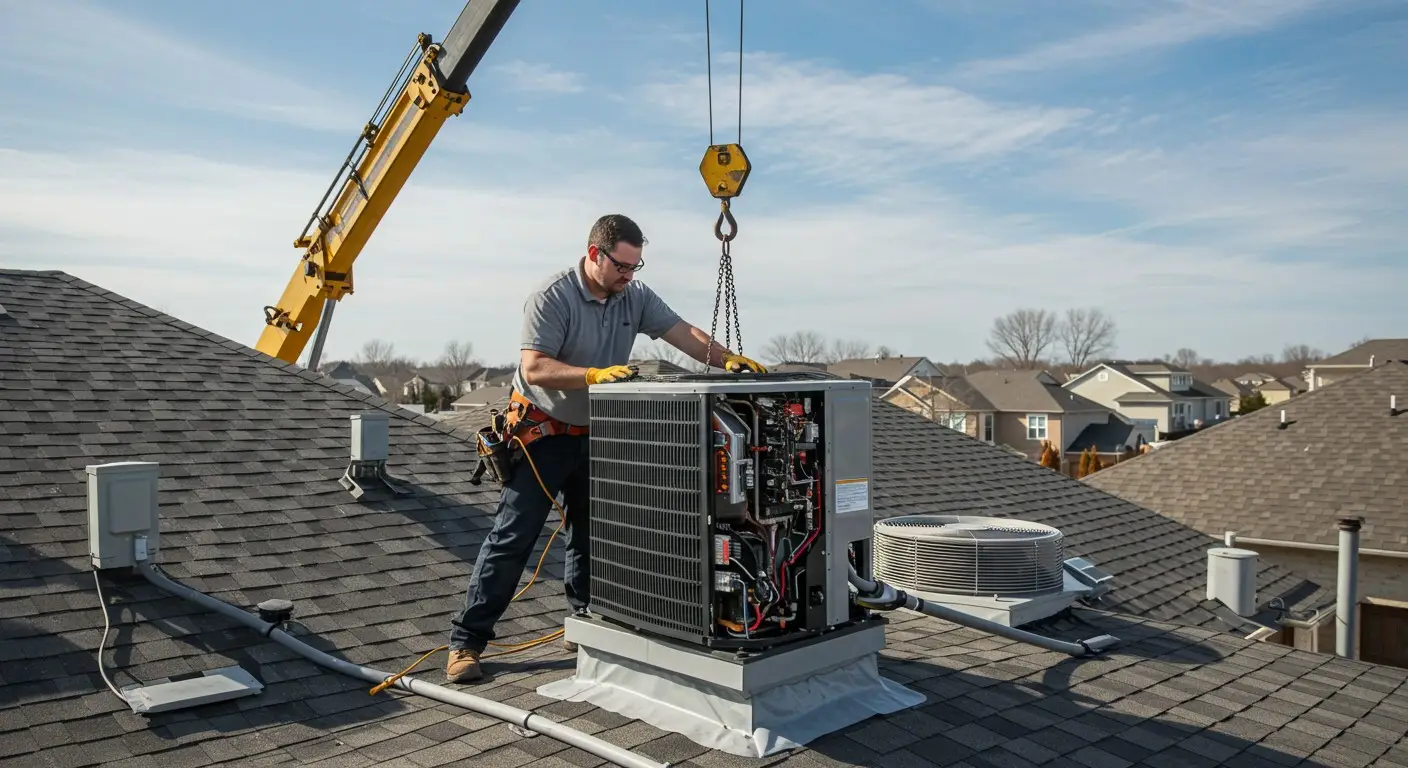
The Technical Process of Installing Your New System
A proper installation is the most critical factor in the lifespan and efficiency of your new air conditioner. Even the most expensive brand will fail prematurely if installed incorrectly. The process adheres to strict industry standards and local building codes to ensure safety and performance.
Site Evaluation and Load Calculation
The process begins with a Manual J load calculation. This is not a guess based on the size of the previous unit. Technicians measure square footage, window placement, insulation levels, and directional orientation to determine the exact cooling capacity required (measured in BTUs). This ensures the new unit cycles correctly, managing both temperature and humidity.
Safe Removal and Disposal
Technicians disconnect the power supply and safely pump down any remaining refrigerant from the old unit to prevent atmospheric venting, adhering to EPA regulations. The old condenser and evaporator coil are disconnected, removed, and hauled away for recycling. This step also involves inspecting the existing concrete pad or mounting brackets to ensure they are stable and level for the new equipment.
Indoor and Outdoor Unit Installation
The new evaporator coil is installed onto your furnace or air handler, and the new condenser is positioned outside. Organ & Sons Mechanical, Inc. technicians ensure that the outdoor unit has proper clearance for airflow and serviceability. A new filter drier is installed in the refrigerant line to trap moisture and contaminants, protecting the new compressor.
Refrigerant Line Connection and Brazing
Copper refrigerant lines connect the indoor and outdoor components. During the brazing process, nitrogen is flowed through the lines to prevent oxidation and scale buildup inside the copper. This is a crucial step often skipped by lower-quality installers, but it is essential for preventing future blockages in the expansion valve.
Pressure Testing and Vacuum
Once connected, the system is pressurized with nitrogen to check for leaks at the weld points. After confirming the system is sealed, a vacuum pump removes all air and moisture from the lines, creating a deep vacuum. This ensures that only pure refrigerant circulates through the system, maximizing efficiency and lifespan.
System Startup and Commissioning
The system is charged with the manufacturer-specified amount of refrigerant. Technicians then measure superheat and subcooling levels to fine-tune performance. Airflow is tested at the registers to ensure static pressure is within the design specifications. Finally, the thermostat is programmed, and the system is run through a full cycle to verify operation.
Deciding Between Repair and Full Replacement
Homeowners often struggle with the decision to repair an existing problem or invest in a new system. While repair is often the first instinct, there are mathematical and practical thresholds where replacement becomes the only logical financial decision. Continuing to patch a dying system often costs more in the long run due to cumulative repair bills and inflated energy consumption.
The 50% Rule
A common industry standard is the 50% rule. If the cost of the necessary repair approaches 50% of the cost of a new system, replacement is the better option. For example, replacing a compressor on a ten-year-old unit is rarely worth the expense, as other components are likely to fail soon after.
Refrigerant Type Restrictions
If your current AC unit utilizes R-22 (Freon), you are facing a significant liability. R-22 has been phased out due to environmental regulations, making it prohibitively expensive and difficult to source. If an R-22 system develops a leak or requires compressor work, replacement is almost always necessary because the cost of recharging the system is astronomical compared to investing in a modern R-410A or R-454B system.
Frequency of Breakdowns
If you have called for repairs more than twice in the last two years, the system is unreliable. "Nickel and diming" refers to the pattern of replacing a capacitor one month, a fan motor the next, and a contactor the month after. These costs add up, and the unit remains an old, inefficient machine despite the new parts.
Energy Efficiency Discrepancies
Older units typically have SEER (Seasonal Energy Efficiency Ratio) ratings of 10 or 12. Modern standards require a minimum of SEER2 14.3 in the Southwest region, with high-end units reaching SEER ratings of 20 or higher. Replacing a SEER 10 unit with a SEER 16 unit can reduce cooling costs by nearly 40%. If your energy bills in Arroyo Grande are spiking during the summer months, the equipment’s inefficiency is likely the culprit.
Considerations for Local Permits and Utilities
Operating within the Central Coast region involves specific regulatory and environmental considerations that impact how an AC replacement is handled. The state of California has some of the strictest energy codes in the nation, and compliance is mandatory for all permitted work.
Title 24 Energy Compliance
When replacing an air conditioner in California, the installation must trigger a Title 24 compliance check. This often involves duct testing to ensure leakage is below a certain percentage (usually 15% or less). If the existing ducts are leaking significantly, they may need to be sealed or replaced to pass inspection. This code exists to ensure that the energy efficiency gained by the new unit isn't lost through leaky ductwork in the attic or crawlspace.
Electrical Upgrades
Older homes may not have the electrical capacity to support modern, high-performance HVAC equipment, although many modern inverter-driven units are actually more electrically efficient. However, code updates may require the installation of a new electrical disconnect box or a dedicated neutral wire. Technicians verify the breaker size and wire gauge to ensure the new unit operates safely without tripping circuits.
Climate-Specific Equipment Selection
The local climate is characterized by warm days and significantly cooler nights. This diurnal temperature swing suggests that systems should be sized carefully. An oversized unit will cool the house too quickly and shut off before removing latent humidity (though humidity is less of an issue here than in other regions) or simply short-cycle, which increases wear and tear. Variable-speed units are particularly effective here, running at low capacity to maintain steady temperatures during the mild afternoons and ramping up only when the heat peaks.
Rebates and Incentives
Local utility providers and federal tax credits often incentivize the installation of high-efficiency heat pumps and air conditioners. The Inflation Reduction Act, for instance, offers tax credits for equipment that meets specific CEE tiers. Your installation partner can provide documentation to help you claim these benefits, offsetting the initial installation cost.
Why Professional Installation Matters for Longevity
The difference between a system that lasts 10 years and one that lasts 20 years often comes down to the quality of the installation and the maintenance that follows. Manufacturers strictly void warranties if equipment is not installed by licensed professionals or if the registration is not completed within a set timeframe.
Professional installers focus on the entire building envelope, not just the machinery. They assess insulation levels in the attic, the thermal efficiency of windows, and the tightness of the home. This holistic approach ensures that the AC unit installed is the perfect match for the home's thermal characteristics.
Furthermore, safety is paramount. HVAC systems deal with high-voltage electricity, high-pressure refrigerant gases, and in the case of gas furnaces (often paired with the AC), combustible fuels. A professional ensures that all connections are secure, drains are properly routed to prevent water damage to the home's structure, and electrical grounds are solid.
When the job is done, the workspace should be left cleaner than it was found. Old equipment, cardboard, metal scraps, and debris are removed entirely. The focus is on a turnkey experience where the only evidence of the service is the cool, comfortable air circulating through the home.
Take Action to Restore Your Home Comfort
Delaying an AC replacement usually results in a complete system failure at the most inconvenient time—typically during a heatwave when service queues are longest. Proactive replacement puts you in control of the timeline, the budget, and the equipment selection. It allows you to research and select a system that offers the best balance of initial cost and long-term energy savings.
A new air conditioning system transforms your home environment. It provides consistent cooling, improved air filtration, and quieter operation. Instead of worrying about strange noises or rising energy bills, you can relax knowing your climate control system is reliable, efficient, and covered by a strong manufacturer warranty.
Ensure your home remains a comfortable retreat from the heat. Secure a professional assessment today to determine the best cooling solution for your specific needs and floor plan.
Contact Us