



Immediate Help for Your Ductless HVAC Needs
Struggling with your ductless system's performance? Our certified professionals provide quick and reliable service to restore your comfort in Arroyo Grande, ensuring your home remains temperate regardless of the season. Contact us today to schedule a diagnostic visit or inquire about our flexible financing options.
We understand that when your mini-split fails or operates inefficiently, you need a solution, not a sales pitch. Whether the unit is leaking water, blowing warm air in cooling mode, or refusing to turn on, our team identifies the root cause immediately. We prioritize restoring functionality to your existing system whenever possible, maximizing the lifespan of your investment.
- Expert diagnostics and rapid repairs to minimize downtime.
- Solutions that optimize energy efficiency and restore consistent comfort.
- Transparent pricing with no hidden fees or surprise upcharges.
All services come with a comprehensive warranty and optional financing plans to ensure your comfort is never compromised by budget constraints. Organ & Sons Mechanical, Inc. is dedicated to providing technical excellence on every service call.
What You Can Expect From A Service Visit
When you request service for a ductless mini-split system, the objective is to move from a state of malfunction or inefficiency to full operation in a single visit whenever possible. Ductless systems are technically sophisticated pieces of equipment that rely on inverter technology, complex electronics, and precise refrigerant levels. A standard service call goes beyond a visual inspection; it involves a deep technical analysis of the indoor head units and the outdoor compressor.
Upon arrival, the focus is on accurate diagnostics. Technicians connect gauges to measure refrigerant pressures and superheat/subcooling levels to determine if there is a leak or a restriction in the line set. Electrical components, including the control board and communication wires between the indoor and outdoor units, are tested for continuity and voltage stability. Inverter-driven compressors are sensitive to power fluctuations, so ensuring clean electrical input is a critical part of the service.
For systems that are running but performing poorly, the service often involves deep cleaning. Ductless units are prone to building up mold and mildew on the blower wheel due to the moisture removed during the cooling process. This buildup restricts airflow and reduces efficiency. A comprehensive service includes dismantling the casing to access and clean the blower wheel, evaporator coils, and condensate drain pan. Clearing the condensate line is also essential to prevent water damage to your walls, a common issue with neglected mini-splits.
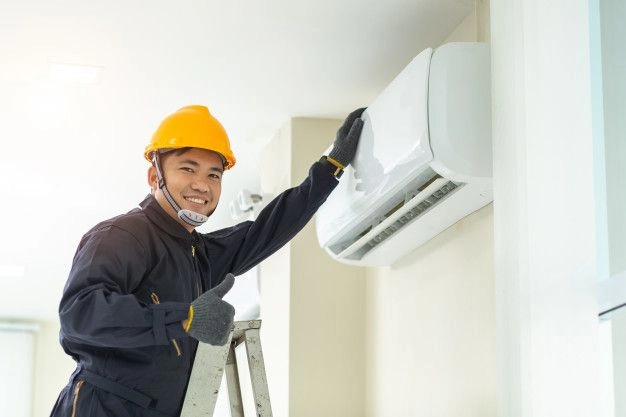
Comprehensive System Diagnostics and Repair
The complexity of ductless systems requires a systematic approach to troubleshooting. Unlike traditional central air systems, mini-splits often feature self-diagnostic codes that appear on the unit or remote. However, these codes only point to the general area of the fault. Professional service involves interpreting these codes and physically verifying the failure before recommending a repair.
- Refrigerant Leak Detection: Low refrigerant is a common cause of poor performance. Technicians use electronic leak detectors to scan line sets, flare connections, and coils. Once the leak is found, it is repaired, and the system is recharged to factory specifications to ensure the compressor does not overheat.
- Communication Wire Troubleshooting: Problems with the communication signal between the indoor and outdoor units can cause the system to shut down completely. Service includes inspecting wiring for corrosion, loose connections, or damage from rodents, which is often a culprit in outdoor units.
- Control Board Analysis: If the system is receiving power but not responding, the issue often lies with the printed circuit board (PCB). Technicians test individual components on the board to determine if a replacement is necessary or if a simple fuse replacement will solve the issue.
- Sensor Calibration: Ductless units rely on thermistors (temperature sensors) to regulate operation. If a sensor is reading incorrectly, the unit may short cycle or fail to reach the set temperature. Testing these sensors against actual ambient temperatures ensures the system cycles correctly.
- Condensate Pump Repair: For units installed on interior walls where gravity drainage isn't possible, condensate pumps are used. If these fail, the unit will shut off to prevent overflowing. Service includes testing the pump mechanism and float switch functionality.
The Execution of the Service Process
Understanding the workflow of a professional service appointment helps homeowners prepare and ensures expectations are met. The process is designed to be efficient, respectful of your property, and transparent regarding costs and timelines.
- Arrival and Site Protection: The technician arrives within the scheduled window, fully equipped with the necessary tools and common parts. Before entering the home, shoe covers are applied, and drop cloths are used around the indoor unit to protect flooring and furniture from dust or water during cleaning or repair.
- Initial Assessment and Code Retrieval: The technician will ask about the specific symptoms you are experiencing. They will then operate the unit to replicate the issue and check for error codes displayed on the unit or the remote control interface.
- Detailed Diagnostic Testing: Using specialized tools, the technician isolates the problem. This involves electrical testing, temperature split measurements (the difference between air entering and leaving the unit), and pressure tests. This step confirms exactly what is broken and why it failed.
- Explanation and Approval: Once the issue is identified, the technician explains the findings clearly. You are presented with the repair options, the associated costs, and the estimated time for completion. No work begins without your explicit approval.
- Execution of Repair or Maintenance: With approval granted, the repair is performed. This might involve soldering a leak, replacing a fan motor, swapping out a control board, or performing a deep chemical clean of the coils.
- System Testing and Validation: After the repair, the system is run through a full operational cycle in both heating and cooling modes (if applicable). The technician verifies that the airflow is strong, the temperature split is correct, and no unusual noises or vibrations are present.
- Cleanup and Final Report: The work area is cleaned thoroughly. The technician provides a detailed service report outlining what was done, any parts replaced, and recommendations for future care to prevent recurrence.
Deciding When Replacement Beats Repair
There comes a point in the lifecycle of every HVAC system where continuing to repair it becomes less economical than replacing it. Ductless mini-splits generally have a lifespan of 15 to 20 years with proper maintenance, but several factors can accelerate the need for replacement. Making the right decision depends on weighing the immediate cost of repair against the long-term benefits of a new system.
- The 50% Rule: A widely accepted guideline in the HVAC industry is the 50% rule. If the cost of the necessary repair approaches or exceeds 50% of the cost of a new system, replacement is usually the better financial decision. This is especially true if the equipment is out of warranty.
- Frequency of Breakdowns: If you have required service calls multiple times in the last two years, the system is likely becoming unreliable. The cumulative cost of frequent minor repairs often outpaces the monthly cost of financing a new, reliable unit.
- Component Obsolescence: As systems age, manufacturer support for specific parts may dwindle. If a critical component like a compressor or a specific control board is on backorder or discontinued, keeping the old system running becomes difficult or impossible.
- Energy Efficiency Degradation: Older units, even when running, may not maintain their original SEER (Seasonal Energy Efficiency Ratio) rating. If your utility bills in Arroyo Grande have been steadily climbing despite normal usage, the system’s compressor or heat exchange efficiency has likely degraded significantly.
- Refrigerant Type: Older systems may utilize R-410A or even older refrigerants. As regulations change and newer, more efficient refrigerants become the standard, servicing older units becomes more expensive due to the rising cost and scarcity of the older refrigerant types.
Local Climate and Regulatory Considerations
Operating a ductless system in the Central Coast region presents specific challenges and requirements. The climate in this area is characterized by mild temperatures year-round, but the specific weather patterns influence how these systems must be maintained. We have wet winters and dry summers, which creates a specific environment for HVAC equipment.
The wet winter months from November to March introduce significant moisture into the air. For ductless systems, this increases the likelihood of biological growth on the indoor blower wheels and coils. If a system is used for heating during these damp months, the outdoor unit will go into defrost mode periodically. Ensuring the outdoor unit is mounted off the ground and drains properly is essential to prevent ice buildup or water pooling that can damage the foundation or the unit itself.
Conversely, the dry summers mean dust and pollen are prevalent. Filters in mini-split heads are smaller than those in central systems and can clog rapidly in dusty environments. This restricts airflow and forces the system to work harder, driving up energy costs. Regular filter maintenance is strictly required to handle the local particulate matter.
From a regulatory standpoint, California has strict energy codes under Title 24. When performing significant repairs or alterations to an HVAC system, compliance with these efficiency standards is mandatory. Additionally, proper refrigerant handling is heavily regulated to protect the environment. Professional service ensures that all refrigerant recovery and charging is done in accordance with EPA Section 608 regulations, preventing legal liabilities for the homeowner. Local noise ordinances in residential zones may also dictate where outdoor units can be relocated if a system configuration needs to be changed during a major repair.
Why Professional Execution Matters
The difference between a quick fix and a lasting solution often lies in the expertise of the technician. Ductless systems are precision instruments. Over-tightening a flare connection by a fraction can cause a leak; under-charging the system by a few ounces can ruin the compressor. Choosing a service provider with specific training in ductless technology is critical for the longevity of the equipment.
- Accurate Load Calculation verification: During a service call, technicians can verify if the installed unit is actually the right size for the room. Improper sizing is a frequent cause of short-cycling and premature failure.
- Inverter Technology Expertise: Modern ductless systems use variable-speed compressors. Diagnosing these requires specialized knowledge of DC voltage conversion and frequency modulation that general handymen do not possess.
- Proper Tooling: Working on mini-splits requires specific adapters for vacuum pumps, torque wrenches calibrated for flare nuts, and micron gauges to ensure a moisture-free system. Professional trucks are stocked with these specific tools.
- Warranty Preservation: Most manufacturers require proof of professional maintenance to honor parts warranties. DIY repairs or service by unlicensed individuals can void these warranties instantly.
Restoring Comfort to Your Home
Your home comfort system should be an asset, not a source of stress. When your ductless unit malfunctions, it disrupts your daily life and impacts the livability of your space. Prompt, professional intervention stops minor issues from spiraling into catastrophic failures. By addressing noises, leaks, or temperature inconsistencies early, you protect the significant investment you have made in your home’s heating and cooling infrastructure.
We focus on delivering results that last. The goal is to leave your system running quieter, cleaner, and more efficiently than when we arrived. Whether it is a simple capacitor replacement or a complex compressor change-out, the work is performed with attention to detail and respect for your home. Organ & Sons Mechanical, Inc. is committed to keeping your environment comfortable year-round.
Don’t let a malfunctioning ductless system disrupt your day. Contact us now to schedule your expert service and restore your comfort immediately.
Contact Us