



Is Your Current HVAC System Failing to Keep Up?
Inconsistent indoor temperatures and rising utility bills often signal that your heating and cooling equipment can no longer handle the specific demands of the Arroyo Grande climate. Whether you are facing a complete system breakdown during a summer heatwave or your furnace is rattling during a wet winter night, immediate professional intervention is required to restore comfort and safety. Contact us or inquire about our flexible financing options to schedule your assessment today.
Homeowners frequently delay replacing aging units, hoping for one last repair, only to face higher costs and diminished performance. Organ & Sons Mechanical, Inc. provides comprehensive installation services designed to eliminate these inefficiencies. We focus on sizing, efficiency, and longevity, ensuring your new investment performs optimally from day one.
- Rapid, same-day installation availability to minimize discomfort and downtime in your home.
- Transparent, upfront pricing structures with no hidden fees and clear financing pathways.
- Certified, factory-trained technicians dedicated to precision and high-quality workmanship.
All installations are fully compliant with local building codes and backed by comprehensive manufacturer and labor warranties.
Immediate Solutions for HVAC Performance Issues
When a heating or cooling system fails, the impact on your home environment is immediate. The Mediterranean climate here brings warm, dry summers and significantly cooler, wet winters. An old or undersized unit struggles to transition between these extremes, often running constantly without reaching the set temperature. We provide immediate evaluations to determine the most effective path forward, focusing on restoring your home's climate control capability. — try our HVAC troubleshooter today.
Our installation services cover a broad spectrum of equipment designed for modern energy efficiency standards. We do not simply swap out boxes; we analyze the home's thermal envelope. This ensures that the equipment we install is not just new, but the correct solution for the specific square footage and insulation levels of your property.
- Central Air Conditioning Systems: High-efficiency split systems that manage humidity and temperature effectively during the dry summer months.
- Gas Furnaces: Reliable heating solutions that provide consistent warmth when evening temperatures drop significantly.
- Heat Pumps: Versatile units capable of both heating and cooling, ideal for the moderate regional climate where extreme freezing is rare.
- Ductless Mini-Splits: Targeted comfort solutions for room additions or homes without existing ductwork.
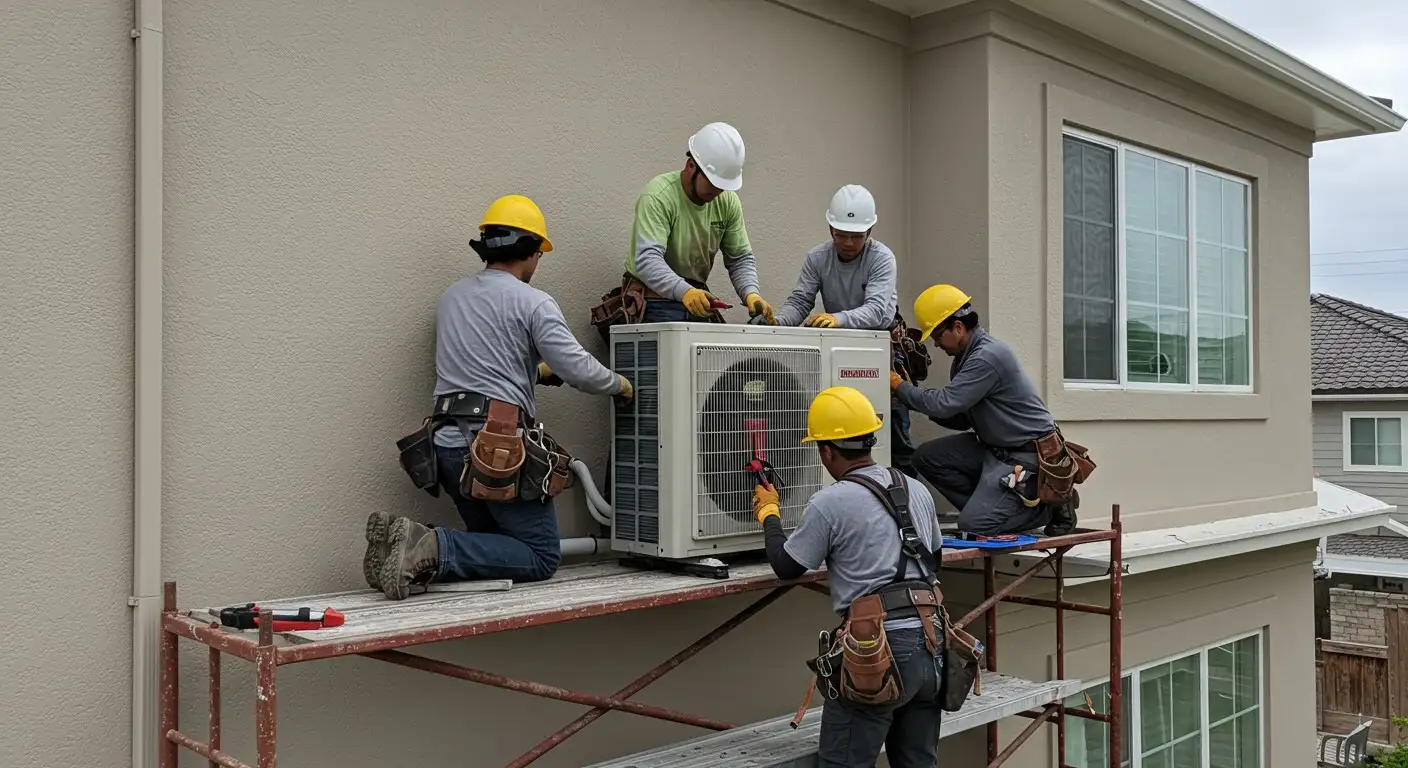
Understanding the Installation Process: Step-by-Step Guide
A successful HVAC installation relies heavily on the procedure followed before and during the physical work. Manufacturer specifications are strict; deviating from them can reduce the system's lifespan and void warranties. We follow a rigorous, technical process to ensure every component functions as intended.
Load Calculation and Sizing:
Before any equipment is ordered, we perform a detailed load calculation. This goes beyond just looking at the size of the old unit. We factor in window placement, insulation quality, and the orientation of the home. This calculation ensures the new system is neither oversized (which causes short-cycling and humidity issues) nor undersized (which runs continuously without cooling or heating effectively).
Site Preparation and Protection:
Technicians prepare the workspace to protect your property. Drop cloths are used to cover flooring, and the area surrounding the indoor and outdoor units is cleared. Safety protocols are established to manage gas lines and high-voltage electrical connections securely.
Safe Removal and Disposal:
The existing equipment is disconnected and removed. This involves capturing and recycling old refrigerant according to EPA regulations to prevent environmental contamination. We handle the disposal of the old metal and components, leaving you with a clean slate for the new system.
Equipment Positioning and Connection:
The new indoor and outdoor units are leveled and secured. Proper leveling is critical for compressor health and drainage. We connect the refrigerant lines, brazing them with nitrogen to prevent internal oxidation. Electrical wiring and control voltage wires are connected and tested for proper polarity and grounding.
Ductwork and Airflow Optimization:
Connecting the new unit to existing ductwork often requires custom sheet metal fabrication to ensure a sealed, streamlined fit. We seal these connections to prevent air leakage, which is a primary source of energy loss.
System Commissioning and Testing:
Once physically installed, the system is not just turned on; it is commissioned. We measure static pressure, check refrigerant subcooling and superheat levels, and verify gas pressure for furnaces. This data confirms the system is operating within the precise engineering parameters set by the manufacturer.
When to Opt for HVAC Replacement Over Repair
Deciding between repairing a malfunctioning unit or investing in a new system is a common dilemma. While repairs may seem cheaper upfront, they often act as a temporary bandage on a failing system. There are specific technical and financial indicators that suggest replacement is the more prudent financial decision.
The 50% Rule:
If the cost of the repair approaches or exceeds 50% of the value of the system (or the cost of a new unit), replacement is generally the better choice. Investing heavily in a depreciating asset rarely yields a return on investment.
System Age:
Heat pumps and air conditioners typically last 10 to 15 years, while furnaces may last 15 to 20 years. If your equipment in Arroyo Grande has surpassed these benchmarks, parts are likely becoming obsolete, and efficiency has degraded significantly. Even if it runs, it is likely costing you more in energy usage than a modern unit would.
Frequency of Breakdowns:
Recurring issues indicate that the internal components are failing sequentially. Fixing a compressor one month and a blower motor the next creates a cycle of expense that exceeds the monthly payment of a new, warrantied system.
Efficiency Ratings (SEER2 and HSPF2):
Older systems often operate at 10 SEER or lower. Modern standards require higher efficiency ratings (SEER2). Upgrading to a modern system can reduce energy consumption by 20% to 40%, offsetting the installation cost over time through utility savings. Organ & Sons Mechanical, Inc. can help you calculate the projected savings based on your current usage patterns.
Comfort Consistency:
If some rooms are freezing while others are hot, or if the unit struggles to maintain the set point during mild weather, the system has likely lost compression or airflow capacity. Replacement allows for the correction of these comfort imbalances.
Navigating Local Regulations and Seasonal Considerations
Installing HVAC equipment involves more than just mechanical labor; it requires adherence to strict regional codes and an understanding of the local environment. In Arroyo Grande, the climate presents specific challenges that dictate how systems should be selected and installed.
Managing Coastal Influence and Humidity:
The proximity to the ocean introduces moisture and salt air, particularly affecting outdoor condenser units. We recommend equipment with robust, corrosion-resistant coatings or composite bases to withstand the elements. During the wet winters, heat pumps must be elevated properly to allow for defrost drainage and airflow, preventing ice buildup and rust.
California Title 24 Compliance:
California has some of the strictest energy codes in the nation. Title 24 mandates specific efficiency ratings and often requires third-party HERS (Home Energy Rating System) testing after installation. This testing verifies that ductwork leakage is minimal and that the refrigerant charge is correct. Failing to pull permits or skip these tests can result in fines and complications when selling the home. We handle the permitting process and coordinate necessary inspections to ensure full legal compliance. — check our HVAC FAQs.
Refrigerant Phase-Outs:
Environmental regulations are shifting away from older refrigerants like R-410A toward low-GWP (Global Warming Potential) alternatives. Installing a new system ensures you are using current technology that will be serviceable and compliant for years to come, avoiding the skyrocketing costs of phased-out refrigerants.
Seasonal Temperature Swings:
The region sees a distinct drop in temperature in the evenings, even after hot days. This requires a system with responsive controls. Variable-speed blowers and two-stage compressors are particularly effective here, as they can ramp down to maintain comfort quietly and efficiently without the harsh on/off cycling of single-stage units.
Why Professional Execution Matters for Long-Term Performance
The most important day in the life of your heating and cooling system is the day it is installed. Industry research consistently shows that the quality of the installation is more important than the brand name on the box. A top-tier unit installed poorly will perform worse than a mid-range unit installed perfectly. — visit our HVAC blog for insights.
Preserving Manufacturer Warranties:
Manufacturers expressly state that warranties are valid only if the equipment is installed by a licensed professional. DIY or handyman installations often void these protections immediately, leaving the homeowner liable for expensive parts failures.
Safety and Air Quality:
Gas furnaces involve combustion, carbon monoxide, and gas piping. Improper venting or connections can pose serious health risks. Similarly, electrical connections for AC units involve high voltage that requires strict adherence to safety codes to prevent fire hazards. Professional installation ensures these risks are mitigated through rigorous testing.
Optimized Efficiency:
A system that is overcharged with refrigerant or has restricted airflow will consume excessive electricity. Our technicians utilize digital manifolds and airflow hoods to dial in the system to the manufacturer’s exact specs, ensuring you get the efficiency rating you paid for.
Correct Duct Integration:
Connecting a new, high-power blower to old, undersized, or leaky ductwork can lead to increased noise and static pressure problems. We assess the entire air distribution system, recommending modifications where necessary to ensure the new unit delivers air quietly and evenly throughout the home.
Secure Your Comfort With Reliable Installation
Your home’s comfort system is a complex integration of mechanical, electrical, and airflow technologies. When it is time to upgrade or replace your equipment, the decision impacts your daily life, your energy bills, and your home’s value for the next decade. Do not settle for quick fixes or unlicensed work that leads to future headaches.
We provide the expertise, the certification, and the local knowledge required to install systems that withstand the wet winters and dry summers of the Central Coast. From the initial load calculation to the final safety check, every step is executed with precision.
Organ & Sons Mechanical, Inc. is ready to help you transition to a more efficient, reliable, and comfortable home environment.
Take control of your indoor climate today—schedule your comprehensive estimate.
Contact Us