



24 Hour HVAC Service in Arroyo Grande, CA
24 Hour HVAC Service in Arroyo Grande, CA
Need Fast HVAC Help? Immediate 24/7 Service Available
Facing an HVAC breakdown at the worst possible time is stressful, but our team is ready to provide express troubleshooting and repairs, day or night, for homeowners in Arroyo Grande. Contact Organ & Sons Mechanical, Inc. now to dispatch a technician immediately or inquire about our available financing options.
- Technicians arrive within hours to resolve your issue quickly.
- Expert solutions for any HVAC model, backed by immediate service guarantees.
- 24/7 support ensures we’re here when you need us most, even on holidays.
Licensed, insured, and up-front pricing — no surprises, just fast solutions.
Urgent HVAC Issues? We Respond Immediately
Heating and cooling systems rarely fail when it is convenient. Breakdowns often occur during the peaks of the season—the hottest afternoon of August or the coldest, wettest night in January—because that is when the equipment is under the highest mechanical stress. When your system stops working, the comfort of your home and the safety of your family are immediately compromised. A comprehensive 24-hour service is not just about convenience; it is about mitigating damage to your home and restoring a safe environment.
Residents in Arroyo Grande experience a Mediterranean climate that can shift rapidly. While summers are dry and warm, necessitating reliable air conditioning, the winters bring moisture and lows in the 60s or below, making heating essential. A failure in either system requires immediate professional attention. Organ & Sons Mechanical, Inc. understands that waiting until "regular business hours" is often not an option when temperatures inside the home become unbearable or when safety issues, such as electrical hazards or gas concerns, arise.
We categorize emergency calls to prioritize the most critical situations. While a strange noise might wait until morning, the following scenarios trigger our urgent response protocols:
- Complete System Failure: When the unit will not turn on despite thermostat adjustments, leaving the home without climate control during extreme weather.
- Electrical Burning Smells: Distinct odors of melting plastic or ozone indicate severe electrical faults, such as overheated wiring or seized motors, which pose a fire risk.
- Gas Leaks or Odors: If you smell sulfur or rotten eggs near your furnace, this is an immediate emergency requiring utility shutoff and professional inspection.
- Refrigerant Leaks: Visible ice on coils or hissing sounds often indicate a refrigerant breach, which can permanently damage the compressor if the system continues to run.
- Excessive Water Leakage: Clogged condensate lines can cause water to back up and damage ceilings or flooring, requiring immediate clearance.
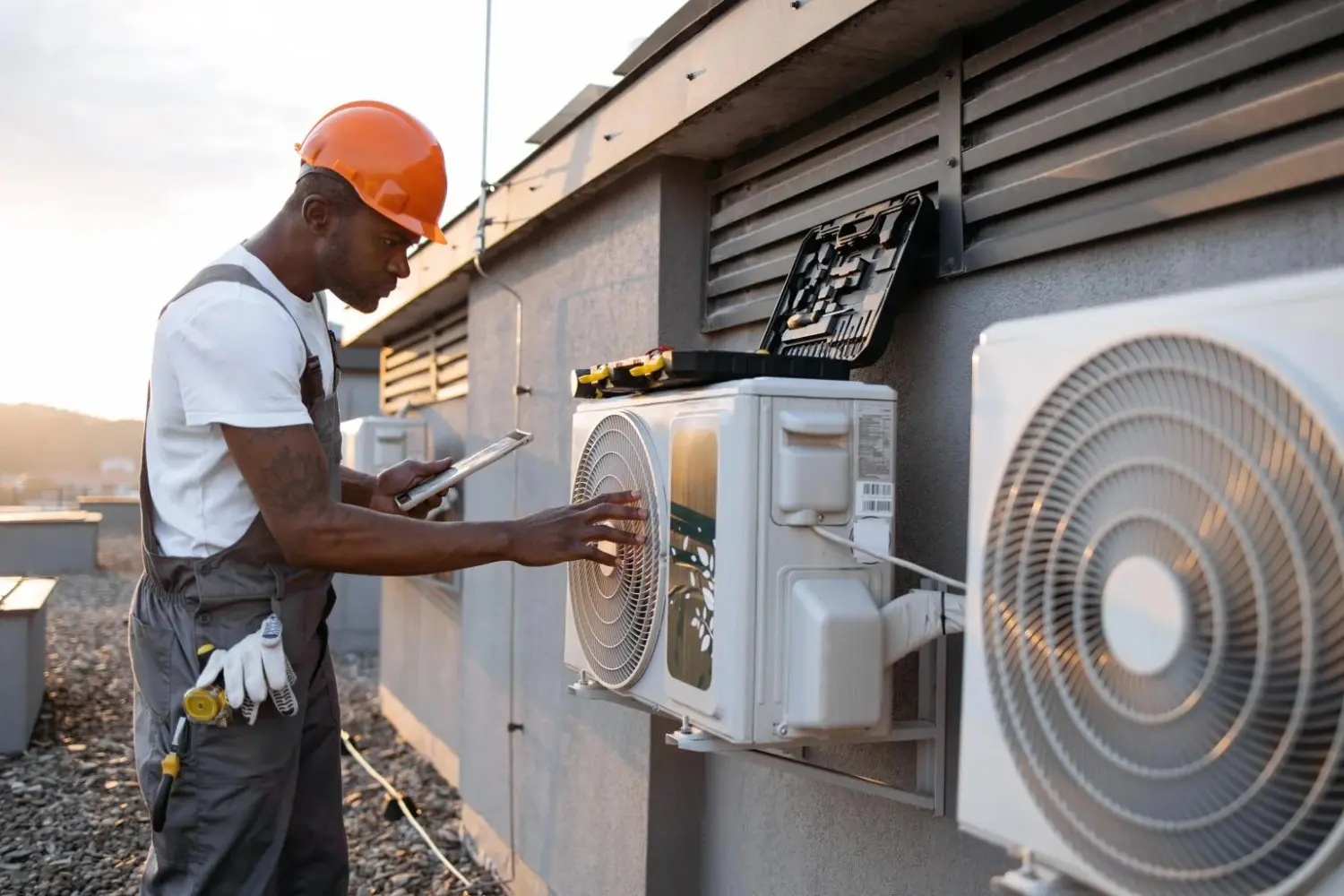
What You Can Expect From Emergency Service
Calling for after-hours service involves a specific workflow designed to diagnose and resolve issues as efficiently as possible. When you request 24-hour assistance, the focus is on speed, accuracy, and stabilizing the situation. The goal is to return your home to a comfortable temperature or, at a minimum, ensure the system is safe until a major component can be acquired — see our HVAC FAQs for more.
Upon arrival, the technician performs a focused diagnostic assessment. This is not a general maintenance tune-up; it is a targeted investigation into the cause of the failure. The service vehicle is stocked with a wide inventory of universal parts, including capacitors, contactors, igniters, and control boards. This "truck stock" allows for the immediate repair of the most common HVAC failures without needing to wait for suppliers to open.
The scope of an emergency visit typically includes:
- Rapid Diagnostics: Utilizing advanced multimeters and pressure gauges to isolate the failed component within the electrical or refrigerant circuit.
- Safety Inspection: Verifying that no secondary hazards exist, such as carbon monoxide back-drafting or exposed high-voltage wiring.
- Temporary vs. Permanent Solutions: In cases where a proprietary part (like a specific blower motor or heat exchanger) must be ordered, the technician will explain options to get the system running temporarily or provide auxiliary heating/cooling solutions if available.
- Clear Communication: You receive a detailed explanation of the failure, the required fix, and the associated costs before any work begins.
Our Troubleshooting and Repair Process
Effective repair requires a systematic approach to ensure the root cause is addressed, not just the symptom. A technician does not simply swap parts and hope for the best; they follow a logic-based troubleshooting sequence to ensure the system is restored to manufacturer specifications. This process remains consistent whether the call comes in at 2:00 PM or 2:00 AM.
- Thermostat and Control Verification: The technician begins at the user interface. They check for proper communication between the thermostat and the control board. Often, issues stem from low batteries, loose low-voltage wiring, or calibration errors that prevent the signal from reaching the furnace or AC unit.
- Airflow and Filtration Analysis: Restricted airflow is a leading cause of system paralysis. The technician inspects the filter condition, return air grilles, and blower wheel. A severely clogged filter can cause an AC unit to freeze up or a furnace to overheat and trip its high-limit switch. Clearing these restrictions is often the first step in restoring function.
- Electrical Component Testing: If controls and airflow are normal, the technician tests the high-voltage components. This involves measuring the microfarads on run capacitors, checking the resistance across contactor coils, and verifying the amperage draw of the compressor and fan motors. Deviations from the rated specs indicate a failing part that must be replaced.
- Refrigeration and Combustion Analysis: For cooling issues, the technician measures subcooling and superheat levels to verify refrigerant charge. For heating issues, they analyze the flame sensor current, igniter resistance, and gas pressure at the manifold. This ensures the unit is burning fuel safely and efficiently.
- System Operation Verification: Once the repair is made, the system is cycled through a full run time. The technician measures the temperature split (the difference between supply and return air temperature) to confirm the system is actually adding or removing heat as intended.
Deciding Between Emergency Repair and System Replacement
One of the most difficult decisions a homeowner faces during an after-hours call is whether to invest in a repair or consider a full system replacement. This decision is often time-sensitive. While a quick repair is usually preferred, there are mathematical and practical tipping points where putting money into an old system is no longer economical.
Mid-page, it is important to note that Organ & Sons Mechanical, Inc. technicians provide objective data to help you make this choice. We present the condition of the unit and the cost of the repair, allowing you to decide without pressure.
Consider the following factors when weighing your options:
- The 50% Rule: If the cost of the repair approaches 50% of the value of a new system, replacement is generally the smarter financial move. This is especially true if the system is out of warranty.
- System Age and R-22 Refrigerant: If your air conditioner is over 15 years old and utilizes R-22 (Freon), repair costs can be exorbitant due to the scarcity of this phased-out refrigerant — see our HVAC terminology page. Investing in a leak repair for an R-22 system is rarely a good long-term strategy compared to upgrading to a modern, high-efficiency unit.
- Frequency of Breakdowns: If you have required emergency service more than twice in the last two years, the system is likely reaching the end of its useful life. "Nickel and diming" a failing unit with frequent service calls often costs more annually than the monthly payments on a new, energy-efficient system.
- Critical Component Failure: Failures of major components like the compressor or the heat exchanger are catastrophic. These repairs are labor-intensive and expensive. If these parts fail on an older unit, replacement is almost always the recommended path.
Local Factors Affecting HVAC in Arroyo Grande
Operating an HVAC system in Arroyo Grande presents unique challenges due to the specific microclimate and local regulations — visit our HVAC blog for advice. The proximity to the coast means equipment is exposed to marine air, which can accelerate corrosion on outdoor condenser coils and electrical contacts. This environmental factor makes routine maintenance and prompt repair of minor surface rust essential to prolonging system life.
The region's weather pattern—wet winters and dry summers—creates a dual load on systems. During the rainy season from November to March, heating systems must combat high humidity levels inside the home. If a furnace is not sized correctly or if the heat exchanger is compromised, the system may struggle to dehumidify, leading to a clammy indoor environment. Conversely, the dry summer heat puts a heavy particulate load on filters, as dust and pollen are more prevalent.
Local compliance is also a major factor in HVAC work.
- Title 24 Compliance: California’s energy code (Title 24) is strict. Any significant alteration, repair, or replacement of HVAC equipment in Arroyo Grande must meet specific efficiency standards. This includes duct testing and ensuring programmable thermostats are installed.
- Permitting Requirements: Professional HVAC providers handle the necessary permitting for major repairs and replacements. Unpermitted work can lead to fines and complications when selling a home.
- Utility Incentives: Local utility providers, such as PG&E, often offer rebates for upgrading to high-efficiency heat pumps or energy-star rated gas furnaces. A professional service provider can guide you through qualifying for these programs during a replacement scenario.
Why Homeowners Choose Professional Emergency Teams
When an HVAC emergency strikes, the temptation to call a general handyman or attempt a DIY fix can be strong. However, modern heating and cooling systems are complex appliances involving high-voltage electricity, combustible gases, and pressurized refrigerants. The risks associated with unqualified repair attempts include voided warranties, permanent system damage, and serious safety hazards.
Professional emergency technicians are rigorously trained to handle these specific risks. They carry the necessary liability insurance to protect your property and the specialized certifications (such as EPA Section 608 for refrigerants) required by law.
- Proper Tooling: Professionals utilize diagnostic tools that pinpoint problems invisible to the naked eye, such as microscopic cracks in a heat exchanger or minute voltage irregularities.
- Warranty Preservation: Most equipment manufacturers require proof of professional service to honor parts warranties.
- Stocked Inventory: A dedicated HVAC service vehicle carries hundreds of parts, significantly increasing the likelihood of a "one-trip" fix compared to a generalist who must source parts the next day.
- Code Adherence: All repairs are performed in accordance with local building codes and safety standards, ensuring the long-term legality and safety of the installation.
Reliability is the cornerstone of emergency service. You need a team that answers the phone, provides a clear arrival window, and possesses the technical expertise to resolve the issue regardless of the make or model of your equipment. When you trust your home comfort to Organ & Sons Mechanical, Inc., you are choosing a partner dedicated to restoring your environment swiftly and safely.
Don't let a broken heater or AC unit disrupt your life any longer. Get the immediate, professional help you need right now.
Call our team immediately to dispatch an emergency technician to your home.
Continuous Support for Unplanned HVAC Needs
Reliable 24-hour HVAC service in Arroyo Grande, CA, ensures system issues are addressed whenever they occur. Organ & Sons Mechanical, Inc. provides around-the-clock service availability to reduce downtime and equipment strain. Unresolved HVAC concerns can escalate quickly without timely attention. Our team delivers responsive service focused on restoring dependable operation.
Ensure HVAC support is available whenever system issues arise.
Access 24 Hour HVAC Service Support
Contact Us