



Is your furnace ready for Arroyo Grande's chilly nights?
When winter weather hits Arroyo Grande, the last thing you want is a furnace failure leaving your home uncomfortably cold. Ensure your system is up and running with trusted local experts who can diagnose and resolve heating issues immediately; call us to schedule your repair or discuss financing options today. A functioning heating system is not just a matter of comfort but also of safety during the coldest months of the year.
- Quick, same-day service to restore comfort promptly.
- Transparent pricing with no hidden fees.
- 24/7 availability for emergency repairs.
Fully licensed and insured — all work guaranteed.
Comprehensive Diagnostic and Repair Services
A furnace breakdown rarely happens at a convenient time. Whether the unit has stopped producing heat entirely or is making alarming noises, immediate professional intervention is required to prevent further damage to the system. The primary goal of a service visit is to accurately identify the root cause of the failure rather than simply swapping out parts. Modern heating systems involve complex interactions between gas valves, electrical circuits, and airflow mechanics, all of which must function in unison.
Technicians arrive equipped to handle a wide array of heating emergencies. In Arroyo Grande, where the damp winters can accelerate corrosion in older units, specific attention is paid to the integrity of the heat exchanger and the burner assembly. The scope of repair covers every component of the central heating system. This includes calibrating thermostats for precise temperature control, unblocking condensate lines in high-efficiency models, and replacing faulty ignition sensors that prevent the burners from lighting.
The service extends to airflow management. A furnace cannot heat a home effectively if the blower motor is seizing or if the limit switch is tripping due to overheating. Comprehensive testing ensures that warm air is being distributed evenly throughout the residence. By addressing electrical connections and gas pressure settings, the system is restored to the manufacturer’s specifications, ensuring efficient operation that keeps utility bills manageable during the peak heating season.
The Furnace Repair Process
Understanding what happens during a service call eliminates the uncertainty of home repairs. The process is designed to be systematic and transparent, ensuring homeowners know exactly what is wrong and how it will be fixed before any work begins — check our HVAC FAQs page.
- Initial Assessment and Safety Check: The technician begins by inspecting the unit for immediate safety hazards, such as gas leaks or carbon monoxide risks. This step is non-negotiable and prioritizes the safety of the household.
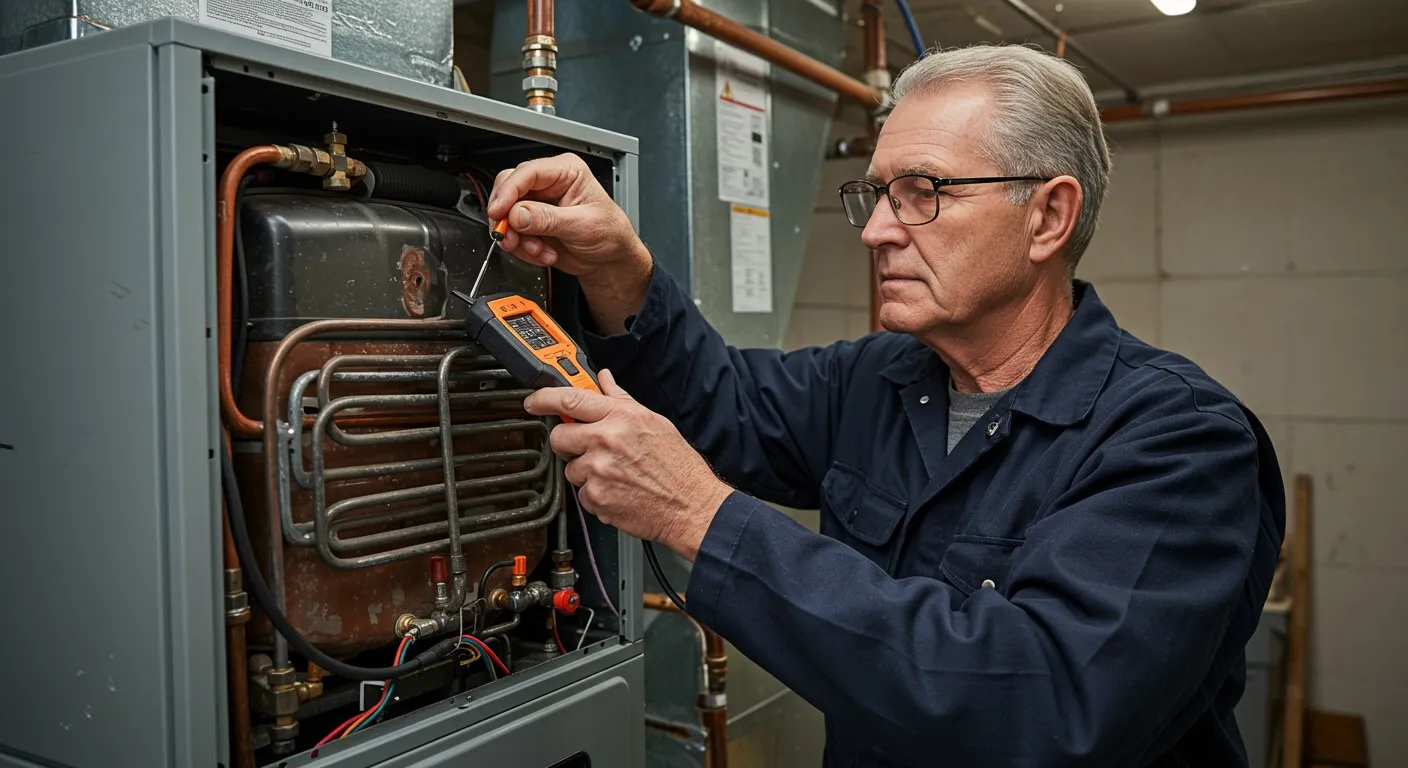
- Systematic Troubleshooting: Using specialized diagnostic tools, the technician tests individual components. This includes checking voltage to the igniter, measuring the microamp draw on the flame sensor, and testing the pressure switch to ensure the draft inducer is working correctly.
- Diagnosis and Explanation: Once the issue is isolated, the findings are presented clearly. You receive a detailed explanation of the failed part, why it failed, and the options available for repair.
- Execution of Repairs: Upon approval, the necessary repairs are performed using high-quality replacement parts. The focus is on long-term reliability rather than temporary patches.
- Performance Verification: After the repair is complete, the furnace is cycled through a full heating run. The technician measures the temperature rise (the difference between air entering and leaving the unit) to confirm it falls within the rated range.
- Site Cleanup: The workspace is left clean, and old parts are removed and disposed of properly.
Identifying Common Heating System Failures
Furnaces often provide warning signs before a catastrophic failure. Recognizing these symptoms allows homeowners to seek repair services before the system shuts down completely.
- Ignition Failure: If the furnace attempts to start but the burners never ignite, the issue often lies with the hot surface igniter or the pilot light assembly. In modern units, electronic ignition systems are reliable but can fail due to cracks or electrical shorts.
- Short Cycling: When a furnace turns on and off rapidly without reaching the set temperature, it is short cycling. This is frequently caused by a dirty flame sensor, a clogged air filter restricting airflow, or an overheating heat exchanger triggering the high-limit switch.
- Noisy Operation: Mechanical systems should run relatively quietly. Banging sounds often indicate thermal expansion or ductwork issues, while high-pitched squealing suggests a slipping blower belt or a dying motor bearing. Rattling may point to loose panels or a cracked heat exchanger.
- Weak Airflow: If the air coming from the vents is lukewarm or the flow is weak, the blower motor may be struggling, or there could be a breach in the ductwork. In some cases, a clogged secondary heat exchanger in high-efficiency units restricts exhaust flow, causing the system to lock out.
- Thermostat Inaccuracies: Sometimes the furnace is operational, but the communication from the thermostat is flawed. This results in wide temperature swings or a system that refuses to turn off.
Deciding Between Repair and Replacement
Homeowners often face the difficult choice of sinking money into an existing unit or investing in a new system. This decision relies on data, age, and cost efficiency rather than guesswork.
- The 50% Rule: A general industry standard suggests that if the cost of the repair approaches 50% of the cost of a new system, replacement is the smarter financial move. This is particularly true if the unit is out of warranty.
- Age of the System: Furnaces typically last between 15 and 20 years. If a unit in Arroyo Grande is approaching the two-decade mark, parts may be obsolete or prohibitively expensive. A repair on a unit this old is often a temporary fix before another component fails.
- Frequency of Breakdowns: If a system has required multiple repairs in the last two years, it has likely reached the end of its reliable lifespan. "Nickle and diming" repairs can quickly exceed the monthly cost of financing a modern, high-efficiency replacement.
- Energy Efficiency: Older furnaces often operate at 60% to 70% AFUE (Annual Fuel Utilization Efficiency). Modern units operate at 95% or higher. Replacing an old unit can result in immediate monthly savings on gas bills, which factors into the long-term cost analysis.
- Safety Concerns: If the heat exchanger is cracked, repair is rarely a safe option. A cracked heat exchanger can leak carbon monoxide into the living space. In this scenario, immediate replacement is the only responsible choice for occupant safety.
Local Considerations for Heating Maintenance
Operating a furnace in the Central Coast region presents specific challenges that differ from inland climates. While winters are generally mild compared to other parts of the country, the humidity and salt air can impact HVAC equipment longevity.
- Corrosion Risks: The proximity to the ocean means that external components and intake pipes are subject to salt air corrosion. Regular inspections focus on checking gas piping and electrical contacts for oxidation that could lead to intermittent failures.
- Moisture Management: Wet winters in the region mean that condensate drains on high-efficiency furnaces must be kept clear. If these freeze or clog due to debris, the furnace will shut down to prevent water damage.
- Permitting and Compliance: Furnace repairs and replacements involving gas lines or significant electrical alterations must adhere to local building codes. Professional service providers ensure that all work is compliant with current safety regulations, which is vital for maintaining home insurance validity and resale value.
- Utility Rebates: Local utility providers often offer rebates for repairing or upgrading to energy-efficient systems. Technicians can provide documentation required to claim available incentives for energy-saving improvements.
The Importance of Professional Diagnostics
Attempting DIY repairs on a gas furnace poses significant risks. Modern heating systems contain safety interlocks designed to prevent fire and explosion; bypassing these or installing parts incorrectly can have dangerous consequences.
Organ & Sons Mechanical, Inc. utilizes advanced diagnostic tools to read error codes from the furnace control board. These codes provide a digital map of the system's status, indicating whether a fault is due to pressure, temperature, or electrical irregularities. Professional multimeters are used to check the resistance of igniters and the capacitance of motor run capacitors.
Gas pressure must be measured with a manometer to ensuring the manifold pressure matches the manufacturer’s plate rating. Too much pressure can overheat the exchanger; too little can cause condensation and corrosion. Furthermore, technicians verify the integrity of the venting system. A blocked flue pipe can force exhaust gases back into the home. Professional service ensures that the venting is drafting properly and that the combustion process is safe and efficient.
Preventive Maintenance to Avoid Emergencies
The best way to avoid an emergency repair call on a freezing night is proactive maintenance. While repairs address immediate breakage, maintenance prevents the break from happening.
- Sensor Cleaning: Flame sensors become coated in carbon and oxidation over time. Cleaning these ensures the furnace "sees" the fire and stays lit.
- Amp Draw Checks: Monitoring the electrical draw of the blower motor and inducer motor can predict failures before they happen. If a motor is pulling higher than rated amps, it is nearing the end of its life.
- Heat Exchanger Inspection: Visual and camera inspections of the heat exchanger look for hairline cracks that expand when heated. Catching these early prevents carbon monoxide leaks.
- Burner Adjustment: dirty burners produce a weak, yellow flame rather than a strong, blue one. Cleaning and aligning burners maximizes heat transfer and fuel efficiency.
Why Choose Us for Furnace Repair in Arroyo Grande
Choosing the right heating professional matters just as much as fixing the problem itself. Experience, accountability, and local knowledge make a measurable difference in the safety and longevity of your furnace.
What Sets Our Team Apart
- Local Expertise: Deep understanding of Arroyo Grande’s coastal climate, humidity levels, and corrosion risks that impact furnace performance.
- Experienced Technicians: Skilled professionals trained to service both modern high-efficiency systems and older heating equipment.
- Accurate Diagnostics: Focus on identifying root causes, not guesswork or unnecessary part replacements.
- Safety-First Approach: Strict adherence to gas safety standards, carbon monoxide prevention, and manufacturer specifications.
- Transparent Communication: Clear explanations of findings, repair options, and costs before any work begins.
- Code-Compliant Work: All repairs meet local building codes and industry regulations, protecting your home and insurance coverage.
- Long-Term Reliability: Repairs are performed with durability and efficiency in mind, not temporary fixes.
Restoring Your Home Comfort
A broken furnace disrupts daily life and poses health risks during cold snaps. Navigating the technical aspects of heating repair requires expertise, precision, and a deep understanding of local climate factors. Whether it is a simple sensor cleaning or a complex component replacement, the goal remains the same: safe, reliable heat for your home.
When your heating system falters, rely on the experience of Organ & Sons Mechanical, Inc. to resolve the issue efficiently. Do not let a cold house compromise your comfort or safety.
Secure your appointment now for professional furnace repair and get your heating system back on track immediately.
Contact Us