



Facing High Energy Bills and Inconsistent Indoor Comfort?
Experiencing uneven temperatures and skyrocketing energy bills often indicates that your current HVAC system has reached the end of its lifespan. For immediate scheduling or to discuss our available financing options, contact us today to secure your new system. Organ & Sons Mechanical, Inc. provides comprehensive heat pump solutions designed to handle the specific climate demands of San Luis Obispo, CA.
- Get a precise installation estimate and immediately understand how a modern system restores comfort to your home.
- Significantly reduce your monthly energy expenditures by upgrading to high-efficiency, Energy Star-certified models.
- Rely on licensed, insured professionals with a track record of safe, code-compliant installations.
Backed by strong manufacturer warranties and accessible financing options, your investment in a new heating and cooling system is secure.
Comprehensive Heat Pump Installation Services
When you choose to install a modern heat pump, you are investing in a dual-fuel solution that manages both heating and cooling from a single unit. This technology is particularly effective for the Mediterranean climate found in this region, where summers are dry and warm, and winters are mild but wet. Unlike traditional furnaces that burn fuel to create heat, a heat pump moves heat, making it a far more efficient option for temperature control.
Your installation service includes a full assessment of your home’s thermal characteristics. We perform load calculations to ensure the unit is sized correctly for your square footage and insulation levels. An oversized unit will short-cycle, leading to humidity issues and premature wear, while an undersized unit will run continuously without ever achieving the desired temperature.
The installation package typically covers:
- System Selection: Guidance on selecting between air-source, geothermal, or ductless mini-split configurations based on your property layout.
- Old Unit Disposal: Safe removal and environmentally responsible disposal of your existing furnace or air conditioner, including the reclamation of old refrigerant.
- Site Preparation: Leveling the ground for the outdoor condenser and ensuring proper clearance for airflow.
- Electrical Upgrades: verifying that your electrical panel can support the amperage requirements of the new equipment.
- Thermostat Integration: Installation of smart thermostats that optimize the efficiency of the heat pump by learning your schedule.
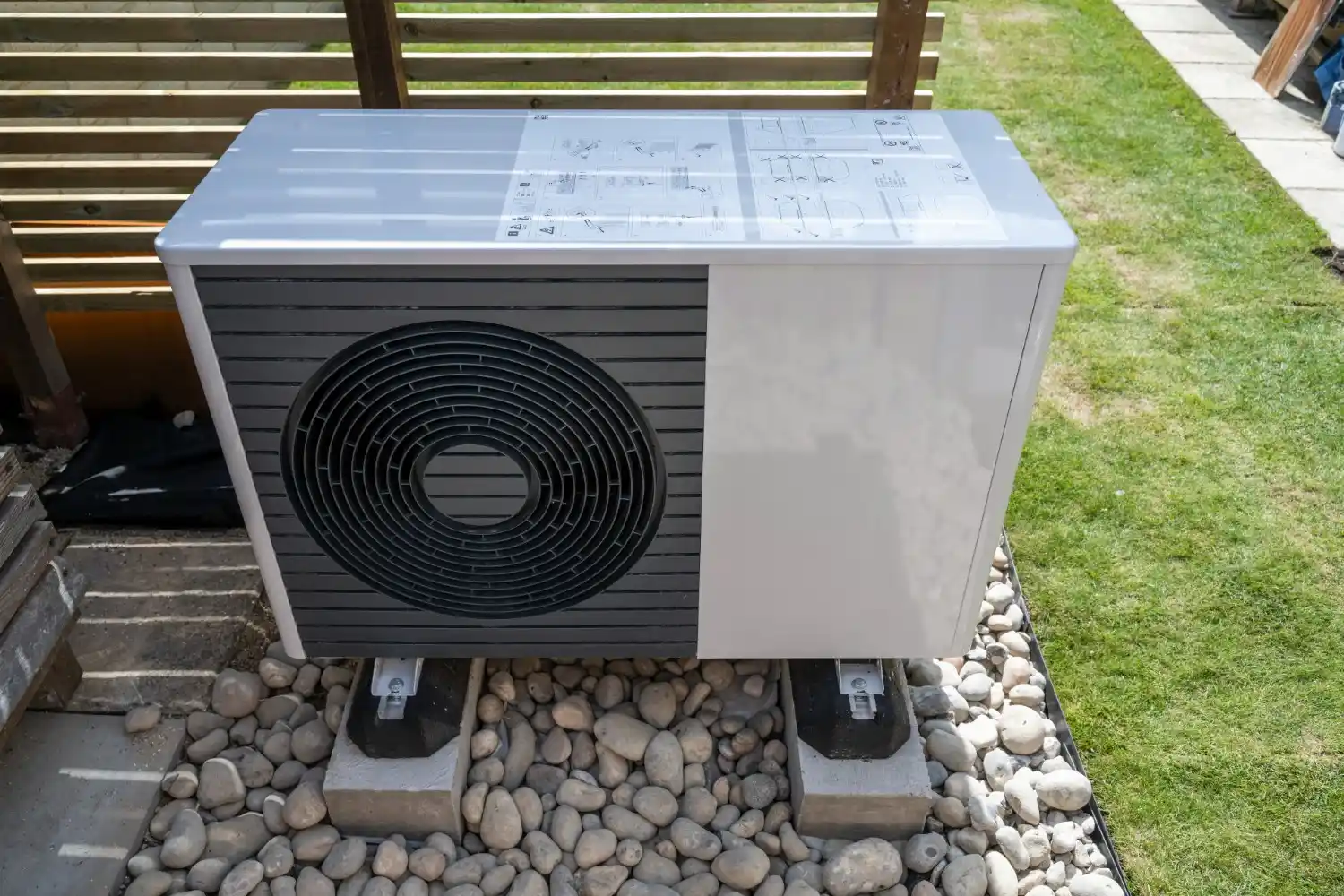
The Heat Pump Installation Process
A professional installation follows a rigorous, step-by-step protocol to ensure the system operates at peak efficiency for years to come. We do not cut corners; every connection is verified, and every component is tested before we leave your property.
Site Assessment and Protection
- The team arrives within the scheduled window and lays down protective coverings to keep your home clean.
- Technicians review the installation plan with you to confirm the location of indoor and outdoor units.
- Power to the existing HVAC system is shut off at the breaker panel for safety.
Removal of Existing Equipment
- Refrigerant is pumped down or recovered into certified cylinders to prevent atmospheric venting.
- Old electrical disconnects and whips are disconnected.
- The existing air handler or furnace and the outdoor condenser are disconnected from the ductwork and removed from the premises.
Indoor Unit Installation
- The evaporator coil and air handler are positioned and sealed to the existing supply and return plenums.
- Technicians check for air leaks in the immediate ductwork connections to prevent energy loss.
- A secondary drain pan and safety float switch are installed to protect your home from potential water damage.
Outdoor Unit Installation
- A new composite pad is placed on a leveled surface to support the condenser unit, keeping it off the ground and away from potential standing water.
- The outdoor unit is positioned with specific attention paid to manufacturer-specified clearances for maintenance and airflow.
- Seismic strapping is applied where required by local building codes to secure the unit.
Refrigerant Line Set Connection
- Copper refrigerant lines are routed from the indoor unit to the outdoor unit.
- Technicians braze the connections while flowing nitrogen through the lines to prevent oxidation and debris buildup inside the copper.
- A filter drier is installed to capture any moisture or contaminants that might remain in the system.
Pressure Testing and Vacuum
- The system is pressurized with nitrogen to a high PSI to ensure there are no leaks in the brazed joints.
- Once the pressure holds, a deep vacuum is pulled to below 500 microns to remove non-condensables and moisture.
- This step is critical; moisture left in the lines can mix with refrigerant oil to create acid, which destroys the compressor.
Final Charge and Startup
- Refrigerant is released into the system, and the charge is fine-tuned based on subcooling and superheat calculations.
- The system is powered on, and technicians test all modes of operation, including cooling, heating, and defrost cycles.
- Airflow is measured to ensure the static pressure is within the manufacturer’s design limits.
When to Replace vs. Repair Your System
Deciding between repairing an aging unit or investing in a new heat pump is a financial calculation based on age, efficiency, and reliability. While repairs may seem cheaper in the short term, they often lead to higher cumulative costs over time — try our HVAC troubleshooter for guidance.
Consider replacement if:
- The 50% Rule Applies: If the cost of the repair approaches 50% of the value of a new system, replacement is the more creating financial choice.
- System Age: The heat pump or AC is over 10 to 15 years old. Systems in this age range have likely lost significant efficiency and are nearing the end of their mechanical life.
- R-22 Refrigerant: Your old unit utilizes R-22 (Freon). This refrigerant is phased out and incredibly expensive to replace if a leak occurs.
- Frequency of Breakdowns: You have required more than two repairs in the last year. Frequent failures indicate that internal components are degrading simultaneously.
- Rising Energy Bills: You notice a steady increase in utility costs despite normal usage. As internal parts wear, motors and compressors draw more amperage to do the same amount of work.
- Comfort Issues: Some rooms are hot while others are cold, or the unit struggles to maintain the set temperature on the hottest or coldest days of the year.
Local Considerations: Permits, Climate, and Utilities
Operating a heat pump in the Central Coast region requires specific attention to local regulations and environmental factors. Organ & Sons Mechanical, Inc. ensures every project aligns with regional requirements.
Permitting and Inspections
- Installing a new HVAC system is a significant home improvement that requires a building permit from the local municipality.
- The permit process ensures that the installation meets safety standards regarding electrical connections, gas lines (if dual fuel), and structural integrity.
- A third-party HERS (Home Energy Rating System) rater may be required to verify duct sealing and refrigerant charge, ensuring the system meets California’s strict Title 24 energy efficiency standards.
- We handle the application and scheduling of these inspections so you remain compliant without the administrative burden.
Climate Specifics
- The local climate features wet winters. Heat pumps must be elevated properly to allow for drainage during the defrost cycle.
- Unlike the extreme cold of the Midwest, our region rarely sees freezing temperatures that require expensive auxiliary heat strips, making heat pumps the most efficient choice for heating.
- The corrosive marine air in coastal areas can degrade outdoor coils faster. We recommend and install units with specialized coatings or epoxy-treated coils to resist salt corrosion and extend the life of the condenser.
Utility Rebates and Incentives
- California aggressively promotes electrification. By switching from gas heating to an electric heat pump, homeowners often qualify for rebates through TECH Clean California or local utility providers.
- Federal tax credits under the Inflation Reduction Act provide substantial financial incentives for installing high-efficiency heat pumps (SEER2 and HSPF2 rated).
- We assist in identifying which models qualify for these savings to maximize your return on investment.
Technical Advantages of Modern Heat Pumps
Modern heat pump technology has advanced significantly beyond the systems of the past decade. Understanding these technical differentiators helps explain why upgrading now delivers immediate benefits.
Variable Speed Inverter Compressors
- Old systems operate on an "all-or-nothing" basis—they are either running at 100% capacity or they are off. This leads to temperature swings and high energy surges at startup.
- Modern inverter-driven heat pumps can modulate their output, running at lower speeds (e.g., 30% or 50%) to maintain a constant temperature.
- This technology results in whisper-quiet operation and significantly lower electricity consumption.
Intelligent Defrost Cycles
- In older units, defrost cycles were based on timers, meaning the unit would enter defrost mode even if it wasn't necessary, wasting energy.
- Newer models use demand-defrost technology, utilizing sensors to detect actual frost accumulation on the outdoor coil before initiating a cycle.
Enhanced Filtration and Air Quality
- New installations provide an opportunity to upgrade your filter cabinet.
- Modern air handlers can accommodate thicker, high-MERV media filters that capture smaller particles like pollen, smoke, and pet dander, improving indoor air quality without restricting airflow.
Zone Control Capabilities
- If your home has uneven heating or cooling, a new system can often be paired with zoning dampers.
- This allows you to control the temperature in different areas of the house independently, sending conditioned air only where it is needed.
Why Professional Installation Matters
The longevity and efficiency of your heat pump depend entirely on the quality of the installation. A top-tier unit installed poorly will perform worse than a budget unit installed correctly.
Proper Sizing (Manual J)
- We do not guess. We perform calculation protocols to determine the exact heating and cooling load of your home.
- This accounts for window orientation, insulation values, and air leakage rates.
Ductwork Modifications
- A new high-efficiency unit often requires more airflow than older systems.
- We inspect and modify the plenum and duct transitions to minimize static pressure, ensuring the blower motor doesn't overwork and burn out prematurely.
Commissioning and Calibration
- The job isn't done when the unit turns on. We calibrate the blower speeds, adjust the refrigerant charge to the ounce, and verify the temperature split across the coil.
- This commissioning data is recorded to establish a baseline for future maintenance.
Take the Next Step
We are committed to providing San Luis Obispo residents with reliable, high-performance heating and cooling solutions. By focusing on technical precision and adherence to local codes, we ensure your home remains comfortable regardless of the season.
Secure your comfort and efficiency today. Contact us now to schedule your heat pump installation estimate.
Contact Us