



Immediate HVAC Help When You Need It Most
Struggling with a broken AC during a San Luis Obispo summer or a furnace failure in the middle of a wet winter can be unbearable for homeowners and business owners alike. Organ & Sons Mechanical, Inc. responds quickly to restore your comfort with our 24/7 emergency HVAC services, so contact us immediately to schedule a dispatch to your location. We understand that temperature control is not just a luxury but a necessity for your safety and property protection.
- Expect rapid dispatch and same-day service for critical repairs to minimize system downtime.
- Work directly with certified and experienced local technicians who understand regional climate demands.
- Benefit from transparent pricing and flexible financing options that put you in control of the budget.
All services are fully licensed, compliant with local codes, and backed by a satisfaction guarantee.
Comprehensive Diagnostics and Rapid Repair Solutions
When a heating or cooling system fails, the immediate goal is to identify the root cause rather than simply applying a temporary patch. Modern HVAC systems are complex networks of electrical components, refrigerants, and airflow channels. A technician arrives at your property equipped to perform a thorough evaluation of the entire system. This process involves testing the thermostat for communication errors, checking the electrical connections for voltage drops, and inspecting the blower motor for mechanical resistance.
Technicians prioritize restoring functionality efficiently. If a system is blowing warm air during a heatwave, the focus shifts to the outdoor condenser unit to check for compressor failure or refrigerant leaks. In contrast, if a furnace refuses to ignite, the inspection targets the pilot light, thermocouple, or electronic ignition system. The objective is to provide a clear explanation of what failed, why it failed, and what is required to fix it permanently.
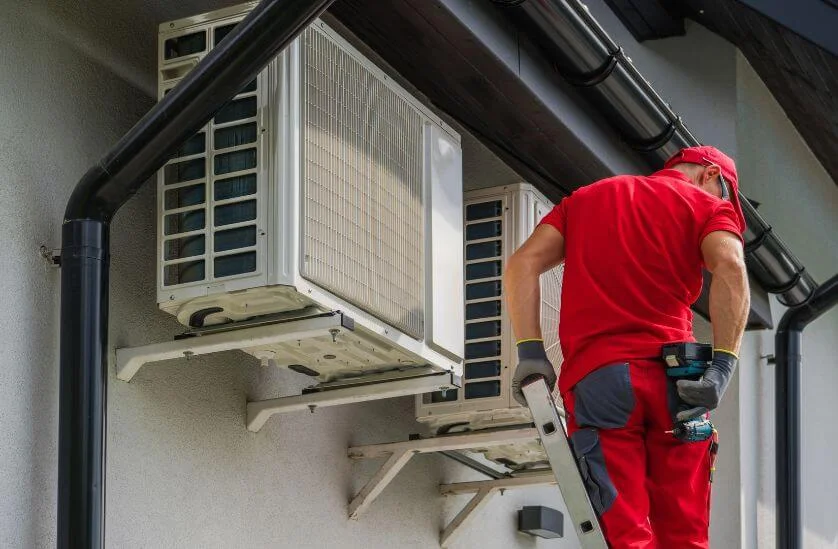
Identifying Common System Failures
Breakdowns often manifest through specific warning signs before the system completely shuts down. Recognizing these signs early can prevent more extensive and expensive damage to the unit.
- Short Cycling: The unit turns on and off frequently without completing a full heating or cooling cycle, often indicating an oversized unit, a clogged filter, or a safety switch malfunction.
- Unusual Noises: Grinding, squealing, or banging sounds usually suggest loose mechanical parts, a failing motor bearing, or debris in the blower assembly.
- Weak Airflow: Reduced air pressure from vents can point to ductwork breaches, a failing blower motor, or a frozen evaporator coil blocking air passage.
- Inconsistent Temperatures: Hot and cold spots throughout the building often signify an unbalanced system, issues with zoning dampers, or low refrigerant levels.
The Repair Workflow
Once the diagnostic phase is complete, the repair process moves quickly. Service vehicles are stocked with common parts such as capacitors, contactors, and sensors to facilitate on-the-spot repairs. This reduces the need for multiple visits and ensures the system is back up and running as soon as possible. In cases where a specialized part is required, the procurement process is handled immediately to minimize the delay. Every repair concludes with a full system test to verify that airflow, temperature differential, and energy consumption are within manufacturer specifications.
System Design and Installation Process
There comes a point where repairs are no longer cost-effective, or a system becomes too inefficient to justify keeping. Installing a new HVAC system is a significant investment in long-term comfort and energy savings. The process begins with a detailed load calculation. Unlike a simple swap-out, a proper installation requires determining the exact heating and cooling load of the structure. This calculation, often referred to as a Manual J, considers the square footage, insulation levels, window orientation, and local San Luis Obispo weather patterns.
Correct sizing is critical. An undersized unit will run continuously, failing to reach the desired temperature, while an oversized unit will cycle too frequently, failing to dehumidify the air properly and wearing out components prematurely.
Steps to a Successful Installation
The installation day is structured to be efficient and respectful of the property.
- Site Preparation: Technicians lay down drop cloths and protective coverings to shield flooring and furniture from dust and debris.
- Safe Removal: The old equipment is disconnected from electrical and gas lines, carefully removed, and disposed of according to environmental regulations.
- Equipment Placement: The new indoor and outdoor units are positioned and leveled. For outdoor units, this involves ensuring proper clearance for airflow and stability on the pad.
- Ductwork Connection: The new unit is sealed to the existing ductwork or new plenum. This step is vital to prevent air leaks that compromise efficiency.
- Refrigerant Line & Electrical Hookup: Copper refrigerant lines are brazed and vacuum-tested to ensure no leaks exist. Electrical connections are wired to code, including the installation of a new safety disconnect box if necessary.
- System Commissioning: The system is charged with refrigerant to the precise factory specifications. Technicians test static pressure and temperature rise to validate performance.
Energy Efficiency and SEER2 Ratings
Modern installations focus heavily on energy efficiency. Systems are rated by SEER2 (Seasonal Energy Efficiency Ratio 2) for cooling and HSPF2 (Heating Seasonal Performance Factor 2) for heating. Higher ratings indicate a more efficient unit that consumes less electricity to provide the same amount of comfort. Upgrading from an old 10 SEER unit to a modern 16+ SEER2 system can result in significant reductions in monthly utility bills. Variable-speed blowers and two-stage compressors further enhance efficiency by allowing the system to operate at lower capacities when full power is not needed, maintaining a consistent temperature with less energy.
Deciding Between Repair and System Upgrade
Homeowners often face the dilemma of whether to approve a costly repair or invest in a replacement. This decision relies on several factors, including the age of the unit, the cost of the repair, and the system's history of breakdowns.
A general guideline used in the industry is the "50% Rule." If the cost of the repair approaches 50% of the value of the system or the cost of a new unit, replacement is usually the smarter financial choice. Additionally, the age of the equipment plays a major role. Heat pumps and air conditioners generally last 10 to 15 years, while furnaces can last 15 to 20 years. If a system is nearing the end of its expected lifespan, putting money into repairs may be throwing good money after bad.
Frequent Breakdowns and Reliability
Reliability is a key factor. If a system requires multiple service calls in a single year, it is signaling that major components are beginning to fail sequentially. Continuing to repair an unreliable system leads to cumulative costs that could have been applied toward a new, warrantied unit. Organ & Sons Mechanical, Inc. helps evaluate the total cost of ownership to assist in making an informed decision.
Refrigerant Phases and Compatibility
Older air conditioning units often utilize R-22 refrigerant (Freon), which has been phased out due to environmental regulations. Supplies of R-22 are limited and extremely expensive. If an older unit develops a refrigerant leak, the cost to recharge it can be astronomical. Modern systems use R-410A or newer, more environmentally friendly refrigerants. Upgrading eliminates the liability of relying on obsolete chemicals and ensures the system is future-proofed against rising refrigerant costs.
Navigating Local Climate and Building Requirements
Operating in the Central Coast region requires specific attention to environmental factors. The climate features mild, wet winters and dry, warm summers. While extreme heat is less common than in inland valleys, temperature spikes do occur, making reliable air conditioning essential. Conversely, the wet winters demand safe and efficient heating to prevent indoor moisture issues and maintain comfort.
Addressing Coastal Corrosion
For properties closer to the ocean, salt air can be detrimental to outdoor HVAC equipment. The saline environment accelerates corrosion on the aluminum fins and copper tubing of condenser coils. This corrosion reduces the unit's ability to transfer heat and can lead to premature failure. In this region, it is often recommended to install units with special coastal coatings or corrosion-resistant materials to extend the lifespan of the equipment.
Permits and Title 24 Compliance
California has some of the strictest energy codes in the nation, specifically Title 24. Any significant alteration to an HVAC system, including replacement, requires a permit and must meet specific energy efficiency standards.
- Duct Testing: When installing a new unit, local codes often require ductwork to be pressure-tested for leaks. If leakage exceeds a certain percentage, sealing the ducts becomes mandatory.
- Thermostat Requirements: Regulations may require the installation of a smart or programmable thermostat to ensure the system does not run unnecessarily.
- Permit Handling: Professional contractors handle the entire permitting process, submitting the necessary documentation to the city or county planning department. This ensures that the installation is legal, safe, and will not cause issues during a future home sale.
Why Homeowners Choose Our Technicians
Selecting a contractor goes beyond just finding someone to fix a machine; it is about trusting a team to enter your home and work on a critical infrastructure system. Professional service providers prioritize technical excellence and customer respect.
Technical Certification and Ongoing Training
The HVAC industry is constantly evolving with new technologies, such as inverter-driven compressors and smart home integration. Technicians undergo regular training to stay current with these advancements. Certifications, such as NATE (North American Technician Excellence), indicate that a technician has demonstrated real-world working knowledge of HVAC systems. This expertise ensures that diagnostics are accurate and installations are performed correctly the first time.
Respect for Property and Safety
Professionalism is demonstrated through the care taken inside the home. Technicians use shoe covers and work mats to protect flooring. They maintain a clean workspace and remove all trash and old equipment upon completion. Safety is also paramount; technicians are trained to handle high-voltage electricity and combustible gases safely, protecting the household from hazards like carbon monoxide leaks or electrical fires.
Transparent Communication
Clear communication eliminates surprises. A professional HVAC contractor provides written estimates before work begins, detailing the scope of work, the parts required, and the labor costs. There are no hidden fees or bait-and-switch tactics. The focus is on providing the information needed to make the right choice for the specific home and budget.
Stay Cool or Cozy—Schedule Your Service Instantly!
Whether dealing with a sudden breakdown or planning a comprehensive system upgrade, the goal is always consistent, efficient comfort. Don't let a heating or cooling issue disrupt your life any longer.
Secure your comfort and peace of mind by scheduling your service with our expert team today.
Contact Us