



Heat Pump Inefficiency or Failure Impacting Your Daily Routine?
Facing unexpected heat pump breakdowns during Atascadero’s tricky weather changes can leave your home uncomfortably hot during peak afternoons or freezing during chilly nights. You need a reliable, swift service that understands these specific climate challenges and is available exactly when you need them to restore balance to your home environment. Contact us immediately to schedule a diagnostic visit or inquire about our flexible financing options to get your system back on track.
Organ & Sons Mechanical, Inc. specializes in addressing these urgent climate control issues with precision and speed. We understand that a malfunctioning heat pump is not just a minor inconvenience; it disrupts your sleep, your work, and your daily life. Our approach focuses on rapid identification of the root cause followed by immediate, effective solutions.
- Comprehensive system diagnostics to pinpoint electrical, refrigerant, or mechanical failures.
- Expedited repair availability to ensure minimal downtime for your household.
- Flexible financing options available to manage unexpected repair or replacement expenses smoothly.
All services provided come with industry-standard warranties and access to manageable financing options, ensuring your investment is protected.
What You Get Today: Fast, Effective Heat Pump Service
When you request service for a heat pump, the priority is restoring functionality immediately. The service visit begins with a systematic analysis of the unit. Unlike standard furnaces or air conditioners, heat pumps rely on complex chemical and mechanical balances to move heat rather than generate it. This requires a technician who understands the specific thermodynamics of the system.
Upon arrival, the focus shifts to identifying the immediate failure point. This involves checking the thermostat communication, the electrical supply to the outdoor unit, and the pressures within the refrigerant lines. In Atascadero, where temperature swings are common, the system often struggles to switch between heating and cooling modes effectively if maintenance has been deferred.
You receive a clear, written explanation of the issue once the diagnosis is complete. There is no guesswork. The technician outlines exactly which component has failed—be it a seized compressor, a leaking reversing valve, or a blown capacitor—and presents the options for repair. You get transparent information regarding the cost of parts and labor before any tools are applied to the fix.
- System Diagnostics: Advanced testing of voltage, amperage, and refrigerant levels to ensure the system is operating within manufacturer specifications.
- Leak Detection: Utilizing electronic sniffers and pressure tests to locate refrigerant leaks that compromise efficiency and endanger the compressor.
- Airflow Analysis: Checking static pressure and ductwork integrity to ensure the heat pump can distribute conditioned air effectively throughout the home.
- Electrical Safety Check: Tightening connections and inspecting wiring for signs of overheating or corrosion which are common fire hazards.
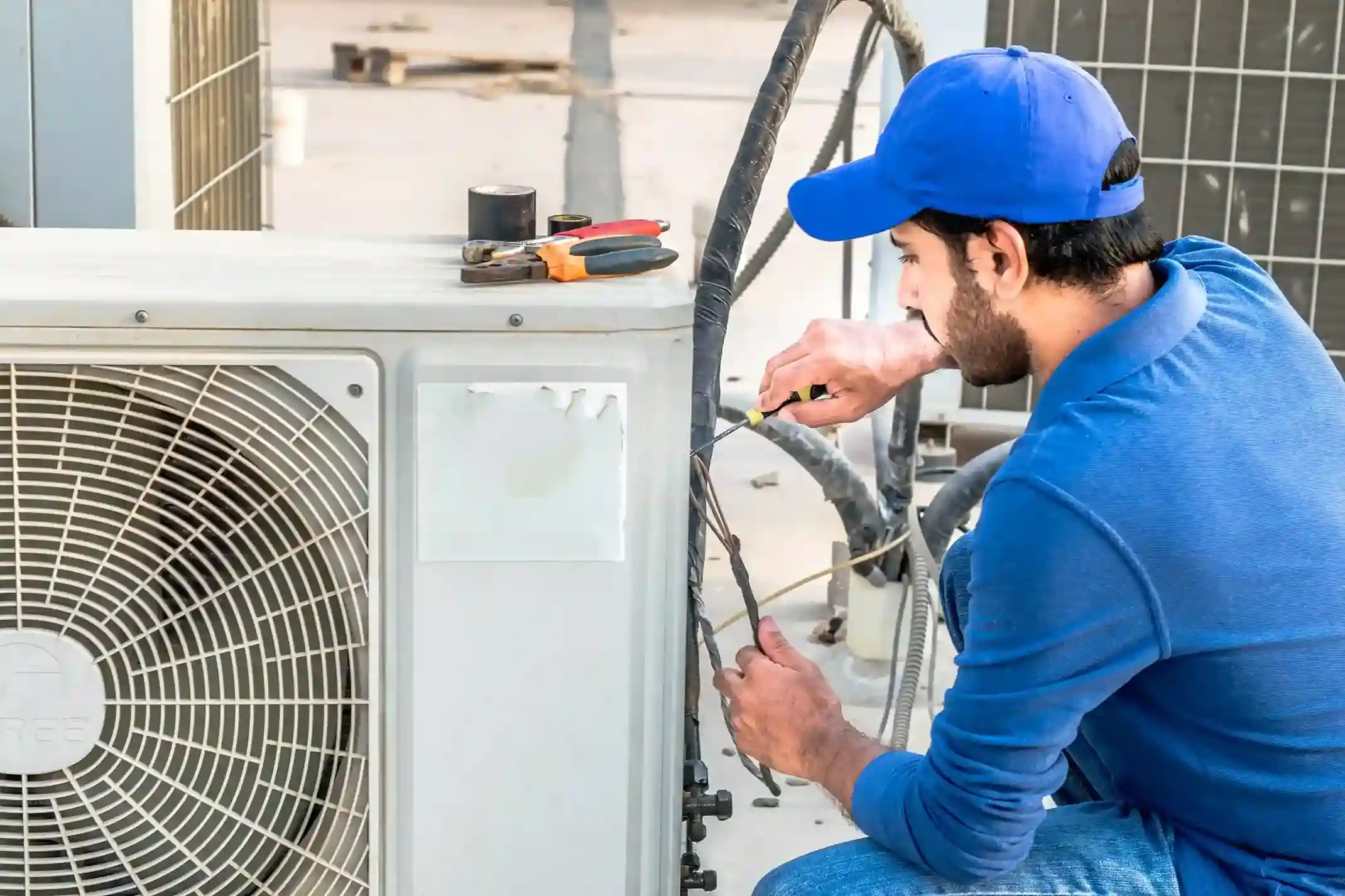
Common Heat Pump Failures and Technical Solutions
Heat pumps are workhorses, running year-round to provide both heating and cooling. This double duty leads to specific wear and tear patterns that differ from standalone AC units or furnaces. Understanding these failures helps in making informed decisions about repairs.
Reversing Valve Issues
The reversing valve is the heart of a heat pump's ability to switch modes. It physically redirects the flow of refrigerant. If this valve gets stuck, the system might blow cold air when you want heat, or vice versa. Technicians test the solenoid coil that activates the valve. If the electrical signal is present but the valve does not shift, the mechanical component is seized and typically requires replacement.
Refrigerant Leaks and Charge Issues
A heat pump must have a precise charge of refrigerant to work efficiently. In the winter, a low charge causes the coils to freeze up, leading to a system lockout. In the summer, it causes the evaporator coil to freeze, blocking airflow. Technicians do not simply "top off" the refrigerant; they locate the leak, braze the line set to seal it, and then recharge the system to factory specifications.
Outdoor Unit Icing
While some frost on the outdoor unit is normal during Atascadero winters, a unit encased in a block of ice indicates a failure in the defrost cycle. This is often caused by a faulty defrost control board, a bad sensor, or a burnt-out fan motor. Professional service involves testing the defrost initiation sequence to ensure the unit can melt accumulated ice before it damages the fan blades or crushes the coil fins.
Compressor Malfunctions
The compressor is the engine of the heat pump. Hard starting, loud banging noises, or tripping breakers are signs of compressor distress. Technicians check the "run" and "start" capacitors first, as these are cheaper and easier to fix. If the windings inside the compressor are shorted or grounded, the component usually requires a major repair or system replacement.
How Installation and Replacement Works: Step-by-Step
When a repair is no longer feasible or cost-effective, a full system replacement is necessary. This process is more involved than a simple swap-out. Modern heat pumps are highly sensitive to sizing and ductwork design. An improperly installed unit will never achieve its rated efficiency (SEER2 or HSPF2) and will likely fail prematurely.
The installation process follows a strict technical protocol to ensure longevity and performance.
- Load Calculation: The first step is performing a Manual J load calculation. This determines the exact heating and cooling requirements of the specific building structure in Atascadero, accounting for insulation levels, window orientation, and square footage.
- Ductwork Assessment: Existing ductwork is inspected for leaks, proper sizing, and insulation. High-efficiency heat pumps require specific airflow rates; if the ducts are too small, the system will be noisy and inefficient.
- Equipment Selection: Selecting a unit that matches the regional climate data. For this area, technicians look for units with high HSPF2 ratings to handle the heating load efficiently without excessive reliance on expensive electric heat strips.
- Safe Removal: The old refrigerant is recovered according to EPA regulations to prevent environmental contamination. The old unit is disconnected and removed from the property.
- Precision Installation: The new indoor air handler and outdoor condenser are set in place. For the outdoor unit, a composite pad is used to ensure the unit remains level and off the ground, protecting it from ground moisture and debris.
- Brazing and Evacuation: The copper lines connecting the units are brazed with nitrogen flowing through them to prevent oxidation. A vacuum pump is then used to remove all moisture and air from the lines, measuring the vacuum in microns to ensure a perfectly dry system.
- Commissioning: The system is charged with refrigerant by weight. The technician then measures "subcooling" and "superheat" to fine-tune the charge. Finally, the thermostat is programmed, and airflow is balanced.
When Replacement Beats Repair: A Quick Guide
Deciding between sinking money into a repair or investing in a new system is a critical financial decision. There are specific metrics and thresholds that industry professionals use to guide this choice. It is rarely a guess; it is a calculation based on age, condition, and cost.
The primary factor is the "50% Rule." If the cost of the repair approaches 50% of the value of a new system, replacement is generally the better financial move. Additionally, if a heat pump is over 10 to 12 years old, it is nearing the end of its useful life. Heat pumps generally have shorter lifespans than furnaces because they run all year long.
- Frequency of Breakdowns: If the system has required repairs more than twice in the last two years, it has likely entered the phase of cascading failures. Fixing one part often puts stress on another worn part, leading to a cycle of bills.
- Efficiency degradation: Older units lose efficiency over time due to coil corrosion and compressor wear. If energy bills have been steadily climbing despite normal usage, the unit is costing you money every month that could be going toward a new, more efficient system.
- Refrigerant Type: Systems that utilize R-22 refrigerant are now obsolete. The cost of R-22 has skyrocketed due to production bans. If an older R-22 unit develops a leak, replacement is almost always the only logical option.
- Major Component Failure: If the compressor or the heat exchanger fails on an out-of-warranty unit, the labor and part costs are significant. In these cases, the warranty coverage on a new unit provides better long-term security.
Organ & Sons Mechanical, Inc. technicians provide an honest assessment of the system’s health, helping you weigh the immediate repair cost against the long-term savings of a modern, high-efficiency installation.
Local Notes on Permits and Seasonal HVAC Efficiency
Operating in Atascadero presents specific challenges and regulatory requirements that must be navigated during heat pump service and installation. The local climate, characterized by significant temperature differentials between day and night, demands a system that is calibrated for versatility.
Permitting and Title 24 Compliance
Any significant alteration to an HVAC system, including the replacement of a heat pump or condensing unit, generally requires a building permit. California’s Title 24 energy standards are among the strictest in the nation. These standards dictate specific requirements for duct sealing, airflow verification, and thermostat capabilities.
Professional service providers handle the permitting process. This ensures that the installation meets all local safety and energy codes. Unpermitted work can lead to fines, issues when selling the home, and voided manufacturer warranties. Verification by a third-party HERS (Home Energy Rating System) rater is often required to close out the permit, confirming that the ducts are sealed and the unit performs as promised.
Seasonal Maintenance Needs
The local environment directly impacts heat pump performance. The dry, dusty summers mean that condenser coils can become impacted with dirt and debris quickly. A dirty coil cannot release heat effectively, causing the compressor to run hotter and consume more electricity.
Conversely, the wet winters introduce moisture that can accelerate corrosion on electrical contacts and sensors. Regular seasonal maintenance is not just a recommendation; it is a necessity to keep the defrost cycles working correctly. If the drainage path for the defrost water is blocked by debris, it can refreeze and damage the outdoor unit.
- Summer Prep: Focuses on cleaning the outdoor coil, checking the condensate drain line for algae buildup, and verifying the refrigerant charge for peak cooling.
- Winter Prep: Focuses on testing the defrost board, checking the electric heat strips (emergency heat), and ensuring the thermostat is correctly prioritizing the heat pump over the backup heat.
Differentiators: Technical Expertise and Operational Standards
Choosing a service provider involves looking beyond the price tag and evaluating the quality of the technical execution. The difference between a temporary patch and a permanent solution lies in the training and tools of the technician.
High-quality service is defined by the depth of the diagnostic process. Rather than simply swapping parts until the unit turns on, skilled technicians use advanced diagnostic tools to view the system holistically. This includes measuring static pressure to identify duct restrictions that may have caused the component failure in the first place. Without addressing the underlying cause, the new part will likely fail just as the old one did.
Truck stock is another critical logistical factor. A service truck acts as a mobile warehouse, stocked with universal parts, capacitors, contactors, and motors. This preparation enables the completion of most repairs on the initial visit, eliminating the frustration of waiting for parts to be ordered while the house remains uncomfortable.
- Respect for Property: Technicians utilize drop cloths and shoe covers to protect flooring and maintain a clean workspace. All debris and old parts are removed from the site.
- No-Pressure Education: The goal is to inform the homeowner of the technical reality of their system. Options are presented clearly, allowing the homeowner to make the decision that fits their budget and future plans.
- Safety First Protocols: Every service call includes checks for electrical safety hazards and, where applicable, carbon monoxide testing if gas auxiliary heat is present.
Ensuring Long-Term Comfort and Efficiency
Maintaining a comfortable home environment requires a heat pump that functions efficiently regardless of the season. Whether you are dealing with a sudden breakdown in the middle of summer or looking to upgrade an aging system before winter sets in, professional intervention is the key to longevity and performance.
The right service ensures that your system navigates the local climate effectively, keeping energy bills manageable while providing consistent temperature control. From navigating local permits to performing complex refrigerant repairs, expertise matters.
For dependable service that prioritizes your comfort and respects your time, trust Organ & Sons Mechanical, Inc. to get the job done right.
Contact us today to schedule your heat pump service or to discuss your replacement options with a certified professional.
Contact Us