



Is Your Furnace Failing to Keep Your Home Warm?
If your heating system has stopped working or is blowing cold air during one of Salinas’s chilly, damp nights, prompt repair is essential to restore safety and comfort. Don't wait out the cold when your system malfunctions—contact us immediately for emergency dispatch or to discuss financing options for major repairs.
When you reach out for service, you receive professional attention focused on resolving the mechanical failure quickly and correctly. Our approach prioritizes accurate diagnostics and lasting solutions over quick patches.
- Experienced technicians available round-the-clock for all emergency repairs.
- Benefit from our same-day repair service ensuring minimal interruption to your comfort.
- All repairs are performed with adherence to local guidelines and up-to-date permits.
We provide a full warranty on repairs with flexible payment options available. Organ & Sons Mechanical, Inc. is ready to deploy certified professionals to your location to assess the situation and get your heat running again.
Immediate Furnace Repair Services Available Today
When a furnace breaks down, the primary goal is restoring heat efficiently while ensuring the system operates safely. Homeowners in Salinas often face heating issues that stem from specific regional factors, such as the corrosion caused by coastal fog or wear and tear from seasonal dampness. A professional repair service addresses these issues head-on with a fully stocked truck and diagnostic tools capable of identifying the root cause within minutes of arrival.
Your service appointment focuses on a comprehensive evaluation of the heating unit. The technician arrives equipped to handle common and complex malfunctions immediately. This includes addressing ignition failures, airflow restrictions, and thermostat communication errors. The objective is to complete the repair in a single visit whenever possible, minimizing the downtime of your heating system.
Scope of Diagnostics and Repair
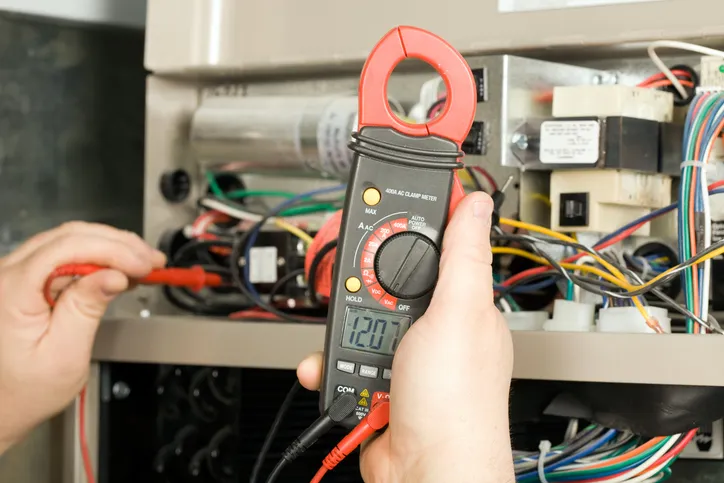
A proper repair goes beyond simply swapping out a broken part. It requires a holistic view of the HVAC system to ensure that the failure is not a symptom of a larger issue. When a technician evaluates your furnace, the following components are rigorously tested:
- Ignition Systems: Whether your unit uses a standing pilot light, hot surface igniter, or intermittent pilot, technicians test for proper firing and flame sensing.
- Airflow and Blower Motor: The blower motor is tested for amperage draw and capacitor health. Technicians also check for blockages in the ductwork or filter housing that could be causing the unit to overheat.
- Heat Exchanger Inspection: This is a critical safety check. Technicians inspect the heat exchanger for cracks or corrosion, which can lead to carbon monoxide leaks.
- Safety Switch Calibration: Limit switches, rollout switches, and pressure switches are tested to ensure they are engaging and disengaging correctly to protect the unit.
By focusing on these core components, the repair service ensures that the immediate problem is solved and that the unit is calibrated for optimal performance for the remainder of the season.
The Professional Repair and Diagnostic Process
Understanding how a technician approaches a broken furnace can help you prepare for the service call. The process is structured to be transparent, efficient, and thorough. There is no guesswork involved; every step relies on data gathered from the unit’s performance indicators.
- Initial System Assessment: The technician begins by discussing the symptoms you have noticed, such as strange noises, short cycling, or a lack of heat. They then perform a visual inspection of the thermostat, the furnace unit, and the surrounding ventilation.
- Active Testing and Diagnosis: Using multimeters, manometers, and combustion analyzers, the technician tests the electrical and gas components. This isolates the faulty part, whether it is a bad gas valve, a failed circuit board, or a burnt-out inducer motor.
- Review of Findings: Once the issue is identified, the technician provides a detailed explanation of the failure, the necessary repair, and the associated costs. You are given a clear scope of work before any tools are applied for the fix.
- Execution of Repairs: Upon approval, the technician proceeds with the repair. This involves removing the defective component, installing the manufacturer-approved replacement, and securing all connections.
- System Validation and Safety Check: After the part is installed, the furnace is cycled on. The technician measures temperature rise, checks gas pressure, and monitors the draft to ensure combustion gases are venting properly.
- Clean Up and Final Report: The work area is cleaned, and a final service report is provided detailing the work performed and any recommendations for future maintenance.
This structured workflow ensures that safety standards are met at every stage. In Salinas, where humidity can impact electrical connections, special attention is paid to ensuring all wiring is corrosion-free and secure.
Deciding Between Furnace Repair and System Replacement
One of the most difficult decisions a homeowner faces during a breakdown is whether to invest in a repair or replace the entire unit. While Organ & Sons Mechanical, Inc. prioritizes repair whenever feasible, there are specific technical and financial thresholds where replacement becomes the more logical choice. This decision is rarely subjective; it is based on the age of the unit, the cost of the repair, and the safety of the current system.
The 50% Rule and Financial Viability
A standard metric used in the industry is the 50% rule. If the cost of the repair approaches or exceeds 50% of the cost of a new system, replacement is generally recommended. This is particularly true if the unit is out of warranty. Spending significant money on a compressor or a heat exchanger for an old unit often leads to "throwing good money after bad," as other components are likely to fail soon after.
Age and Efficiency Considerations
Furnaces typically have a lifespan of 15 to 20 years. If your unit is approaching the 15-year mark, parts may be becoming obsolete or harder to source. Furthermore, older units often operate at 60% to 70% AFUE (Annual Fuel Utilization Efficiency), whereas modern units can reach upwards of 95%. In the moderate climate of Salinas, where winters are mild but heating is still required daily, an inefficient unit can lead to unnecessarily high utility bills.
Safety-Critical Failures
Certain failures dictate immediate replacement due to safety risks.
- Cracked Heat Exchanger: If the heat exchanger is cracked, the unit must be shut down immediately to prevent carbon monoxide poisoning. Repairing a heat exchanger is rarely cost-effective compared to replacement.
- Chronic Short Cycling: If a unit has been short cycling for years due to being oversized or undersized for the home, repair will only be a temporary band-aid. The system architecture itself is flawed.
Frequency of Repairs
If you have required repairs more than twice in the last two years, the system is demonstrating a pattern of decline. Continuing to repair a unit in this state often results in a higher total cost of ownership than installing a new, reliable system with a warranty.
Navigating Local HVAC Requirements and Seasonality
Operating a furnace in Salinas presents a unique set of challenges compared to other regions. The local climate and building codes dictate specific requirements for repair and maintenance that homeowners must be aware of.
Impact of Marine Climate on Heating Systems
Salinas experiences a Mediterranean climate characterized by wet winters and significant coastal fog. While freezing temperatures are rare, the humidity and salt air can accelerate corrosion on metal components.
- Rust and Corrosion: Furnace burners and pilot assemblies are susceptible to rust accumulation. Regular cleaning and inspection of these components are vital to prevent uneven burns and safety lockouts.
- Condensate Management: For high-efficiency condensing furnaces, the drainage system must be checked frequently. Algae and sediment can build up in drain lines faster in humid environments, leading to water damage or system shutdowns.
Building Codes and Permits
Any significant alteration to a heating system, including the replacement of major components or the installation of a new unit, typically requires adherence to California Title 24 energy standards and local Salinas building codes.
- Permitting: Professional repairs adhere to local municipal codes regarding gas line connections, electrical safety, and venting clearance. This ensures that your home remains insurable and compliant.
- Venting Requirements: Because older homes in the area may have masonry chimneys, checking the liner condition is essential when repairing or upgrading furnaces. Modern furnaces require specific flue sizing to prevent condensation damage to the chimney structure.
Utility Considerations
Most heating systems in the area rely on natural gas provided by local utilities. Technicians must verify that gas pressure entering the home matches the requirements of the furnace. Fluctuations in pressure or improper gas line sizing can lead to soot buildup and inefficient heating. Ensuring the gas valve is calibrated to the local fuel supply is a standard part of the repair process.
Why Technical Expertise Matters for Your Heating System
The difference between a restored system and a recurring problem often lies in the technical capability of the service provider. Modern furnaces are complex machines integrating printed circuit boards, variable-speed motors, and advanced sensors. Handling these repairs requires specialized training and diagnostic equipment.
Accurate Troubleshooting vs. Parts Swapping
Inexperienced repair attempts often result in "parts swapping"—replacing components blindly in hopes of fixing the issue. This wastes time and money. Professional diagnostics utilize static pressure testing, temperature rise calculations, and electrical metering to pinpoint the exact failure. This approach ensures that the repair addresses the root cause, not just the symptom.
Safety Protocols
Furnace repair involves working with combustible gas and high-voltage electricity.
- Gas Leak Detection: Technicians use electronic sniffers and bubble solutions to ensure all gas connections are perfectly sealed after a repair.
- Carbon Monoxide Testing: A crucial final step is testing the ambient air and the flue gas for carbon monoxide. This confirms that the combustion process is contained and venting correctly.
Inventory and Availability
A significant advantage of professional mechanical service is the access to a wide inventory of parts. Service vehicles are stocked with universal and OEM specific parts, including control boards, igniters, and pressure switches. This logistics capability is what allows for same-day completion of most repairs, restoring heat to your home without the need for follow-up visits.
Secure Your Comfort With Professional Repair Services
A malfunctioning furnace disrupts your life and poses potential safety risks to your household. Whether you are dealing with a complete system failure, strange noises, or inconsistent heating, the situation requires immediate, expert intervention. Ignoring the signs of a struggling furnace can lead to more extensive damage and higher costs down the road.
We are committed to providing precise, code-compliant repairs that stand the test of time. From the initial diagnostic test to the final safety check, every step is executed with technical precision.
Do not let a broken heater compromise your comfort or safety. Contact Organ & Sons Mechanical, Inc. today to schedule your repair service and restore warmth to your home.
Contact Us