



Inconsistent Temperatures Driving Your Energy Bills Up?
Facing sudden cold snaps in Pismo Beach or watching your energy bills climb due to an aging system creates unnecessary stress for homeowners. We are here to help you transition to a modern, efficient solution that handles both heating and cooling seamlessly. Contact us today to schedule an estimate or ask about our available financing options.
Updating your HVAC system addresses comfort issues immediately while securing long-term savings.
- Enhance your home’s total efficiency with a professional heat pump installation.
- Save on monthly energy costs while enjoying consistent, reliable heating and cooling year-round.
- Benefit from potential utility rebates and efficient, eco-friendly technology designed for coastal climates.
All installations are fully licensed, insured, and aligned with local building codes for your absolute peace of mind. Organ & Sons Mechanical, Inc. ensures your transition to a new system is smooth, compliant, and tailored to your specific property needs.
What You Get With a Modern Heat Pump Installation
Installing a new heat pump is more than just swapping out a box outside your home; it is a comprehensive upgrade to your property’s thermal envelope and energy management. When you schedule an installation, you are investing in a dual-purpose system that replaces both your air conditioner and your furnace. This consolidation simplifies maintenance and lowers your carbon footprint.
Homeowners in Pismo Beach receive a complete system assessment prior to any work beginning. This ensures that the unit selected matches the specific heating and cooling loads of the structure. The scope of a standard installation includes the removal and environmentally safe disposal of existing equipment, preparation of the installation site, and the precise placement of both the outdoor condenser and the indoor air handling unit.
The package typically includes:
- Professional Load Calculation: We perform a Manual J load calculation to determine the exact British Thermal Unit (BTU) capacity required for your square footage, insulation levels, and window orientation.
- Equipment Selection: You receive guidance on selecting between air-source heat pumps, ductless mini-splits, or geothermal options based on your budget and infrastructure.
- System Integration: The new unit is integrated with your existing ductwork, or new lines are run for ductless configurations.
- Thermostat Upgrades: Installation of smart thermostats or control interfaces that allow for programmable schedules and Wi-Fi connectivity.
- Post-Installation Testing: A rigorous commissioning process where airflow, refrigerant levels, and electrical draw are measured to ensure manufacturer specifications are met.
Current heat pump technology offers superior humidity control, which is essential in coastal environments. Unlike older systems that blast hot or cold air in short bursts, modern variable-speed compressors run at lower speeds for longer periods. This maintains a constant temperature and constantly cycles air through filtration systems, improving indoor air quality while using less electricity.
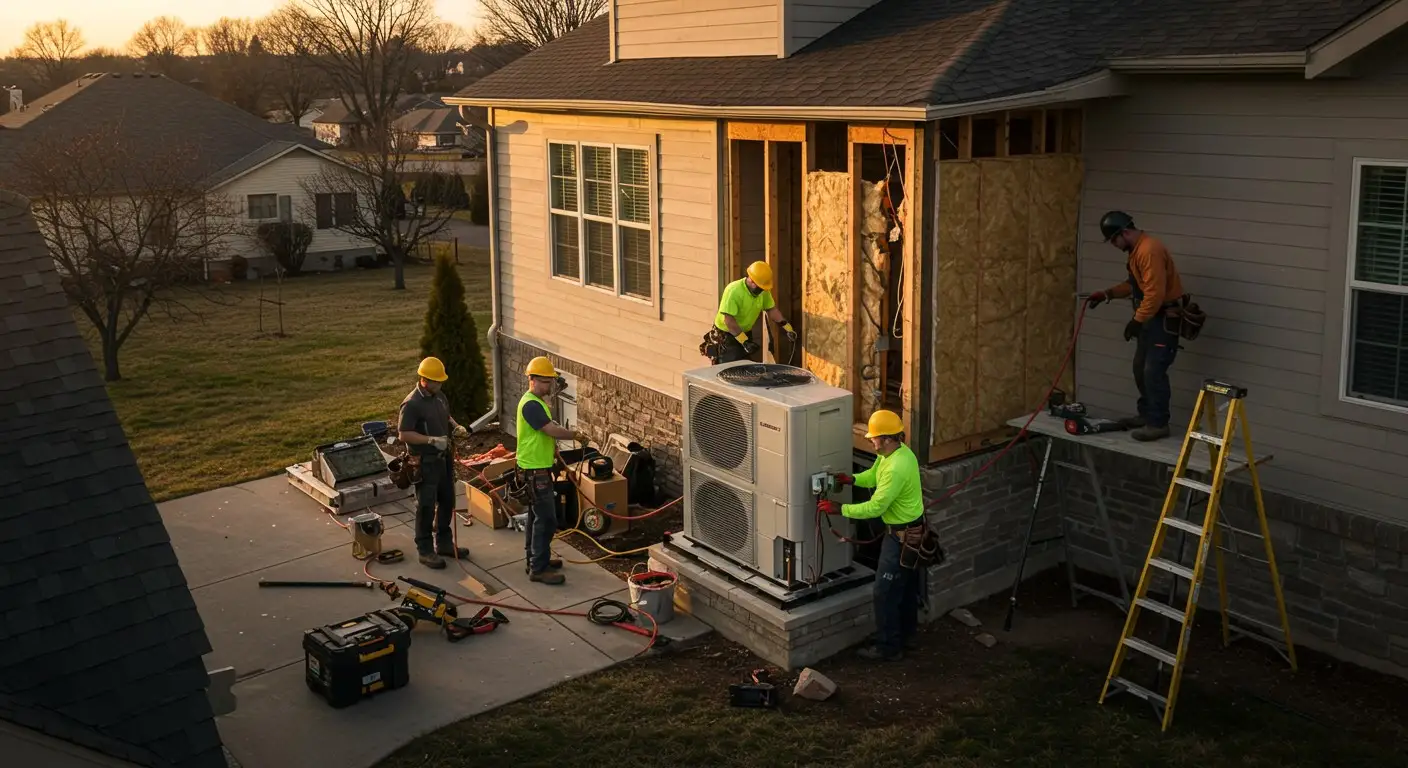
The Installation Process: From Assessment to Airflow
A systematic approach ensures that your heating and cooling upgrade is performed correctly the first time. We adhere to a strict protocol that minimizes disruption to your daily routine while maximizing the performance of the new equipment. Understanding the sequence of events helps homeowners prepare for the installation day.
- Site Evaluation and Sizing: The process begins with a technical audit of your home. Technicians examine the current ductwork for leaks or insulation gaps that could undermine the new system. We measure the refrigerant line path and electrical capacity to ensure your electrical panel can support the heat pump. If the electrical service requires an upgrade to handle the amperage, this is identified immediately.
- Decommissioning the Old System: Before the new unit arrives, the old equipment must be safely removed. This involves pumping down any remaining refrigerant in accordance with EPA regulations to prevent atmospheric venting. We disconnect gas lines (if replacing a gas furnace) and electrical connections, then physically remove the condenser and air handler. We take care to protect your landscaping and flooring during this removal phase.
- Setting the Outdoor Unit: The outdoor compressor is the heart of the heat pump. We prepare a level pad, often raising the unit slightly off the ground to allow for proper drainage and airflow, which is critical in damp coastal climates. The unit is positioned to minimize noise transfer to indoor living spaces and neighbors.
- Indoor Installation and Connection: The indoor coil or air handler is installed in the attic, garage, or closet space. We braze the copper refrigerant lines using nitrogen purging to prevent oxidation inside the pipes, a critical step for the longevity of the compressor. Condensate drain lines are installed with safety switches to prevent water damage in case of a blockage.
- Electrical and Control Wiring: High-voltage wiring is connected to the disconnect box and the unit, adhering to strict safety codes. Low-voltage wiring connects the indoor and outdoor units to the thermostat. We test all connections to ensure proper voltage and grounding.
- Vacuum and Charge: Once the lines are connected, we pull a deep vacuum on the refrigerant lines to remove all moisture and air. This is vital because moisture in the lines reacts with refrigerant to form acid, which kills compressors. After the vacuum holds, we release the factory charge and fine-tune the refrigerant levels based on the length of the lineset (subcooling and superheating methods).
- Final Commissioning: The system is powered on and tested in both heating and cooling modes. We measure temperature differentials across the coil (Delta T) and verify that the auxiliary heat strips (if installed) engage properly during defrost cycles or extreme cold.
When Replacement Beats Repair
Deciding between repairing an existing system and investing in a new installation is a financial and operational calculation — try our HVAC troubleshooter for guidance. While repairs may seem cheaper in the short term, they often lead to higher cumulative costs when dealing with aging infrastructure. There are specific thresholds where replacement becomes the only logical business decision for a homeowner.
- The 50% Rule: If the cost of a repair approaches 50% of the value of the system, or 50% of the cost of a new unit, replacement is the smarter financial move. Dumping money into a compressor replacement for a 12-year-old unit is rarely cost-effective, as other components are likely to fail soon.
- System Age and R-22 Refrigerant: Heat pumps in the Pismo Beach area generally last 12 to 15 years. If your unit is over 10 years old and requires a major component, replacement is recommended. Furthermore, if your older system utilizes R-22 (Freon), refrigerant costs are exorbitant due to the production ban. upgrading to a system that uses R-410A or newer refrigerants eliminates this liability.
- Declining Efficiency and Rising Bills: Heat pumps lose efficiency as they age due to coil corrosion and wear on the compressor valves. If you notice a steady increase in your kilowatt-hour usage despite normal weather patterns, the system is working harder to provide the same output. New systems often carry SEER2 ratings significantly higher than units from a decade ago, leading to immediate reductions in monthly utility bills.
- Comfort and Noise Issues: If the system struggles to keep up during "June Gloom" or rare heat waves, or if it has become noticeably louder, the mechanical components are near the end of their lifecycle. Uneven heating or cooling in different rooms also indicates that the current system is either failing or was never sized correctly to begin with.
Organ & Sons Mechanical, Inc. provides honest assessments on the condition of your current unit to help you determine if a repair will extend the life of the system significantly or if it is merely a temporary fix.
Local Considerations: Permits, Utilities, and Climate
Installing a heat pump in Pismo Beach requires specific attention to regional factors that do not apply to inland areas. The coastal environment presents unique challenges and regulatory requirements that must be navigated to ensure a compliant and durable installation.
- Salt Air and Corrosion Protection: The proximity to the ocean means salt spray is a constant threat to outdoor mechanical equipment. Standard aluminum fins on condenser coils can corrode rapidly, leading to efficiency loss and failure. We recommend and install units with specialized coastal coatings or epoxy-coated coils designed to withstand marine environments. Regular rinsing of the outdoor unit is also a maintenance requirement in this zone.
- Permitting and Title 24 Compliance: HVAC installations in California trigger Title 24 energy efficiency standards. A permit is required for heat pump change-outs to ensure the work meets safety and energy codes. This includes duct sealing verification (HERS testing) in many cases to ensure conditioned air isn't leaking into unconditioned spaces. We handle the permitting process, ensuring the installation passes all city or county inspections — check our HVAC FAQs for details.
- Electrical Panel Capacity: Many older homes in the area may have 100-amp electrical panels that are already near capacity. Switching from a gas furnace to an all-electric heat pump might require a panel upgrade or the installation of "smart" circuit splitters. We assess your electrical infrastructure early to avoid surprises.
- Rebate Eligibility: California offers various rebate programs for electrification, such as the TECH Clean California initiative or federal tax credits under the Inflation Reduction Act. These incentives are often tied to specific efficiency ratings (SEER2 and HSPF2). We ensure the equipment selected meets the criteria to maximize your potential return on investment.
- Seasonality and "June Gloom": Unlike inland areas where cooling is the priority, Pismo Beach requires a system capable of handling damp, cool conditions well into the summer months. A heat pump is ideal for this, as it provides gentle, consistent warmth without the dryness associated with gas furnaces, effectively managing the coastal dampness.
Why Professional Installation is Mandatory
Heat pumps are sophisticated pieces of machinery that rely on complex thermodynamics and high-voltage electricity. The difference between a high-performing system and one that fails prematurely often lies in the quality of the installation. Manufacturer warranties are almost exclusively dependent on proof of professional installation by a licensed contractor — visit our HVAC blog for more insights.
- Refrigerant Handling Certification: Handling refrigerants requires EPA 608 certification. Improper charging affects efficiency and can damage the compressor. Overcharging leads to high head pressure, while undercharging causes the coil to freeze. Professionals have the tools to weigh in the exact charge required.
- Ductwork Modifications: Simply connecting a new high-efficiency unit to old, undersized, or leaky ductwork will result in poor performance and noise. Professionals assess static pressure and modify transitions or plenums to ensure the new blower motor can move air effectively without straining.
- Safety Protocols: Installation involves working with 240-volt electricity and often disconnecting gas lines if converting from a dual-fuel system. Licensed technicians follow strict safety protocols to prevent fire hazards, electrical shorts, and carbon monoxide issues.
- Warranty Registration: We ensure that your equipment is registered with the manufacturer to activate the full parts warranty. We also provide labor warranties that cover the workmanship of the installation, protecting you from expenses related to installation errors.
Secure Your Comfort and Efficiency Today
Upgrading to a heat pump is a significant investment in your property that pays dividends through lower energy bills and superior climate control. Navigating the options for sizing, efficiency ratings, and coastal protection requires a partner who understands the local environment. Organ & Sons Mechanical, Inc. is committed to delivering precision installations that stand up to the elements and keep your home comfortable regardless of the weather outside.
Do not wait for a total system failure to start looking for solutions. Call us now to book your consultation and take the first step toward a more efficient, comfortable home.
Contact Us