



Is Your Heating or Cooling System Failing to Keep Up with Coastal Weather?
When your AC falters during a summer heatwave or your heater gives out during a damp, chilly night, it is more than an inconvenience—it is a significant disruption to your home comfort and daily routine. Organ & Sons Mechanical, Inc. provides reliable, prompt service to restore your climate control systems quickly and effectively. If you are experiencing temperature inconsistencies or system failure, contact us to schedule a diagnostic visit or discuss financing options today.
Residents in Pismo Beach need HVAC systems that can handle the unique shift between wet winters and dry summers without driving up utility bills. A failing system often signals underlying mechanical issues that require immediate professional attention rather than a quick DIY fix.
- Rapid response capabilities ensuring your system is back online when you need it most.
- Quality assurance provided by seasoned technicians who adhere to strict safety protocols.
- Energy-efficient solutions designed to lower monthly utility costs and extend equipment lifespan.
All services are performed by licensed professionals, with warranties on parts and labor for your peace of mind.
Comprehensive HVAC Solutions for Year-Round Climate Control
Modern climate control systems are complex networks of electrical, mechanical, and chemical components. When one part fails, it stresses the entire unit, leading to inefficiency and potential catastrophic breakdowns. Professional service addresses the immediate symptoms while identifying the root cause to prevent future interruptions.
Accurate Diagnostics and Troubleshooting
The first step in resolving HVAC issues is identifying exactly why the system is underperforming. Technicians utilize advanced diagnostic tools to measure airflow, test electrical connections, and monitor refrigerant levels. This data-driven approach eliminates guesswork. You receive a precise report on the health of your furnace, heat pump, or air conditioning unit.
- Electrical Analysis: Technicians test capacitors, relays, and wiring to ensure safe and consistent power delivery.
- Airflow Measurement: Static pressure tests reveal blockages or leaks in the ductwork that reduce system efficiency.
- Refrigerant Checks: Proper charge levels are critical for cooling; leaks are identified and sealed before recharging.
System Repair and Component Replacement
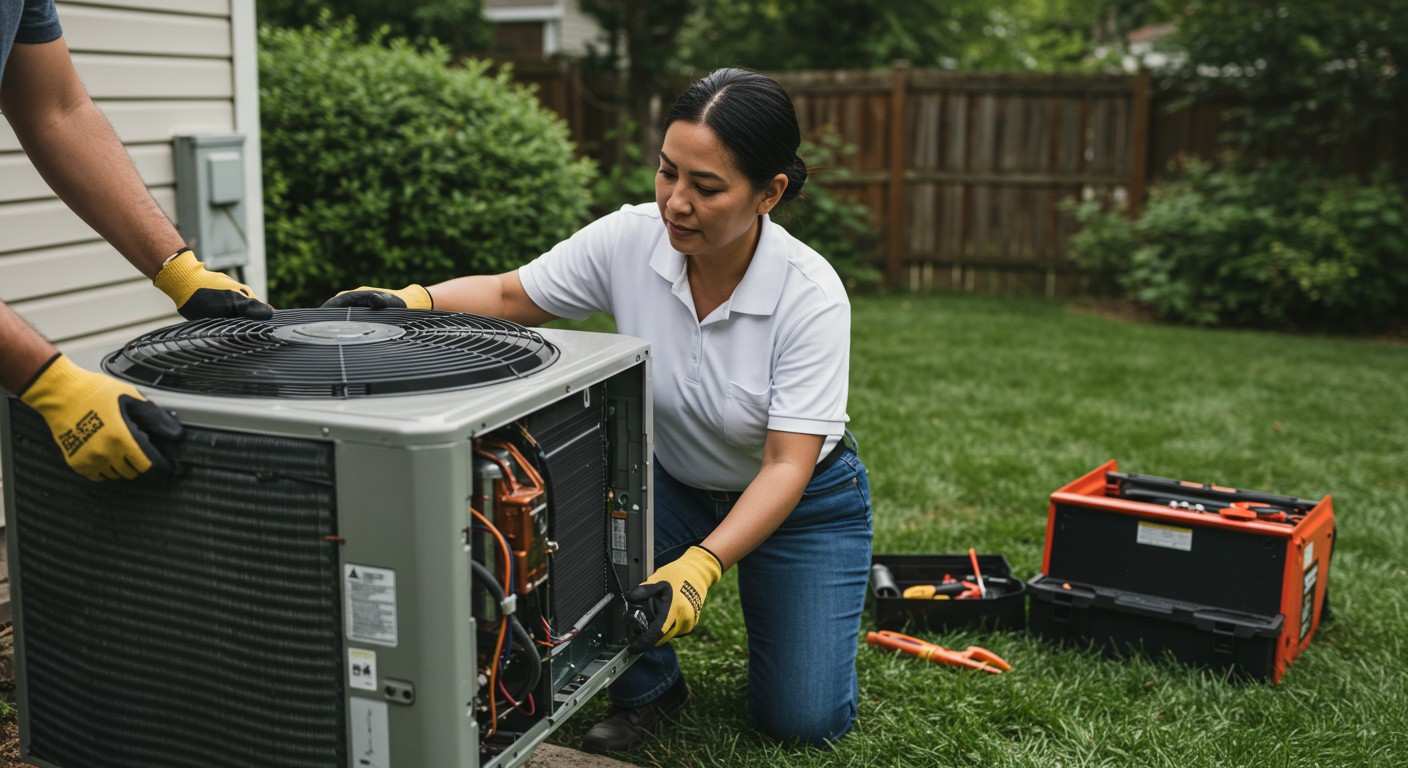
Once the issue is diagnosed, repairs focus on restoring the unit to manufacturer specifications. This involves more than just swapping out a part; it requires calibrating the system to ensure the new component integrates seamlessly with existing hardware. Whether it is a failed compressor, a cracked heat exchanger, or a malfunctioning thermostat, the goal is to maximize the remaining service life of the unit.
Preventative Maintenance Services
Routine maintenance is the most effective way to avoid emergency breakdowns. Regular servicing ensures that coils are clean, filters are fresh, and moving parts are lubricated. This proactive approach is essential for maintaining warranty compliance and achieving the highest possible energy efficiency ratings (SEER and AFUE).
Indoor Air Quality Improvements
Climate control is not just about temperature; it is also about the quality of the air you breathe. Services often include the evaluation and installation of air purification systems, dehumidifiers, and upgraded filtration. In coastal environments where humidity can fluctuate, managing moisture levels is vital to preventing mold growth within the system and ductwork.
The HVAC Restoration and Installation Process
Understanding what happens during a service call helps homeowners prepare for the work ahead. A structured process ensures that nothing is overlooked and that the system operates safely upon completion.
- Initial Assessment and Safety Inspection: The process begins with a thorough site evaluation. Technicians inspect the equipment, the surrounding area, and the ductwork infrastructure. Safety is paramount; gas lines are checked for leaks, and electrical circuits are tested for stability before any work begins.
- Clear Proposal and Scope of Work: After the diagnosis, you receive a detailed explanation of the required repairs or installation steps. This includes a breakdown of necessary parts and the estimated timeline for completion. There are no hidden variables; the focus is on transparency and technical accuracy.
- Execution of Repairs or Installation: Technicians proceed with the agreed-upon work. For repairs, this may involves brazing copper lines, replacing blower motors, or calibrating control boards. For installations, this involves removing old equipment, preparing the mounting surface, and connecting the new unit to the existing infrastructure.
- System Testing and Calibration: Once the mechanical work is done, the system is not merely turned on; it is calibrated. Technicians adjust gas pressure, measure temperature differentials (Delta T), and balance airflow to ensure every room receives adequate conditioning.
- Final Walkthrough and Education: The service concludes with a review of the work performed. You are shown how to operate new thermostats or controls, and technicians provide guidance on filter changes and basic upkeep to maintain the system’s efficiency.
Deciding Between Repair and System Replacement
One of the most difficult decisions homeowners face is whether to pour more money into an aging unit or invest in a modern replacement. While repairs are often the lower upfront cost, they can be more expensive over time if the system is nearing the end of its lifecycle.
The 50% Investment Rule
A common industry standard for making this decision is the 50% rule. If the cost of the necessary repair approaches or exceeds 50% of the cost of a new system, replacement is generally the wiser financial choice. This is particularly true for systems that are out of warranty, as future repairs will also be full-price.
Age and Reliability
HVAC systems typically last between 10 and 15 years. If your unit is over a decade old and requires a major component replacement—such as a compressor or heat exchanger—reliability becomes a gamble. Older units are prone to a "domino effect" where one failure leads to another.
Energy Efficiency and Technology
Older systems operate with significantly lower efficiency standards compared to modern units. A 15-year-old air conditioner may have a SEER rating of 10 or less, while new units often start at SEER 14 and go much higher. Replacing an inefficient unit can result in immediate reductions in monthly energy bills, which helps offset the installation cost over time.
Refrigerant Availability
Older air conditioning units often utilize R-22 (Freon), a refrigerant that has been phased out due to environmental regulations. As supplies dwindle, the cost of repairing a leak in an R-22 system has skyrocketed. Upgrading to a system that uses R-410A or newer refrigerants ensures that future maintenance is affordable and compliant with current laws.
Regional HVAC Considerations
Operating heating and cooling equipment in Pismo Beach presents specific challenges due to the coastal environment. Understanding these local factors is crucial for ensuring the longevity of the equipment.
Combating Salt Air Corrosion
The proximity to the ocean introduces salt spray into the air. Salt is highly corrosive to aluminum and copper, the primary metals used in HVAC condenser coils. Standard units can deteriorate rapidly in this environment, leading to refrigerant leaks and reduced heat transfer.
- Protective Coatings: It is often recommended to apply anti-corrosion coatings to the condenser coils to act as a barrier against salt air.
- System Placement: Positioning the outdoor unit in a sheltered area, or rinsing it regularly with fresh water, can mitigate salt accumulation.
Managing Coastal Humidity
While summers are dry, the marine layer can bring significant humidity. An oversized AC unit will cool the home too quickly without running long enough to dehumidify the air, leading to a cold, clammy indoor environment. Proper sizing (Manual J calculation) is essential to ensure the system runs long enough to effectively remove moisture.
Title 24 and Local Building Codes
California has some of the strictest energy codes in the country. Any significant alteration to an HVAC system, including equipment replacement and ductwork modification, must comply with Title 24 standards. This may require duct leakage testing, refrigerant charge verification, and the installation of smart thermostats. Professional service providers handle the permitting and testing requirements to ensure your home remains code-compliant.
Why Professional Execution Matters
The difference between a system that lasts five years and one that lasts fifteen often comes down to the quality of the installation and maintenance. High-quality equipment installed poorly will underperform and fail prematurely.
Technical Expertise and Certification
Modern HVAC equipment involves complex electronics and variable-speed motors. Technicians undergo continuous training to stay updated on the latest diagnostics and installation techniques. This expertise ensures that sophisticated systems, such as variable refrigerant flow (VRF) units or modulating furnaces, are installed correctly to deliver their promised efficiency.
Safety and Liability
HVAC work involves handling high-voltage electricity, flammable gases, and high-pressure refrigerants. Licensed contractors carry the necessary insurance and bonds to protect the homeowner from liability in the event of an accident. Furthermore, proper venting of gas furnaces is critical to prevent carbon monoxide buildup in the home. Professional execution guarantees that all safety mechanisms are functioning correctly.
Long-Term Warranty Protection
Manufacturers require proof of professional installation and regular maintenance to honor their warranties. Attempting DIY repairs or hiring unlicensed workers can void these warranties, leaving the homeowner responsible for the full cost of future replacements. Organ & Sons Mechanical, Inc. ensures that all documentation is in order to protect your investment.
Value of Local Reputation
Working with a locally established provider ensures accountability. A company deeply rooted in the community relies on its reputation for quality and integrity. You have the assurance that the provider will be there to honor warranties and provide follow-up support if difficult decisions homeowners face arise after the initial service.
Call Us Now!
Don’t let a malfunctioning system compromise your comfort or safety. Secure professional service to ensure your home remains a sanctuary against the elements. Contact us now to schedule your comprehensive HVAC service.
Contact Us