



Is Your Home Heating System Failing to Combat the Coastal Chill?
Is your heating system failing to keep up with the chilly nights and damp fog characteristic of coastal California? You are not alone, and securing a timely professional installation is the most effective way to ensure your comfort throughout the year—contact us today to schedule your assessment or discuss financing options.
Residents in Pismo Beach know that while days can be warm, the temperature drops significantly once the sun goes down. A reliable heater is not a luxury; it is a necessity for maintaining a dry, comfortable indoor environment. When your furnace or heat pump falters, you need a solution that goes beyond a temporary patch. You need a comprehensive installation service that addresses load calculation, energy efficiency, and long-term reliability.
- Experience rapid, reliable installation scheduling to restore heat to your home immediately.
- Enjoy enhanced comfort with energy-efficient heating solutions designed for coastal climates.
- Benefit from comprehensive warranties and competitive financing options that fit your budget.
All installations are fully insured and compliant with local building codes, giving you absolute peace of mind.
Quick, Reliable Heating Installation for Your Home
When you decide to move forward with a new heating installation, you are investing in the infrastructure of your home. The goal is to eliminate the uncertainty of an aging unit and replace it with a system that operates quietly, efficiently, and safely. Modern heating systems have advanced significantly in the last decade, offering variable-speed blowers and smart technology that adapt to the specific weather patterns of the Central Coast.
At Organ & Sons Mechanical, Inc., we recognize that a heating failure often happens at the most inconvenient times. That is why the service focuses on responsiveness. The installation process is designed to minimize disruption to your daily life while maximizing the performance of your new equipment. Whether you are upgrading to a high-efficiency gas furnace or switching to an electric heat pump to handle both heating and cooling, the focus remains on technical precision.
Reliability starts with the equipment selection. We do not believe in one-size-fits-all solutions. A unit that is too large will short-cycle, leading to wear and tear, while a unit that is too small will run continuously without ever reaching your set temperature. Our approach ensures that the equipment installed is perfectly matched to the square footage, insulation levels, and layout of your property.
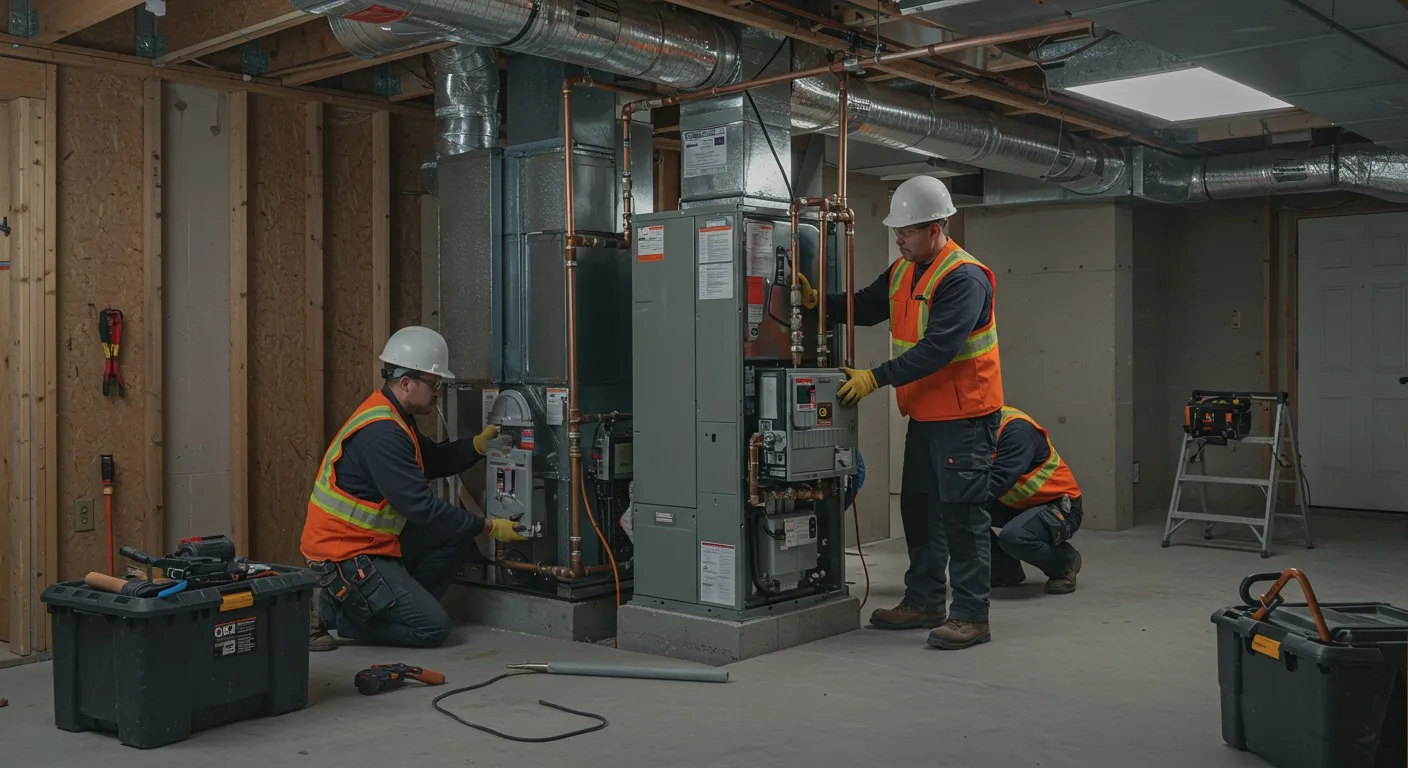
What You Get Today With Professional Installation
Choosing a professional installation service means you are purchasing a complete turnkey solution. You are not just buying a box of equipment; you are paying for the expertise required to integrate that equipment safely into your home. This service covers every aspect of the transition from your old, failing unit to a high-performance system.
The scope of work is comprehensive. It begins with a detailed site evaluation. Technicians assess your current ductwork, gas lines, and electrical capacity to ensure they can support modern, high-efficiency equipment. Many older homes in Pismo Beach may require minor modifications to accommodate newer standards, such as upgraded venting for condensing furnaces or dedicated circuits for heat pumps.
- Comprehensive Site Assessment: A thorough review of your home's thermal characteristics to perform an accurate Manual J load calculation. This ensures the unit sizing is mathematically correct for your specific heating load.
- Safe Removal and Disposal: The safe disconnection, removal, and environmentally responsible disposal of your old heating unit. This includes handling any refrigerants or hazardous materials in compliance with federal regulations.
- System Installation: The physical placement and connection of the new unit. This includes connecting gas lines, high-voltage electrical wiring, low-voltage control wiring, and flue pipes.
- Ductwork Inspection and Sealing: Ensuring that the air distribution system is tight and clean. Leaky ducts can result in significant energy loss, negating the efficiency gains of a new unit.
- Thermostat Integration: Installation and calibration of a new thermostat, often a smart Wi-Fi-enabled model, to give you precise control over your indoor climate.
- Post-Installation Testing: A rigorous commissioning process where the system is tested for static pressure, temperature rise, and gas pressure to ensure it meets the manufacturer’s exact specifications.
How the Installation Process Works
Understanding the sequence of events can help alleviate the stress often associated with home improvement projects. A structured workflow ensures that no steps are missed and that safety remains the top priority throughout the day. The process is streamlined to get your heat running as quickly as possible without cutting corners.
- Pre-Installation Walkthrough: On the day of service, the lead technician will review the job details with you. They will protect your flooring and clear the workspace to prevent any damage to your property during the moving of heavy equipment.
- Safety Disconnects: Power and gas supplies to the existing unit are shut off. Safety protocols are verified before any tools touch the equipment.
- Removal of Old Equipment: The existing furnace or heat pump is disconnected. In tight spaces like attics or crawl spaces, this requires careful maneuvering. The crew removes the unit and clears away debris from the installation area.
- Modifications and Prep: If the new unit has different dimensions or requires different venting, modifications are made to the plenum (the box connecting the unit to the ducts) and the flue system. For heat pumps, a new refrigerant line set may be run or the existing one flushed and pressure-tested.
- Setting the New Unit: The new system is leveled and secured. Vibration isolation pads may be used to reduce noise transfer.
- Making Connections: Gas piping is connected and leak-tested. Electrical connections are tightened to torque specifications. The flue vent is installed to ensure carbon monoxide is safely exhausted outside the home.
- System Commissioning: This is the most critical technical step. Organ & Sons Mechanical, Inc. technicians fire up the system and measure performance data. They adjust gas valve pressure, check airflow, and verify that all safety switches are operational.
- Final Walkthrough: Once the system is running perfectly, the technician shows you how to operate the new thermostat, how to change the filter, and explains the warranty registration process.
When Replacement Beats Repair
Homeowners often struggle with the decision of whether to repair a faltering unit or invest in a new one. While repairs can solve immediate issues, there is a tipping point where continuing to patch an old system becomes financially unwise. In the HVAC industry, specific criteria help clarify this decision.
One common benchmark is the "5,000 Rule." Multiply the age of your equipment by the estimated cost of the repair. If the total exceeds $5,000, replacement is generally the better investment. For example, if you have a 12-year-old furnace and the repair costs $500, the score is 6,000, suggesting replacement is prudent.
- Age of the System: The average lifespan of a furnace is 15-20 years, while heat pumps typically last 10-15 years. If your system is approaching or has exceeded this range, parts will become harder to find, and major component failures (like a cracked heat exchanger or compressor failure) become imminent.
- Frequency of Breakdowns: If you have called for service more than twice in the last two years, your system is signaling the end of its reliable life. The cumulative cost of service calls often outpaces the monthly financing cost of a new unit.
- Rising Energy Bills: As components wear, motors lose efficiency and heat exchangers become fouled. If your energy bills are creeping up despite normal usage, your system is working harder to produce the same amount of heat. New systems with high AFUE (Annual Fuel Utilization Efficiency) ratings can lower monthly bills significantly.
- Comfort Issues: Uneven heating, cold spots in specific rooms, or excessive noise are signs that the system can no longer distribute air effectively.
- Safety Concerns: For gas furnaces, safety is paramount. Rust or cracks in the heat exchanger can lead to carbon monoxide leaks. If a technician flags a safety violation, replacement is usually the only safe option.
Local Considerations: Permits, Climate, and Utilities
Operating a heating system in the Central Coast region presents unique challenges and requirements. Unlike inland areas that experience hard freezes, Pismo Beach deals with salt air corrosion and high humidity. These local factors influence how systems are selected and installed.
- Coastal Corrosion: The proximity to the ocean means that outdoor units (like heat pumps or AC condensers) are subjected to salt spray. This accelerates corrosion on standard aluminum fins. We recommend units with specific coastal coatings or protection packages to extend the lifespan of the equipment in this environment.
- Temperature Variance: The region sees significant swings between daytime highs and nighttime lows. This makes variable-speed equipment highly desirable. A variable-speed furnace can run at a lower capacity to maintain a steady temperature without the frequent on/off cycling that wastes energy and creates noise.
- Permitting and Codes: Installing a heating system is a major construction activity that requires adherence to California Title 24 energy standards. A permit is legally required for HVAC replacements. This ensures the installation meets safety standards for gas piping, electrical grounding, and duct sealing. A professional contractor handles the permit application and coordinates the final city inspection on your behalf.
- Electrification Trends: California is moving toward electrification. Incentives and rebates are frequently available for homeowners switching from gas furnaces to electric heat pumps. These heat pumps are incredibly efficient in the mild coastal climate, often providing 3 to 4 units of heat for every 1 unit of electricity consumed.
- Utility Rebates: Local utility providers often offer rebates for installing high-efficiency equipment. Your installer can help identify which models qualify for these savings, potentially offsetting a portion of the installation cost.
Why Professional Installation is Non-Negotiable
Attempting a DIY heating installation or hiring an unlicensed handyman poses severe risks. Modern heating systems involve high-voltage electricity, combustible gases, and pressurized refrigerants. A single mistake can lead to gas leaks, electrical fires, or system failure that voids the manufacturer’s warranty.
Manufacturers strictly enforce warranty terms. They require proof that the equipment was installed by a licensed HVAC contractor. Without this proof, if a component fails a year down the road, you may be liable for the full cost of the part and labor. Professional installation protects your investment by ensuring the warranty remains valid.
Furthermore, professional installers carry liability insurance and workers' compensation. This protects you as the homeowner from liability in the event of an accident on your property. When you hire a reputable company, you are paying for the assurance that the job will be done right, or they will return to fix it.
A professional team also brings specific diagnostic tools that are not available to the general public. From digital manometers for measuring gas pressure to specialized vacuum pumps for dehydrating refrigerant lines, these tools are essential for achieving the efficiency ratings advertised by the manufacturer. A system that is installed without these precision tools will never achieve its potential efficiency, costing you more money in utilities every month.
When you choose a company with deep roots in the community, you benefit from their long-standing relationships with suppliers. This often translates to better availability of parts and faster turnaround times on equipment orders. You also gain access to ongoing maintenance plans that keep your new system running at peak performance for years to come.
For homeowners in Pismo Beach, the choice is clear. You need a heating solution that withstands the coastal elements, reduces your energy footprint, and guarantees safety for your family. By choosing professional installation, you ensure that your home remains a sanctuary against the cold, damp nights.
Call Us Now!
Don't wait for a complete system breakdown to address your heating needs. Secure your home’s comfort and efficiency with a team that understands the technical and local demands of the job. Trust Organ & Sons Mechanical, Inc. for a seamless, professional installation experience that delivers lasting results.
Ready to upgrade your home comfort? Contact us now to schedule your heating installation consultation.
Contact Us