



Restore Your Home’s Warmth When Your Furnace Fails
Waking up to a freezing house or discovering your heater is blowing cold air is a source of immediate stress, especially during the wet, chilly winter months common to the Central Coast. You need a solution that restores safety and comfort to your property without unnecessary delays or vague promises. Contact us immediately to schedule a diagnostic visit and get your heating system back online.
When your heating system malfunctions, waiting days for a technician is not an option. We provide the rapid response and technical expertise required to diagnose the root cause of the failure and implement a lasting fix.
- Get same-day heating repairs handled by experienced, certified technicians.
- Benefit from transparent, flat-rate pricing with no hidden service fees.
- Enjoy peace of mind with our 24/7 emergency repair availability for critical failures.
- All services are fully licensed and insured, ensuring you receive only the highest quality repairs compliant with local safety standards.
Comprehensive Diagnostics and Immediate Repair Scope
When a heating system goes down, the primary objective is accurate identification of the fault followed by immediate rectification. Homeowners in Pismo Beach require a service that moves beyond simple guesswork. A professional repair visit begins with a systematic analysis of the entire heating envelope. This is not merely kicking the tires; it involves testing electrical loads, gas pressure, and airflow dynamics to ensure the system operates within manufacturer specifications.
Modern heating systems are complex appliances that rely on a sequence of precise operations to generate heat safely. If one component in the safety chain fails—such as a limit switch, flame sensor, or pressure switch—the entire system will shut down to prevent hazards like fire or carbon monoxide leaks. A technician arrives equipped to troubleshoot these specific interlocks. The goal is to determine whether the issue is a minor component failure or a symptom of a larger, systemic problem.
Upon arrival, the service includes a thorough inspection of the thermostat, the furnace cabinet, and the distribution system. You receive a clear explanation of exactly what has failed. Whether it is a cracked heat exchanger, a faulty ignition control module, or a seized blower motor, the diagnosis is presented with evidence. This allows you to make an informed decision on how to proceed. Most common parts are stocked on service vehicles to facilitate repairs during the initial visit, minimizing the time your home remains without heat.
Identifying Common Heating System Failure Points
Understanding what goes wrong with a heater helps in recognizing the urgency of the situation. Heating systems often give warning signs before a catastrophic failure, though some breakdowns occur suddenly. Addressing these specific components is part of a standard repair service.
- Ignition System Failures: Whether your system uses a hot surface igniter or an intermittent pilot, ignition failure is a leading cause of heating loss. If the burners do not light, the furnace locks out for safety.
- Airflow Restrictions: A clogged filter is a common culprit, but issues often run deeper, involving dirty blower wheels or blocked return ducts. Restricted airflow causes the heat exchanger to overheat, tripping the high-limit switch.
- Thermostat Communication Errors: Sometimes the furnace is operational, but the signal from the thermostat is interrupted due to wiring faults or calibration issues.
- Wear and Tear on Moving Parts: Belts crack, bearings seize, and motors burn out. These mechanical failures often result in screeching or grinding noises prior to the system shutting down completely.
- Short Cycling: If the heater turns on and off rapidly without reaching the set temperature, it indicates an oversized unit, a blocked flue, or a failing thermostat anticipator.
The Step-by-Step Heating Repair Process
A structured approach to repair ensures that nothing is overlooked and that safety remains the top priority throughout the service call. Professional technicians follow a rigorous protocol from the moment they arrive at your property.
- Arrival and Site Protection: The technician arrives within the scheduled window, respecting your property by wearing shoe covers and using drop cloths around the work area.
- Initial Consultation: The technician listens to your description of the problem—strange noises, smells, or specific behaviors the furnace exhibited before failing.
- Safety Inspection: Before starting the repair, a safety check is performed to detect any immediate hazards, such as gas leaks or carbon monoxide presence.
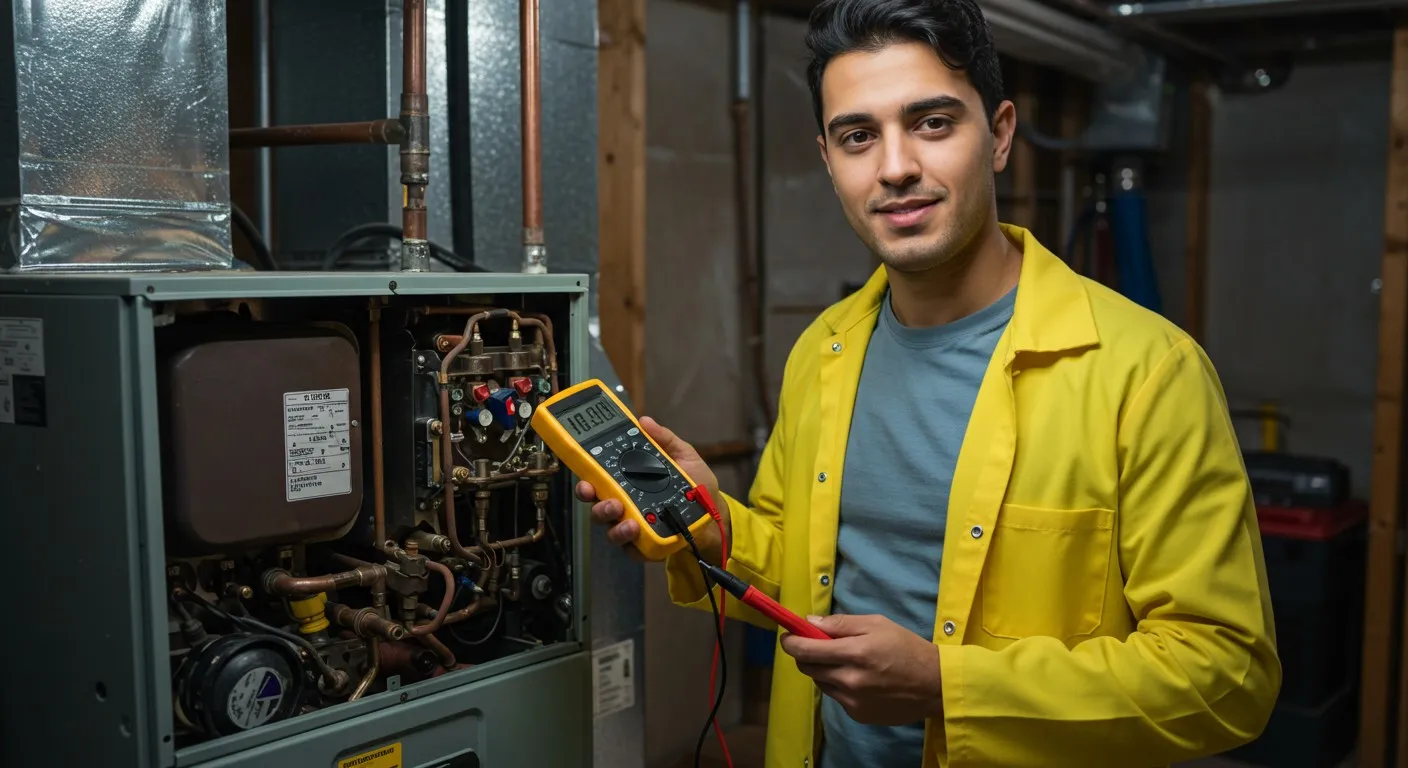
- System Diagnostics: Using specialized multimeters and manometers, the technician tests electrical voltage, amperage, and gas pressure to pinpoint the exact failure.
- Presentation of Options: You are presented with the findings and a flat-rate quote for the repair. No work begins without your direct approval.
- Execution of Repair: The faulty component is repaired or replaced using OEM-equivalent parts to ensure longevity and performance.
- System Testing: Once the repair is complete, the system is cycled through a full heating run to verify ignition, flame stability, and proper blower operation.
- Final Cleanup and Report: The work area is cleaned, and a detailed service report is provided, outlining the work performed and any recommendations for future maintenance.
Deciding When to Repair vs. Replace Your Heating System
One of the most difficult decisions a homeowner faces during a breakdown is whether to invest in a repair or opt for a full system replacement. This decision should be based on data and financial logic rather than emotional urgency. While Organ & Sons Mechanical, Inc. focuses on restoring your current system whenever feasible, there are specific thresholds where replacement becomes the more prudent financial choice.
Age of the Equipment
Heating systems generally have a lifespan of 15 to 20 years. If your furnace is nearing the 15-year mark and requires a major repair—such as a blower motor or control board replacement—the cost of the repair may not yield a sufficient return on investment. In contrast, a unit under 10 years old is almost always worth repairing unless the heat exchanger is compromised.
Cost of Repair vs. System Value
Industry professionals often use the "50% Rule." If the cost of the repair approaches 50% of the value of a new system (or the cost of a new installation), replacement is generally recommended. Putting significant money into a dying asset often leads to "chasing repairs," where one component fails shortly after another is fixed.
Frequency of Breakdowns
If you have required multiple repairs over the last two winters, the system has likely become unreliable. Frequent breakdowns are inconvenient and indicate that the internal components are degrading simultaneously. A reliable heating system should not require service calls every season beyond standard maintenance.
Efficiency and Operating Costs
Older furnaces often operate at 60% to 70% Annual Fuel Utilization Efficiency (AFUE). Modern systems can reach up to 98% AFUE. If your energy bills have been steadily climbing despite moderate usage, the inefficiency of the old unit is costing you money every month. Transitioning to a high-efficiency model can sometimes offset the monthly cost of a new unit through utility savings.
Safety Concerns
A cracked heat exchanger is a non-negotiable red flag. This component separates the combustion gases (including carbon monoxide) from the breathable air in your home. If a crack is detected, the furnace must be red-tagged and shut down immediately for safety. In this scenario, replacement is usually the only viable option, as replacing a heat exchanger is labor-intensive and costly.
Navigating Local Regulations and Coastal Climate Factors
Operating a heating system in a coastal environment like Pismo Beach presents unique challenges that differ from inland areas. The local climate is characterized by mild, wet winters and significant moisture in the air. This specific environment impacts how heating systems degrade and how repairs must be handled.
Corrosion and Salt Air
Proximity to the ocean introduces salt air, which accelerates corrosion on outdoor units (like heat pumps) and even internal furnace components if the intake air is drawn from outside. Technicians in this region check for accelerated rust on burners, pilot assemblies, and electrical contacts. Corrosion can lead to premature electrical failure or safety hazards if metal flue pipes deteriorate.
Moisture and Venting
The heavy precipitation between November and March can impact roof vents and flues. Improperly flashed vents can allow water to leak into the furnace cabinet, damaging circuit boards and causing short circuits. During a repair, checking the integrity of the flue termination and the flashing is critical to prevent water damage recurrence.
Permitting and Code Compliance
California has strict Title 24 energy standards and local building codes that govern HVAC work. While minor repairs generally do not require a permit, replacing a furnace or altering gas lines does. Working with a provider who understands local code enforcement ensures that all work is documented correctly. This is vital for maintaining the resale value of your home and ensuring insurance compliance. Unauthorized work that violates code can lead to fines or complications during a future home sale.
Why Professional Execution Matters
The difference between a quick patch and a professional repair lies in the details. Heating systems involve combustible gases, high-voltage electricity, and high temperatures. Mismanagement of any of these elements poses severe risks to the occupants of the home. Professional service prioritizes safety protocols that a handyman or DIY attempt cannot match.
Technicians trained in thermodynamics and electrical theory do not just swap parts; they analyze the system's performance. They verify that the gas pressure is set correctly to prevent over-firing, which can crack the heat exchanger. They ensure the temperature rise across the heat exchanger is within the manufacturer's range to prevent short cycling. These technical adjustments maximize the lifespan of the repair and the efficiency of the unit.
Furthermore, professional repairs come with warranty protection. When a licensed contractor installs a part, it typically carries a manufacturer's warranty and a labor guarantee. This protects your investment. If the part fails again within the warranty period, you are not left paying for the same repair twice. Reliability is built on accountability and technical competence.
Ensuring Long-Term Comfort and Safety
Restoring your heating system is about more than just temperature control; it is about ensuring the safety and habitability of your home. When the heat goes out, the solution should be swift, transparent, and technically sound. You deserve a service provider who arrives prepared, diagnoses accurately, and repairs effectively, respecting both your time and your property.
Call Us Now!
Don't let a heating breakdown compromise your comfort or safety for another hour. Organ & Sons Mechanical, Inc. is ready to deploy skilled professionals to your location to resolve the issue decisively.
Secure your appointment now to restore reliable warmth to your home today.
Contact Us