



Inconsistent Heating or Cooling Requires Immediate Expert Attention
Is your heat pump cycling incorrectly or failing to reach the set temperature in your Pismo Beach home? Contact us immediately to schedule a diagnostic visit or discuss available financing options to restore your comfort.
When a heat pump fails, you lose both your primary heating and cooling source, leaving your indoor environment uncomfortable and potentially unsafe during extreme weather shifts. You need a solution that addresses the root cause of the failure rather than a temporary patch. Our technicians provide rapid response times to identify mechanical or electrical faults and implement permanent repairs.
- Rapid on-site service arrival within hours of your request.
- Comprehensive system diagnostics including refrigerant levels and electrical components.
- Transparent repair recommendations with no hidden fees or surprise costs.
All services performed are fully certified and backed by a comprehensive labor and parts warranty for your peace of mind.
Comprehensive Heat Pump Diagnostics and Repair Services
Restoring a heat pump to optimal performance requires a systematic approach to diagnostics. Unlike standard air conditioners, heat pumps rely on complex reversing valves and precise refrigerant balances to switch between heating and cooling modes. When we arrive at your property, the focus is on immediate troubleshooting to minimize downtime.
Our service technicians carry fully stocked vehicles equipped with common parts, including capacitors, contactors, and control boards. This preparation allows us to complete most repairs during the initial visit. We address a wide range of operational issues that affect system efficiency and reliability.
Refrigerant Leak Detection and Recharging
Low refrigerant levels are a primary cause of heat pump inefficiency. If the system struggles to transfer heat or if ice forms on the coils, a leak is often the culprit. We utilize advanced electronic leak detectors to pinpoint the exact location of the escape. Once identified, the leak is sealed, and the system is recharged to manufacturer specifications. Correct refrigerant charge is critical; even a 10% deviation can increase electricity consumption significantly and strain the compressor.
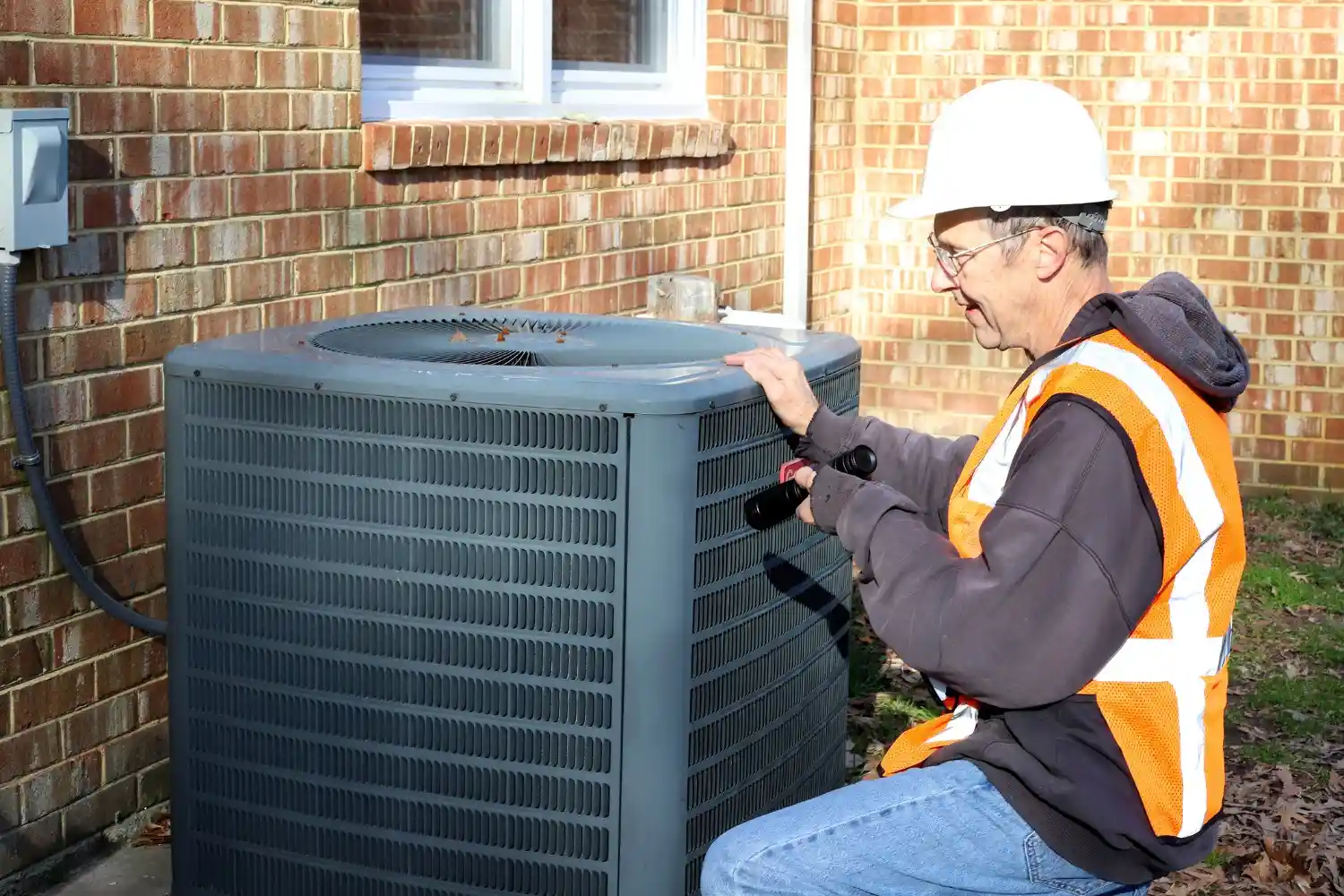
Reversing Valve and Solenoid Repair
The reversing valve is the component that distinguishes a heat pump from a standard AC unit. If your system is stuck in one mode—blowing cold air when you want heat, or vice versa—the reversing valve or its solenoid is likely stuck or failed. We test the electrical signal to the solenoid and the mechanical operation of the valve. If the component is defective, we replace it to restore full dual-mode functionality.
Compressor and Motor Troubleshooting
The compressor is the heart of the system. Loud banging noises, hard starts, or tripping breakers often indicate compressor distress. We measure the amperage draw and winding resistance to determine the health of the motor. Early detection of compressor issues can prevent catastrophic system failure. Similarly, we inspect the outdoor fan motor and the indoor blower motor to ensure proper airflow is maintained across the coils.
Electrical Component Replacement
Heat pumps rely heavily on electrical controls. Worn capacitors, pitted contactors, and frayed wiring can cause intermittent operation or complete system shutdown. We tighten all electrical connections and replace components that show signs of wear or thermal damage. This prevents short circuits and ensures the system receives steady, clean power.
Thermostat and Control Calibration
Sometimes the issue lies not with the mechanical unit but with the control interface. We verify that the thermostat is correctly reading the indoor temperature and sending the appropriate signals to the air handler and condenser. This includes checking the calibration of auxiliary heat settings to ensure backup heating strips only engage when absolutely necessary, saving you money on energy bills.
The Service Workflow From Arrival to Completion
We adhere to a strict process to ensure every service call is handled efficiently and thoroughly. This structured workflow ensures that nothing is overlooked and that you are kept informed at every stage of the repair.
- Initial Assessment and Safety Check: Upon arrival, the technician performs a safety inspection to check for electrical hazards or refrigerant leaks. We listen to the system operation and check error codes on the control board.
- Detailed Diagnostics: We use specialized gauges and meters to measure pressure, temperature, voltage, and amperage. This data allows us to diagnose the specific point of failure accurately.
- Explanation and Quotation: Before any work begins, we provide a detailed explanation of the problem and a clear, flat-rate quote for the repair. You will know exactly what is broken and what it costs to fix it.
- Execution of Repairs: Once approved, the technician proceeds with the repair using OEM or high-quality aftermarket parts. We follow industry best practices for part replacement, brazing, and wiring.
- System Testing and Verification: After the repair is complete, we run the system through a full heating and cooling cycle. We verify temperature splits (the difference between return and supply air temperature) to ensure the system is transferring heat effectively.
- Site Cleanup: We respect your property by using drop cloths and removing all old parts and packaging materials when we leave.
Deciding Between Repair and System Replacement
Homeowners often face the difficult choice between repairing an aging unit or investing in a modern replacement. While repair is often the most immediate and cost-effective solution for minor issues, there are specific scenarios where replacement becomes the more financially sound decision.
Age of the Equipment
Heat pumps generally have a lifespan of 10 to 15 years. If your system is approaching or has exceeded this range, components will begin to fail in rapid succession. Investing heavily in an old system often leads to diminishing returns. If the unit is over 12 years old and requires a major repair like a compressor replacement, upgrading to a new system is often recommended.
The 50% Rule
A common industry standard is the 50% rule. If the cost of the repair approaches 50% of the value of the system (or the cost of a new system), replacement is the better option. This prevents you from sinking money into a "dying asset."
Frequency of Breakdowns
If you have required multiple service calls within the last two years, the system is likely unreliable. Frequent breakdowns indicate that the internal components are wearing out collectively. Organ & Sons Mechanical, Inc. can assess the repair history of your unit to help you determine if the cumulative cost of repairs is outweighing the cost of a new installation.
Efficiency Ratings (SEER2 and HSPF2)
Older heat pumps operate at much lower efficiency levels compared to modern units. If your current system has a low SEER (Seasonal Energy Efficiency Ratio) or HSPF (Heating Seasonal Performance Factor), you are paying significantly more for energy than necessary. upgrading to a high-efficiency system can reduce monthly utility bills enough to offset the installation cost over time.
Comfort and Performance Issues
If your current heat pump struggles to maintain a consistent temperature, leaves humidity levels high, or is excessively noisy, it may be undersized or technically obsolete. newer systems often feature variable-speed compressors that modulate performance to match the heating or cooling load, providing superior comfort and humidity control.
Critical Considerations for Coastal Climate Systems
Operating a heat pump in a coastal environment presents unique challenges that standard maintenance protocols may not address. The proximity to the ocean introduces environmental factors that accelerate wear and tear on HVAC equipment.
Corrosion from Salt Air
The marine layer brings salt-laden air inland. Salt is highly corrosive to aluminum and copper, the primary metals used in heat pump coils. Without proper care, fins can deteriorate, leading to a loss of heat transfer capability and eventually refrigerant leaks. We inspect outdoor units for signs of galvanic corrosion and can recommend protective coatings or specific cleaning intervals to extend the life of the coils.
Managing Humidity Levels
While the region has dry summers, the marine influence can bring periods of high humidity. A properly functioning heat pump acts as a dehumidifier during the cooling cycle. If the system is short-cycling (turning on and off too quickly), it will cool the air but fail to remove moisture, leading to a clammy indoor environment. We ensure the system is correctly sized and configured to run long enough to effectively pull moisture from the air.
Permitting and Regulatory Compliance
Any significant repair involving refrigerant handling or system replacement requires adherence to EPA regulations and local building codes. The California Air Resources Board (CARB) has strict guidelines regarding refrigerant management to minimize environmental impact. We ensure that all work is compliant with state and local regulations, handling necessary permits and documentation so you remain in compliance.
Utility Rebates and Incentives
Local utility providers and state programs frequently offer rebates for repairing or upgrading to energy-efficient heat pump systems. These incentives are designed to lower the load on the electrical grid. Our team stays current on available rebate programs and can assist in identifying which improvements may qualify for financial incentives.
Why Technical Expertise Matters for Your System
The complexity of modern heat pump technology demands a higher level of technical proficiency than standard heating or cooling systems. Inverter-driven compressors, communicating control boards, and electronic expansion valves require precise diagnostic tools and specialized training to service correctly.
- Advanced Diagnostic Tools: We utilize digital manifolds that provide real-time data on superheat and subcooling, allowing for precise refrigerant charging. Airflow is measured using static pressure manometers to identify ductwork restrictions that could be choking the system. Thermal imaging cameras allow us to see electrical hot spots and insulation gaps that are invisible to the naked eye.
- Continuous Training: Manufacturers release new technology annually. Our technicians undergo regular training to stay updated on the latest service bulletins, software updates, and repair techniques for major brands. This ensures that we are not guessing when we approach your equipment but following engineered protocols.
- Inventory and Logistics: A service call is only effective if the repair can be completed promptly. We maintain a robust supply chain and stock our vehicles with universal and OEM-specific parts. This commitment to inventory management reduces the need for follow-up visits and gets your system running faster.
Restoring Your Home’s Climate Control
When your heat pump malfunctions, you need a service provider that combines technical precision with rapid response. We understand the mechanics of heat transfer and the specific demands the local climate places on your equipment. From resolving complex electrical faults to optimizing refrigerant charges, our goal is to ensure your system operates at peak efficiency and longevity.
Do not let a minor issue escalate into a major system failure. Trust Organ & Sons Mechanical, Inc. to provide the expert service required to maintain your indoor comfort year-round.
Contact us today to schedule your comprehensive heat pump service.
Contact Us