



Is Your Furnace Failing You When You Need It Most?
Struggling with a furnace that won’t heat up or is making strange noises creates immediate stress for homeowners in Oxnard. When your heating system falters, you need a technical team that can diagnose the root cause and implement a fix without delay. Call us immediately to schedule a diagnostic visit and restore warmth to your home.
Organ & Sons Mechanical, Inc. provides comprehensive heating solutions designed to get your system back online quickly. We understand that even in our mild climate, a functioning heater is essential for combating the damp coastal chill.
- Rapid response time with 24/7 availability for urgent heating issues.
- Expert repairs by certified technicians ensuring your furnace operates efficiently.
- Affordable solutions with upfront pricing and no hidden fees.
All repairs are fully guaranteed with options for extended warranties, giving you peace of mind long after the job is done.
Comprehensive Diagnostics and Immediate Repair Solutions
When a heating system stops working, the primary goal is to identify the exact point of failure. Modern furnaces are complex machines involving electrical sequences, gas combustion, and airflow management. A guess-and-check approach wastes time and money. Professional service begins with a systematic diagnostic process that isolates the issue within minutes of arrival.
Technicians arrive in fully stocked service vehicles, prepared to handle the vast majority of repairs on the spot. The diagnostic phase involves connecting testing equipment to the furnace control board to read error codes and measuring electrical voltage across critical components. This data-driven approach ensures that the part being replaced is actually the part that failed.
Common issues addressed during a service call include:
- Ignition Failure: Modern units often use hot surface igniters or spark ignition systems. If these components crack or fail, the burners will not light.
- Flame Sensor Issues: Over time, flame sensors accumulate oxidation. If the sensor cannot detect a flame, the system shuts down as a safety precaution.
- Blower Motor Malfunctions: If the motor that circulates air fails or the capacitor weakens, the furnace may overheat or fail to distribute warm air.
- Thermostat Communication Errors: Sometimes the issue lies in the signal between the thermostat and the furnace control board, requiring recalibration or wiring repairs.
- Airflow Restrictions: Blocked vents, clogged filters, or crushed ductwork can cause the limit switch to trip, shutting down the furnace to prevent fires.
Homeowners in Oxnard can expect a transparent explanation of the problem. Once the diagnostic is complete, you receive a clear report on what is broken, why it broke, and the specific cost to fix it. Work only begins after you approve the scope of repair.
Restoring Comfort Through a Systematic Repair Approach
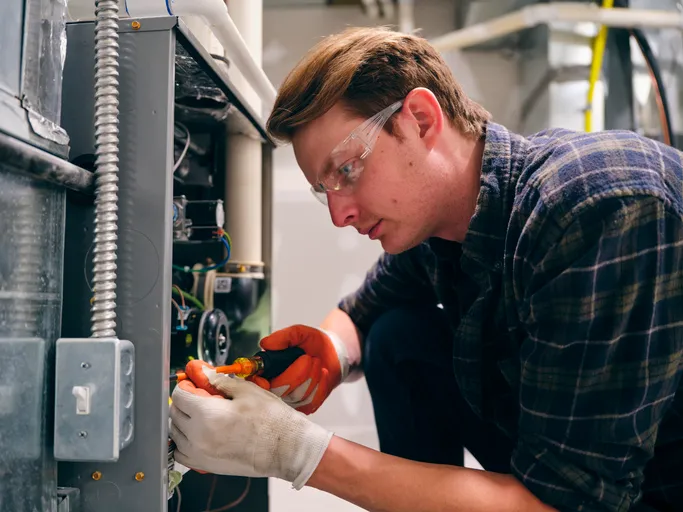
Executing a furnace repair requires strict adherence to safety protocols and manufacturer specifications. Gas-fired appliances involve combustible fuel and high-voltage electricity, meaning there is no room for error. The repair process is structured to ensure safety while restoring the unit to peak efficiency.
The technician follows a rigorous workflow to complete the repair:
- Site Protection: The work area is prepped with drop cloths and shoe covers to protect flooring and surrounding property.
- Safety Disconnect: Gas and electrical supplies are shut off to ensure the safe removal of defective components.
- Component Replacement: The failed part is removed, and the new OEM (Original Equipment Manufacturer) or equivalent high-quality part is installed.
- Electrical Verification: All wiring connections are tightened and tested for proper voltage and continuity.
- Gas Pressure Calibration: For gas valves and burners, the manifold pressure is measured and adjusted to ensure the flame burns cleanly and efficiently.
- Safety Switch Testing: Limit switches, rollout switches, and pressure switches are tested to verify they will shut the unit down in an emergency.
- Carbon Monoxide Screening: A combustion analysis is performed to ensure the heat exchanger is intact and no dangerous gases are leaking into the air supply.
After the repair is physically complete, the system is run through a full heating cycle. This confirms that the thermostat satisfies the call for heat, the blower activates at the correct temperature, and the system shuts down properly without overheating.
Determining When to Repair or Opt for System Replacement
A critical part of the service visit involves evaluating the long-term viability of the current heating system. While repair is often the most cost-effective immediate solution, there are scenarios where investing in a new unit is the smarter financial decision. Organ & Sons Mechanical, Inc. helps homeowners navigate this decision using data rather than sales pressure.
Technicians evaluate the condition of the furnace based on specific decision-grade criteria:
- The Age of the Unit: Furnaces typically last 15 to 20 years. If a unit is approaching or exceeding this age range, parts may become obsolete, and major component failures become more likely.
- The Cost of Repair vs. Value: A general industry standard is the "50% rule." If the cost of the repair approaches 50% of the cost of a new system, replacement is generally recommended.
- Frequency of Breakdowns: If a system has required multiple repairs in the last two years, it indicates that the internal components are failing sequentially. Continuing to repair a "money pit" is rarely economical.
- Heat Exchanger Integrity: The heat exchanger is the heart of the furnace. If this component is cracked or rusted, it presents a carbon monoxide hazard. In almost every case, a compromised heat exchanger necessitates a full system replacement for safety reasons.
- Energy Efficiency (AFUE): Older furnaces may operate at 60-70% efficiency (AFUE). Modern units operate at 80% to 98% efficiency. Replacing an old unit can significantly lower monthly utility bills, offsetting the cost of installation over time.
This assessment is provided objectively. If a repair will buy the system another few years of reliable life, that option is presented clearly. If the system is unsafe or economically inviable, replacement options are discussed.
Navigating Local Climate Factors and Regulatory Requirements
Operating a furnace in a coastal environment presents unique challenges compared to inland areas. While winters here are mild, the region experiences significant humidity and salt air influence. This marine layer can accelerate corrosion on metal components, particularly in the burner assembly and electrical contacts.
Local service providers must account for these environmental factors during repairs:
- Corrosion Management: Technicians check for rust accumulation on the burners and pilot assemblies, which is more common in coastal zones.
- Humidity Control: Systems must be calibrated to handle the damp chill common from November through March. A properly functioning furnace helps reduce indoor humidity levels, preventing mold growth.
- Permitting and Code Compliance: In Ventura County, major HVAC modifications and replacements require permits to ensure safety. Repairs must adhere to current building codes, particularly regarding gas line safety and exhaust venting.
- Utility Rebates: Southern California Edison and other local entities frequently offer rebates for upgrading to high-efficiency equipment. Technicians are knowledgeable about current programs that can help offset costs for homeowners.
Understanding the local ecosystem ensures that repairs hold up against the specific environmental stressors found in the area. It is not just about fixing the machine; it is about ensuring it works specifically for this climate.
Technical Expertise Backed by Reliable Service Guarantees
Choosing a service provider involves looking for technical proficiency and accountability. The difference between a temporary patch and a permanent solution lies in the training of the technician and the quality of the parts used.
High-quality service is defined by several key operational standards:
- Certified Technicians: Service personnel undergo rigorous training and certification to stay updated on the latest furnace technologies, from variable-speed blowers to smart thermostat integration.
- Inventory Readiness: Trucks are stocked with universal parts and common specific components to minimize the need for follow-up visits. The goal is to restore heat in a single trip whenever possible.
- Warranty on Workmanship: Professional repairs come with guarantees. If the same part fails or the issue persists shortly after service, the provider returns to correct it at no cost.
- Transparent Communication: You are informed of the technician's arrival time, and the diagnosis is explained in plain English, not technical jargon.
Get Reliable Furnace Repair You Can Trust
When your heat goes out, you need a partner who prioritizes restoring your home's safety and comfort. Organ & Sons Mechanical, Inc. delivers precise, code-compliant repairs designed to extend the life of your heating system.
Contact our team now to book your furnace repair and ensure your home stays warm this season.
Contact Us